

The best small bedroom design ideas combine smart furniture, efficient storage, and a practical layout to make limited space feel comfortable and functional. Choose space-saving furniture such as storage beds, Murphy beds, floating nightstands, and multifunctional pieces. Use vertical and under-bed storage to reduce clutter, while mirrors, natural light, and light colors can make the room appear more open. A well-planned small bedroom layout can make the most of even the tightest space.
Table of Contents
- How Can You Create a More Spacious Feel in a Small Bedroom?
- Which Space-Saving Furniture Works Best?
- How Can You Maximize Small Bedroom Storage?
- What Small Bedroom Layout Works Best?
- Which Lighting Ideas Save Space?
- Which Colors Can Make a Small Bedroom Appear More Spacious?
- Which Common Design Choices Can Make a Small Bedroom Feel Cramped?
- Small Bedroom Ideas for Different Budgets
- Final Thoughts
- Frequently Asked Questions
Designing a small bedroom can be challenging when you need to fit a comfortable bed, clothing storage, lighting, and personal belongings into a limited area. However, a compact room can still feel stylish, organized, and relaxing when every piece has a purpose.
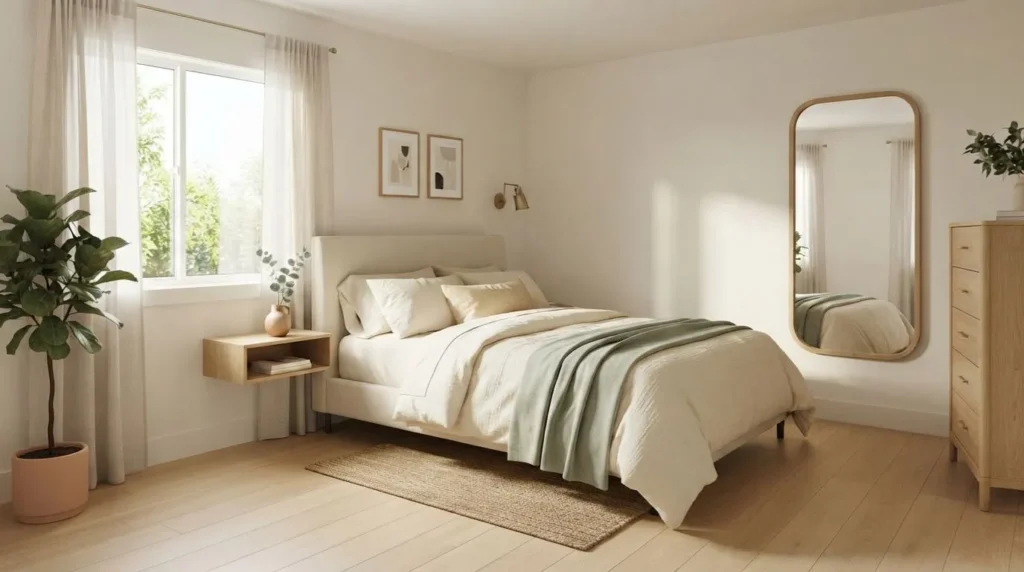
The secret is not simply adding more storage. Effective small bedroom design ideas focus on furniture scale, smart bedroom organization, vertical space, and an uncluttered layout. Whether you have a narrow bedroom, a queen-size bed, or no closet, the right combination of design choices can help you create more usable space without making the room feel crowded.
How Can You Create a More Spacious Feel in a Small Bedroom?
A small bedroom can feel surprisingly spacious when you reduce visual barriers and make better use of light. The goal is to create an open appearance while keeping the room functional.
Use Light Colors Strategically
Using light colors can make a room appear brighter, more spacious, and inviting. Soft white, cream, beige, pale gray, and other neutral bedroom colors are excellent choices for small spaces because they create a clean visual backdrop.
You can maintain a consistent color palette across the walls, bedding, and larger furniture pieces. Add stronger colors through artwork, cushions, blankets, or other small accents instead of overwhelming the room with dark shades.
Add Mirrors to Reflect Light
Mirrors can instantly make a bedroom feel more spacious. Placing a large mirror where it can catch natural light helps brighten the room, while its reflection creates a greater sense of openness in smaller spaces.
Try placing a full-length mirror against an empty wall or using mirrored wardrobe doors. Position mirrors where they reflect light or an attractive part of the room rather than visual clutter.
Keep Windows and Floors Visually Clear
Natural light is valuable in small-space design, so avoid placing tall furniture directly in front of windows. Use lightweight or sheer curtains when appropriate to allow daylight into the room.
You should also maintain clear walking paths around the bed. An open floor makes the room easier to move through and prevents it from feeling overcrowded.
Which Space-Saving Furniture Works Best?
Choosing the right furniture can make a significant difference in a compact bedroom. Instead of filling the room with separate pieces, look for furniture that provides storage or performs multiple functions.
Choose a Storage Bed
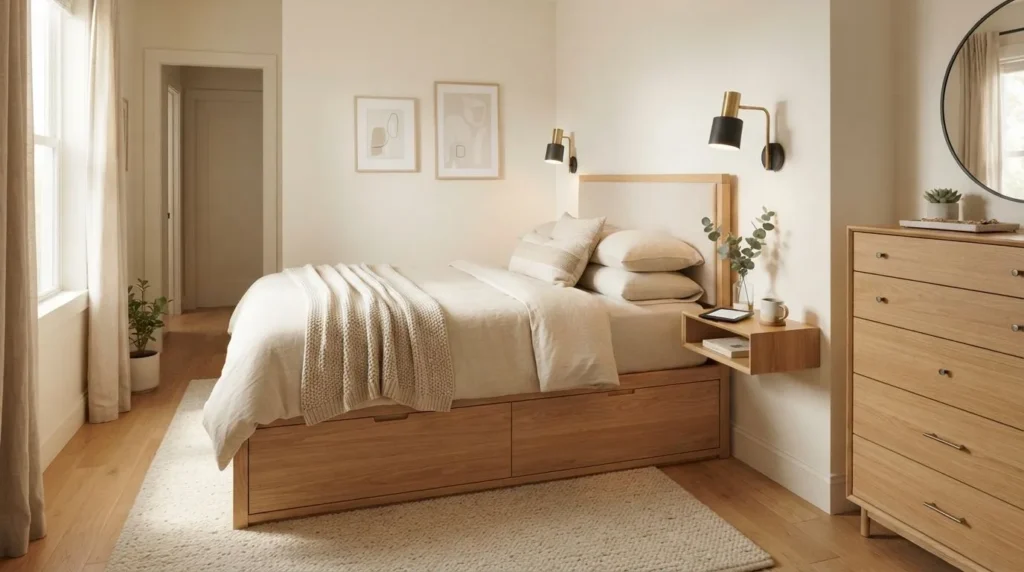
A storage bed makes use of space that would otherwise remain unused. Depending on the design, you can find beds with drawers, lift-up compartments, or built-in storage underneath.
Use this hidden space for seasonal clothing, shoes, extra blankets, bedding, or other items you do not need every day. This can reduce the need for additional storage furniture.
Try a Murphy or Fold-Down Bed
A Murphy bed can be particularly useful when a bedroom needs to serve multiple purposes. The bed folds against the wall when it is not in use, creating additional floor space.
This option can work well in very small rooms, guest bedrooms, or spaces that also function as an office or study area.
Replace Bulky Nightstands With Floating Shelves
Traditional nightstands can take up valuable floor space. A floating nightstand or wall-mounted shelf provides a convenient place for essentials without occupying the floor underneath.
Use it for a small lamp, alarm clock, phone, book, or decorative item. Pairing floating furniture with wall sconces can free even more bedside space.
Choose Multifunctional Furniture
Multifunctional furniture is ideal for compact bedrooms because one item can serve several purposes. A storage ottoman, for example, can provide seating while also offering hidden storage.
Other useful choices include a wall-mounted desk, foldable furniture, a bed with drawers, or a narrow dresser with sufficient storage capacity.
How Can You Maximize Small Bedroom Storage?
Effective small bedroom storage ideas make use of overlooked spaces, turning unused corners and hidden areas into practical storage solutions.
Before adding another large cabinet, look for opportunities to use the bed, walls, doors, and vertical space.
Use the Space Under the Bed
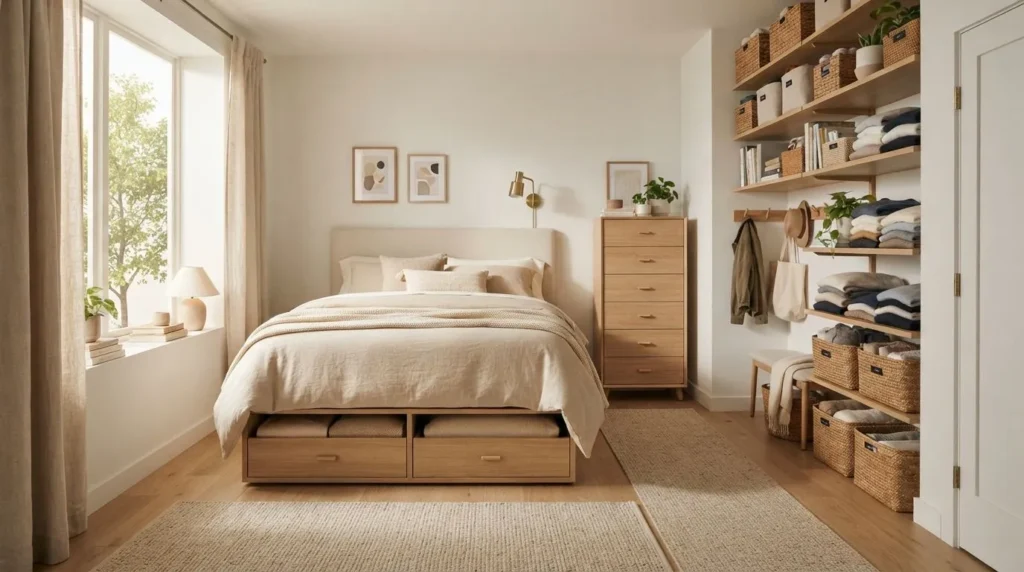
Under-bed storage is one of the easiest ways to increase storage without using additional floor area. Use low-profile boxes, drawers, or containers to organize belongings.
Store seasonal clothing, shoes, spare bedding, or less frequently used items underneath the bed. Keeping everything organized in labeled containers can make this hidden storage much easier to manage.
Think Vertically
When floor space is limited, your walls become valuable storage areas. Install wall-mounted shelves, tall cabinets, hooks, or vertical storage systems to use the available height.
A tall and narrow dresser can also provide useful storage while occupying less floor space than a wide piece of furniture.
Use the Back of Doors
The back of a bedroom or closet door can provide convenient storage without taking up floor space. Over-the-door organizers can hold accessories, shoes, small clothing items, or personal belongings.
Wall hooks are another inexpensive solution for hanging bags, robes, hats, or frequently used items.
Add a Tall, Narrow Dresser
A tall dresser can provide plenty of storage without extending too far into the room. Choose a narrow design that fits comfortably against an available wall.
Avoid placing too many decorative objects on top. Keeping the surface clean helps maintain the uncluttered appearance of the bedroom.
What Small Bedroom Layout Works Best?
There is no single perfect layout for every bedroom. The best arrangement depends on the room’s shape, bed size, windows, doors, and storage needs.
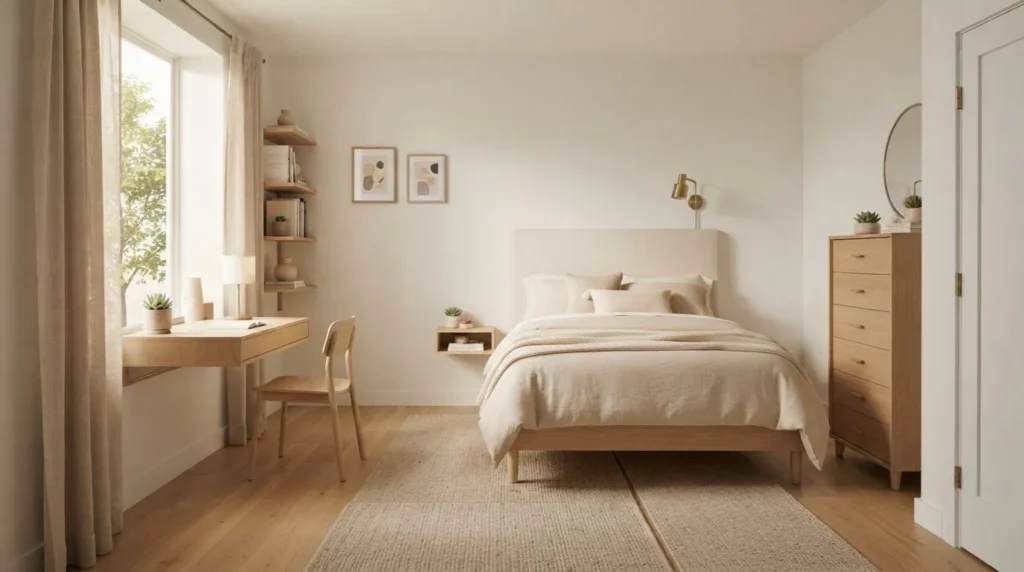
Small Bedroom With a Queen Bed
A queen bed can work in a small bedroom when the layout is carefully planned. Place the bed against the longest practical wall while maintaining enough space to move comfortably around it.
Use compact nightstands or floating shelves instead of large bedside tables. Keep tall storage along a wall where it does not interfere with the main walking path.
Narrow Bedroom Layout
For a narrow bedroom, avoid filling both long walls with bulky furniture. Instead, prioritize a clear central pathway and use furniture with a slim profile.
Place the bed where it creates the most practical circulation area, then use vertical storage and narrow furniture for clothing and personal belongings.
Small Bedroom With a Desk
If you need a workspace, consider a compact or wall-mounted desk. A floating desk can provide a useful work surface while leaving the floor beneath it open.
Whenever practical, position the desk near natural light. Choose a chair that can be pushed underneath the desk when it is not being used.
Small Bedroom With No Closet
A bedroom without a closet requires a combination of compact storage solutions. A storage bed, narrow dresser, clothing rack, wall shelves, and under-bed containers can work together.
Keep everyday clothing easily accessible while storing seasonal belongings in less visible areas. This approach prevents one large wardrobe from consuming most of the room.
Which Lighting Ideas Save Space?
Lighting can improve both the function and appearance of a small bedroom. The best approach is to use fixtures that provide sufficient illumination without requiring extra floor or table space. Lighting can improve both the function and appearance of a small bedroom. For additional inspiration, explore these bedroom lighting ideas.
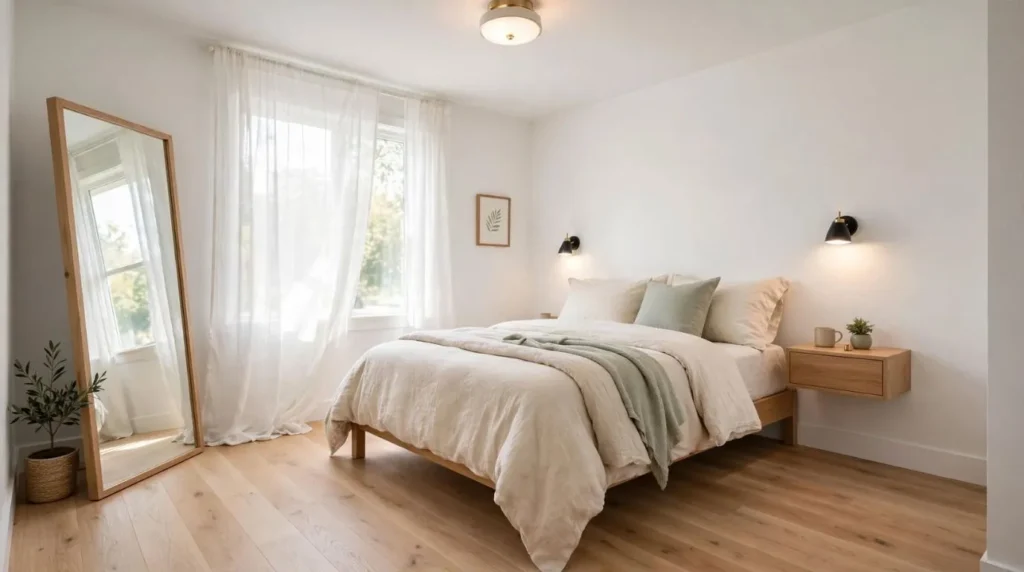
Install Wall Sconces
Wall sconces are an excellent alternative to bedside lamps. Mount them near the bed to provide focused lighting for reading or nighttime activities.
Because sconces do not require a table surface, they allow you to use smaller nightstands or floating shelves.
Use Ceiling Lighting
Ceiling lighting provides general illumination without taking up any floor space. Choose a fixture that matches the scale of the room rather than selecting an oversized statement piece.
A simple ceiling light can provide practical brightness while keeping the overall design clean.
Layer Ambient and Task Lighting
Create a cozy and inviting bedroom by combining different layers of lighting to suit various moods and activities. Ambient lighting provides overall illumination, while task lighting can focus on areas such as the bed or desk.
Combining ceiling lights with wall sconces or other compact fixtures gives you more control without adding bulky furniture. Choosing energy-efficient lighting can also help reduce unnecessary energy use.
Which Colors Can Make a Small Bedroom Appear More Spacious?
A well-chosen color scheme can make a small bedroom appear more spacious, airy, and inviting. Light and coordinated colors generally help create a brighter appearance.
Soft Whites and Neutrals
Soft whites, cream, beige, and pale gray create an airy foundation. They also work well with minimalist décor and allow you to add personality through textiles and accessories.
For a cohesive look, use similar tones across larger surfaces instead of creating too many visual divisions.
Light Blues and Greens
Light blue and soft green can add color while maintaining a calm atmosphere. These shades work especially well for cozy small bedrooms where relaxation is the main goal.
Pair them with white or neutral bedding and natural textures for a balanced appearance.
Can Dark Colors Work in Small Bedrooms?
Yes, dark colors can work if used carefully. A dark accent wall, bedding, or selected furniture can add depth without making every surface visually heavy.
Balance darker elements with good lighting, mirrors, lighter textiles, and open floor space.
Which Common Design Choices Can Make a Small Bedroom Feel Cramped?
Some design decisions can make a compact bedroom feel smaller than it actually is. Avoid adding furniture or décor without considering its impact on space.
Oversized Furniture
Large beds, deep dressers, oversized chairs, and bulky wardrobes can quickly consume valuable floor space. Choose compact furniture that fits the room and serves a clear purpose.
Too Much Clutter
Cluttered surfaces can make even a well-designed bedroom feel crowded. Practice regular bedroom decluttering and keep only useful or meaningful items visible.
Use baskets, drawers, shelves, and hidden storage to keep everyday belongings organized.
Blocking Natural Light
Avoid positioning tall furniture where it blocks windows. Natural light helps create an open and welcoming atmosphere, which is especially important in a small room.
Using Too Many Decorative Pieces
Decorative items should complement the room rather than compete for attention. Select a few meaningful pieces and leave some surfaces open.
A minimalist approach can make the bedroom feel calmer while also making cleaning and organization easier.
Small Bedroom Ideas for Different Budgets
You do not need a large budget to improve a small bedroom. Start with simple changes and gradually invest in upgrades that solve your biggest space problems.
Free and Low-Cost Ideas
Try these affordable small bedroom makeover ideas:
- Rearrange existing furniture to improve the walking path.
- Declutter unnecessary belongings.
- Use the space under the bed.
- Add wall hooks for bags and clothing.
- Replace bulky nightstands with simple floating shelves.
- Rearrange decorative items to create cleaner surfaces.
- Use inexpensive over-the-door organizers.
Mid-Range Upgrades
If you have a moderate budget, consider adding floating shelves, a narrow dresser, under-bed storage containers, a large mirror, or wall sconces.
These improvements can provide both practical storage and a more polished appearance without requiring a complete renovation.
Premium Space-Saving Solutions
For a larger investment, consider built-in storage, a quality storage bed, a Murphy bed, custom wardrobes, or professionally designed multifunctional furniture.
Renters can focus on flexible solutions such as freestanding furniture, removable hooks, floating-style storage, and movable pieces that can be taken to a new home.
Final Thoughts
Creating a functional small bedroom is about making smart choices rather than trying to fit everything into the room. The best small bedroom design ideas combine efficient furniture, thoughtful organization, practical layouts, and visual tricks that make the space feel larger.
Start by decluttering, improving your furniture placement, and using overlooked areas such as walls and the space beneath the bed. Add mirrors, appropriate lighting, and a cohesive color palette to complete the design. With the right strategy, even a very small bedroom can feel comfortable, organized, and stylish.
Frequently Asked Questions
How do I maximize space in a small bedroom?
Start by choosing an efficient furniture arrangement and removing unnecessary items. Then use vertical storage, under-bed storage, floating furniture, and multifunctional pieces to increase usable space.
What furniture is best for a small bedroom?
Storage beds, Murphy beds, floating nightstands, wall-mounted desks, storage ottomans, tall narrow dressers, wall shelves, and foldable furniture are practical choices for compact bedrooms.
What colors make a small bedroom look bigger?
Soft whites, warm neutrals, pale blues, and light greens can help make a bedroom feel brighter and more spacious. Use darker colors as accents when desired.
How do I arrange furniture in a very small bedroom?
Begin with the bed because it is usually the largest item. Position it to create the clearest walking path, then add only essential furniture. Use walls for storage whenever possible.
How can I add storage without taking floor space?
Use floating shelves, wall-mounted storage, vertical organizers, over-the-door systems, hooks, and wall-mounted desks. These solutions use vertical space rather than valuable floor space.