

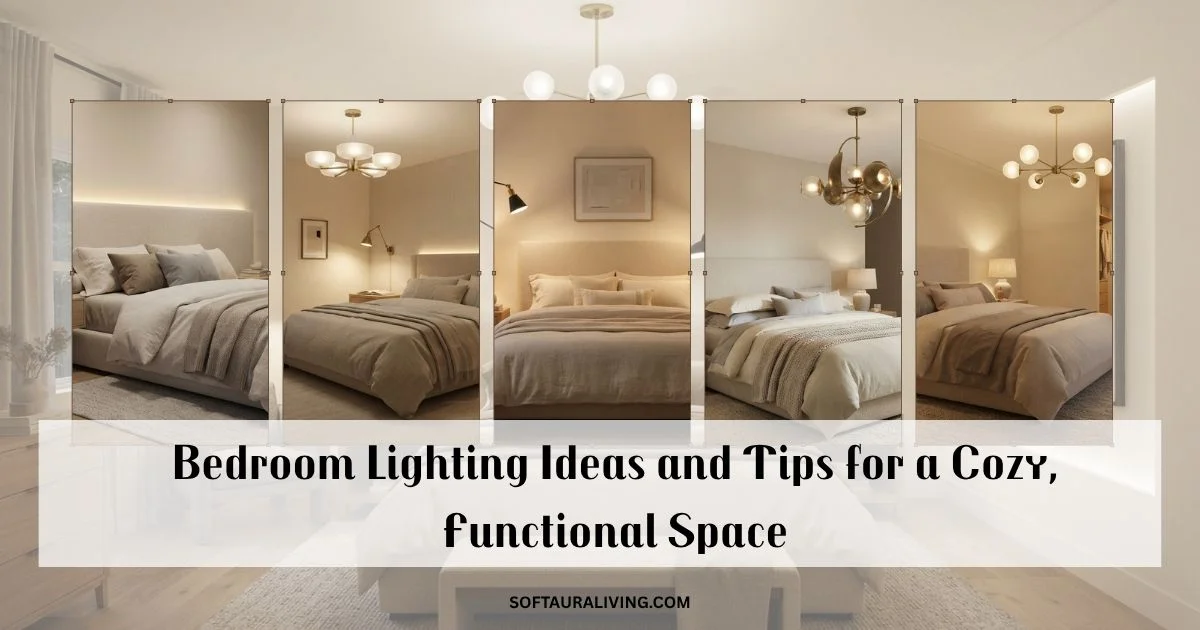
The best bedroom lighting ideas combine ambient, task, and accent lighting to create a cozy and functional space. Use warm LED bulbs, bedside lamps, or wall sconces for reading, and dimmable fixtures for flexible brightness. Choose lighting based on your bedroom size, layout, activities, and décor style to create balanced illumination and a relaxing atmosphere.
Table of Contents
- What Is the Best Lighting for a Bedroom?
- Understand the 3 Layers of Bedroom Lighting
- 12 Bedroom Lighting Ideas for a Cozy Space
- How to Choose the Right Bedroom Light Bulbs
- Bedroom Lighting Ideas for Small Rooms
- How to Place Bedroom Lights
- Bedroom Lighting Ideas by Activity
- How to Create a Relaxing Bedroom at Night
- Common Bedroom Lighting Mistakes to Avoid
- Smart and Energy-Efficient Bedroom Lighting
- Frequently Asked Questions
Bedroom lighting does more than brighten a room. The right combination of fixtures can make a bedroom feel warmer, more comfortable, and easier to use. Good bedroom lighting design balances decoration with practical needs such as reading, dressing, relaxing, and moving around at night.
Instead of depending on one ceiling fixture, combine different light sources. Ambient, task, and accent lighting create layers that give you better control over brightness and atmosphere.
What Is the Best Lighting for a Bedroom?
The best lighting for a bedroom is a combination of ambient, task, and accent lighting. Ambient lighting provides general illumination, task lighting supports activities such as reading or dressing, and accent lighting adds depth and visual interest.
Warm white light is a popular choice for bedrooms because it creates a softer, more comfortable atmosphere. Dimmable lights are also useful because you can increase brightness when needed and create a gentle glow when relaxing.
Consider your bedroom layout, natural light, furniture placement, and daily activities before choosing bedroom light fixtures. The best bedroom lighting should work with your furniture, colors, and overall bedroom decor ideas to create a balanced and comfortable space.
Understand the 3 Layers of Bedroom Lighting
Ambient Lighting
Ambient lighting provides general illumination throughout the bedroom. It can come from ceiling lights, flush-mount fixtures, recessed lighting, pendant lights, or chandeliers.
For rooms with low ceilings, a flush-mount ceiling light can provide useful illumination without taking up visual space. Larger bedrooms may benefit from several ambient light sources instead of one central fixture.
Task Lighting
Task lighting provides focused illumination for specific activities. It is especially useful beside the bed, at a dressing area, or near a reading nook.
Popular options include:
- Bedside lamps
- Table lamps
- Wall sconces
- Adjustable reading lights
- Vanity lighting
A directional light near the bed can make reading more comfortable while reducing the need to brighten the entire room.
Accent Lighting
Accent lighting adds decorative interest and highlights selected areas. Use it to draw attention to a headboard, artwork, shelves, or architectural details.
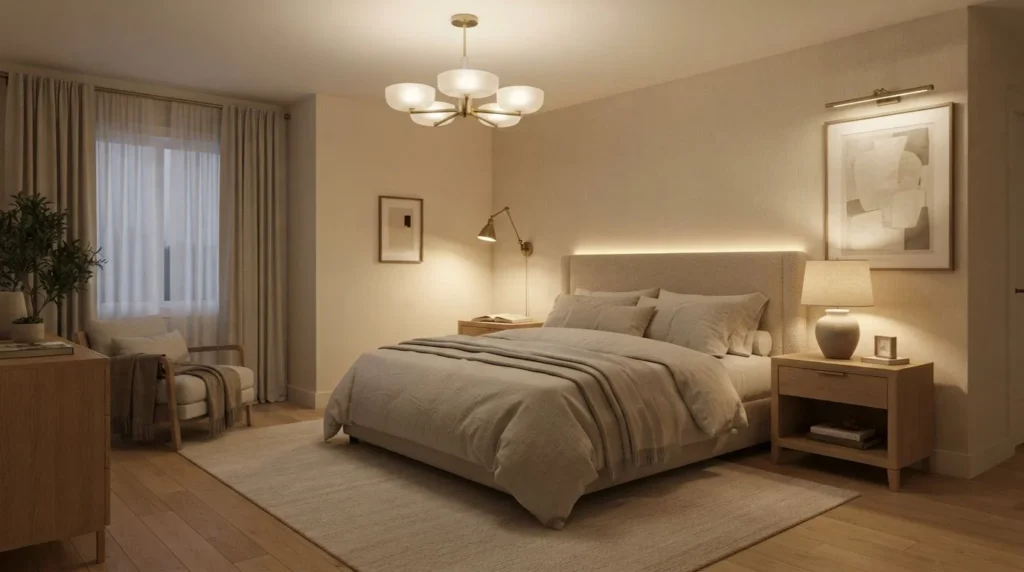
LED strip lights, picture lights, small accent lamps, and indirect lighting can create a soft glow without making the bedroom feel overly bright. Understanding basic lighting design principles can help you combine different light sources instead of relying on a single fixture.
12 Bedroom Lighting Ideas for a Cozy Space
Use Bedside Table Lamps
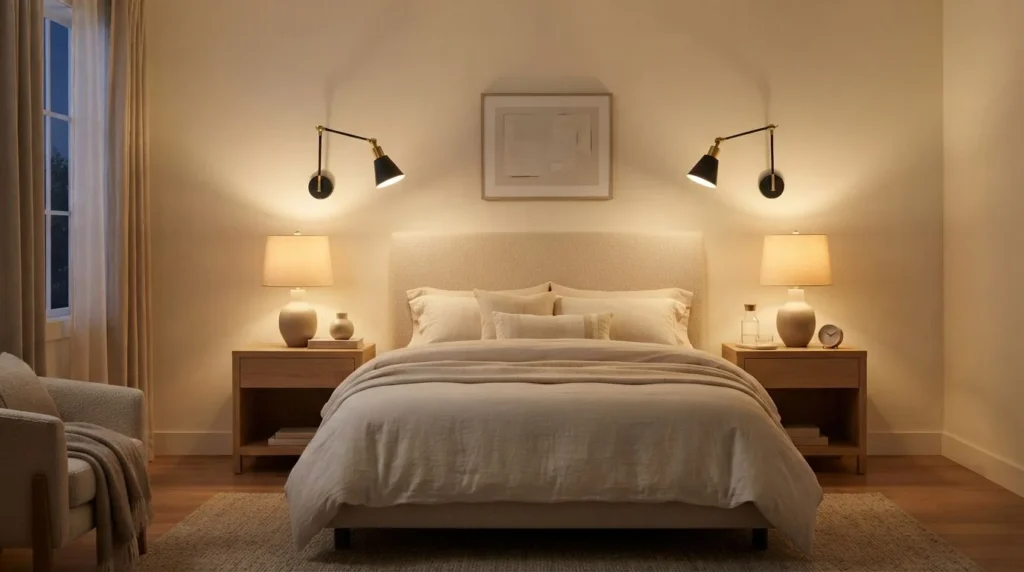
Bedside lamps are simple and practical. Place one on each nightstand for balanced illumination and easy access. Choose shades that soften the light and fixtures that suit your bedroom decor. Bedside lamps work especially well with clean furniture and simple accessories used in modern bedroom decor ideas.
Install Wall Sconces
Wall sconces are excellent bedroom lighting solutions when you want to save bedside table space. Adjustable sconces are particularly useful for reading because you can direct the light where you need it.
Add a Statement Pendant Light
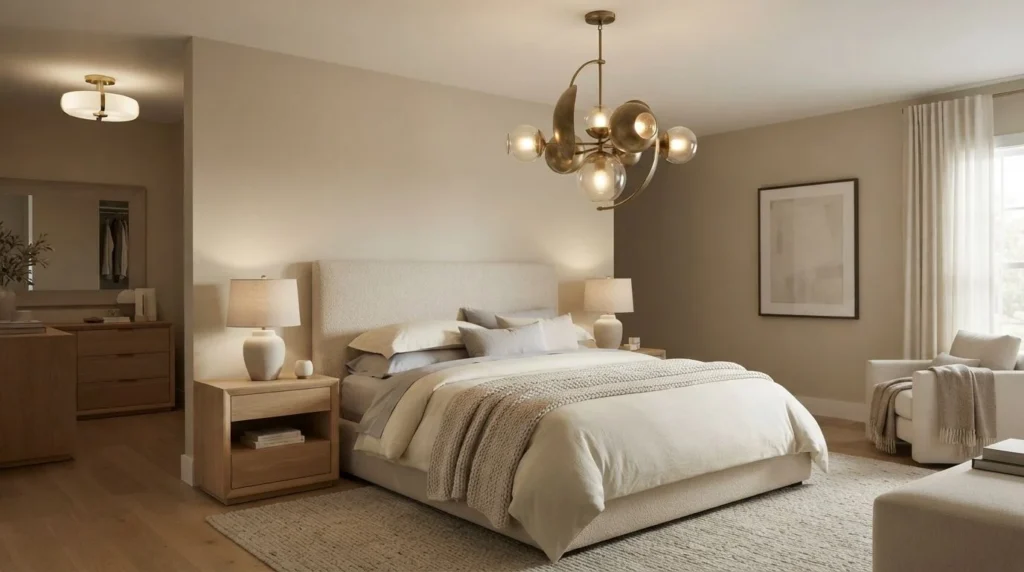
A pendant light can become an attractive focal point in a modern bedroom. Choose a size that suits the room and hang it where it provides useful illumination without overwhelming the furniture.
Choose a Flush-Mount Ceiling Light
Flush-mount lights work well in small bedrooms or rooms with low ceilings. Their compact design provides general illumination while keeping the ceiling visually clean.
Add a Floor Lamp
A floor lamp can brighten a dark corner and provide another layer of light. Place one near a reading chair, dressing area, or unused corner where additional illumination is needed.
Try LED Strip Lighting
LED strip lights can create indirect lighting behind a headboard, under floating furniture, inside shelves, or around selected architectural features. They are useful for creating a subtle decorative glow.
Create a Reading Light by the Bed
For bedtime reading, choose a directional or adjustable fixture. A wall-mounted reading light can provide focused task lighting without making the entire bedroom bright.
Add Vanity Lighting
A dressing area benefits from balanced vanity lighting. Position suitable fixtures around a mirror to provide clear illumination for grooming and makeup while reducing harsh shadows.
Use a Bedroom Chandelier
A chandelier can add elegance and become a decorative centerpiece. Choose a fixture that matches the room’s scale and use a dimmer when possible so the light can be adjusted for different occasions.
Highlight Artwork or Décor
Use picture lights or directional accent fixtures to highlight artwork, an accent wall, decorative shelves, or other features. This adds depth and makes the bedroom feel more thoughtfully designed.
Use Lighting Behind the Headboard
Lighting behind a headboard can produce a soft, indirect glow. Because the light is hidden from direct view, it can create visual warmth without becoming the main source of illumination.
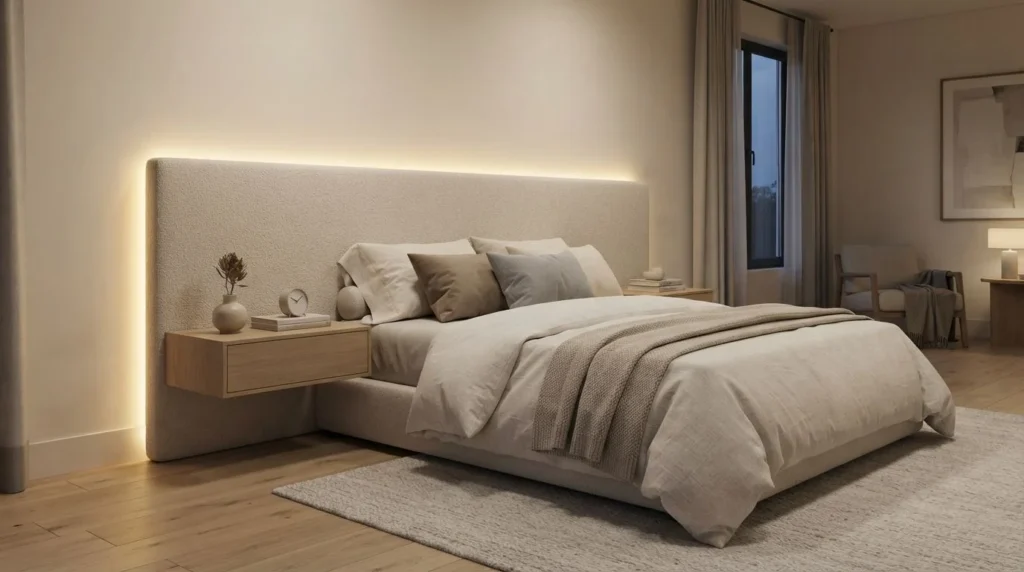
Combine Different Light Heights
Use lighting at different levels rather than placing every fixture overhead. Combine ceiling lighting with bedside lamps and low-level accent lighting to create better light distribution and a more layered bedroom design.
How to Choose the Right Bedroom Light Bulbs
The bulb affects both brightness and atmosphere. Look beyond wattage and consider color temperature, lumens, CRI, and whether the bulb is dimmable.
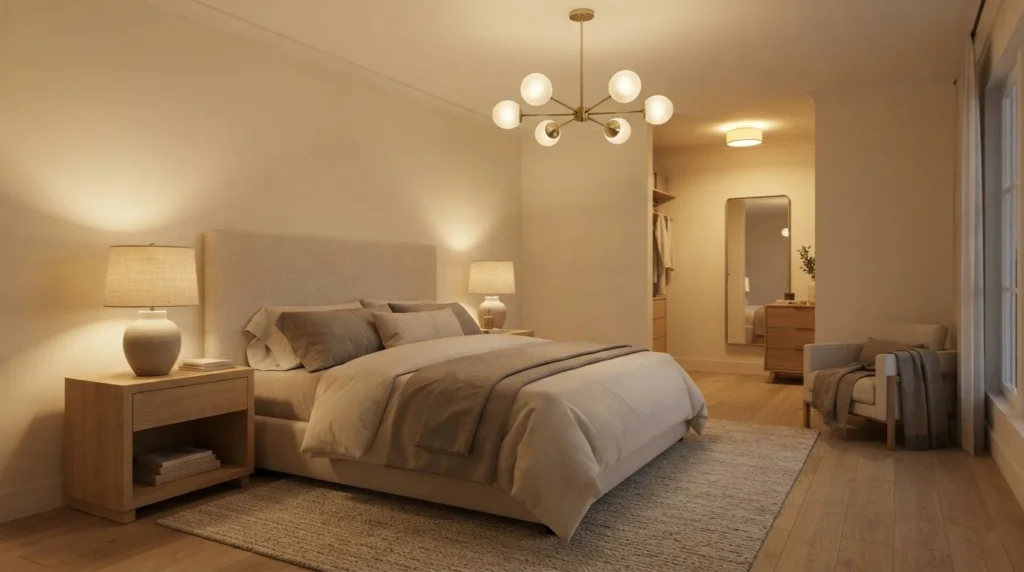
Choose the Right Color Temperature
Color temperature is measured in Kelvin (K). Warm white light around 2700K-3000K is commonly suitable for bedrooms because it provides a comfortable, inviting appearance.
Very warm light can work well for relaxing areas, while more neutral light may be useful around dressing or task areas.
Check Lumens Instead of Only Wattage
Lumens measure brightness, while wattage describes energy consumption. When selecting an LED bulb, check the lumen output to understand how much light it produces.
Consider CRI
The Color Rendering Index (CRI) indicates how naturally colors appear under a light source. A higher CRI can be useful in areas where accurate colors matter, such as near a dressing mirror.
Choose Dimmable LED Bulbs
LED bulbs are an energy-efficient option and are available in many brightness levels and color temperatures. Dimmable bulbs provide additional control, allowing you to create brighter task lighting or a softer evening glow.
Bedroom Lighting Ideas for Small Rooms
Small bedrooms require careful fixture selection. Bulky lights can make the space feel crowded, while poorly positioned fixtures can reduce usable surface area.
Try these solutions:
- Use wall sconces instead of table lamps.
- Choose flush-mount ceiling fixtures.
- Install slim floor lamps in unused corners.
- Add indirect lighting behind the headboard.
- Use LED strips on shelves or furniture.
- Use mirrors to help reflect available light.
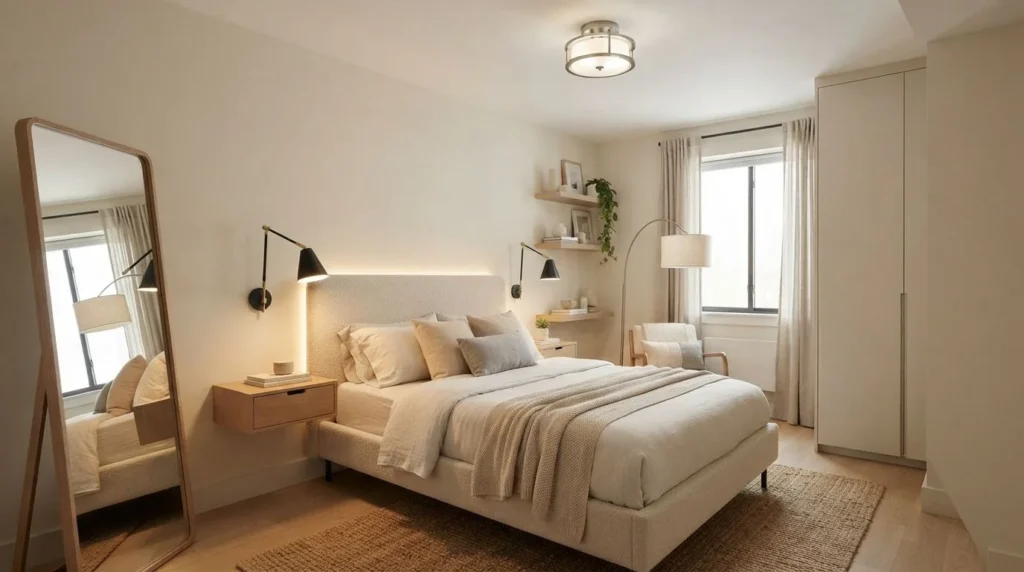
Wall-mounted fixtures are particularly useful because they keep nightstands and floor space available for other needs.
How to Place Bedroom Lights
Good placement improves both comfort and function. Bedside lamps should sit where they are easy to reach and provide comfortable reading illumination without creating glare.
Position wall sconces based on the bed, seating position, and fixture design rather than using one fixed measurement for every room.
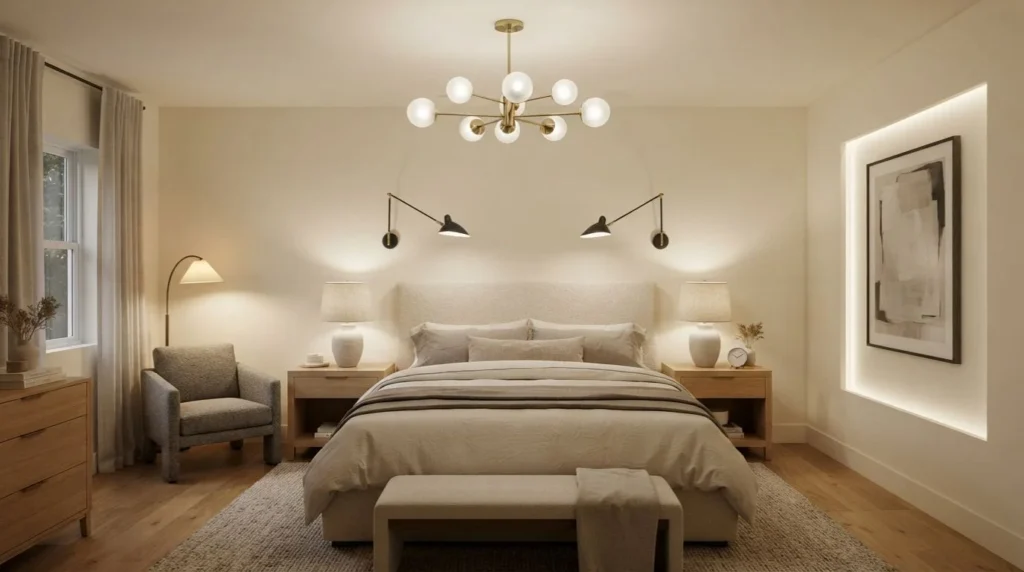
For ceiling lighting, consider the room layout, ceiling height, bed position, and furniture arrangement. Place accent lights where they can highlight artwork, shelves, the headboard, or other decorative features.
Bedroom Lighting Ideas by Activity
| Activity | Recommended Lighting |
| Relaxing | Warm ambient light |
| Reading | Directional task lighting |
| Dressing | Clear task lighting |
| Makeup | Balanced ambient lighting |
| Getting ready | Brighter ambient lighting |
| Nighttime movement | Low-level lighting |
| Creating ambience | Accent lighting |
Using different lighting solutions for different activities makes the bedroom more flexible and comfortable throughout the day.
How to Create a Relaxing Bedroom at Night
A relaxing bedroom usually benefits from softer, adjustable lighting. Instead of switching on a bright ceiling fixture at night, use bedside lamps, dimmable bulbs, or low-level accent lighting.
Warm color temperatures and indirect lighting can create a gentle atmosphere. You can also use smart bulbs or dimmer switches to adjust brightness without changing the fixtures.
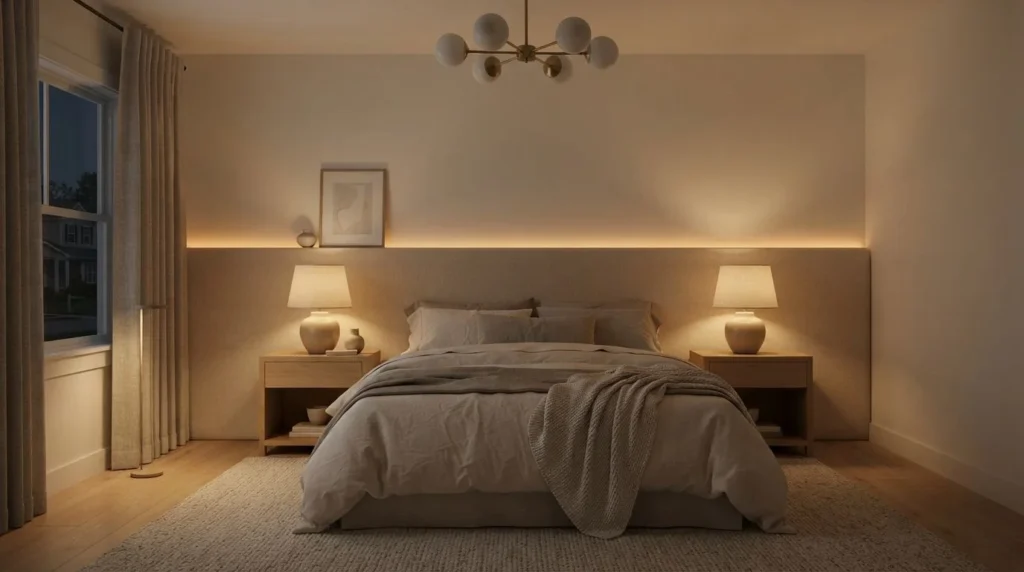
Keep the lighting comfortable rather than excessively bright, especially when the goal is to create a calm evening environment.
Common Bedroom Lighting Mistakes to Avoid
Avoid these common bedroom lighting mistakes:
- Using only one ceiling light: A single fixture may leave some areas poorly illuminated.
- Choosing overly cool bulbs: Cool light can feel less cozy in a relaxing bedroom.
- Making the room too bright: Different activities require different brightness levels.
- Ignoring glare: Use shades and indirect fixtures to make light more comfortable.
- Mixing too many color temperatures: Keep nearby fixtures visually consistent.
- Forgetting dimmers: Dimmers make lighting more adaptable.
- Choosing oversized fixtures: Match the fixture size to the room.
- Poor bedside placement: Make sure reading lights illuminate the page without shining directly into your eyes.
Smart and Energy-Efficient Bedroom Lighting
Smart lighting can make everyday bedroom lighting easier to control. Smart bulbs, smart switches, dimmers, and timers allow you to adjust brightness without repeatedly changing fixtures.
Choosing energy-efficient lighting such as LED bulbs can reduce electricity use while providing long-lasting illumination. The U.S. Department of Energy also provides guidance on energy-efficient lighting and LED technology.
Motion sensor lights can also work well as low-level nighttime lighting in suitable areas, such as near wardrobes or hallways leading from the bedroom.
Frequently Asked Questions
What is the best lighting for a bedroom?
A combination of ambient, task, and accent lighting is usually the most flexible choice. Use general ceiling lighting for overall brightness, focused fixtures for reading or dressing, and accent lighting to create depth and atmosphere.
Is warm or cool light better for a bedroom?
Warm white light is generally preferred for a cozy bedroom atmosphere. Around 2700K-3000K can provide a comfortable appearance, while more neutral lighting may be useful for specific task areas.
What color temperature is best for bedroom lighting?
Around 2700K-3000K is a practical range for many bedrooms. If you prefer a softer evening atmosphere, a warmer temperature can also work well with dimmable lighting.
How do you layer bedroom lighting?
Start with ambient lighting for general illumination. Add task lighting near the bed or dressing area, then use accent lighting to highlight decor, architectural features, or the headboard.
What type of light is best for reading in bed?
A directional reading light, adjustable wall sconce, or suitable bedside lamp is ideal. The fixture should provide focused illumination without creating uncomfortable glare.
How can I light a small bedroom?
Use space-saving fixtures such as wall sconces, flush-mount ceiling lights, slim floor lamps, and LED strip lights. These options provide useful illumination without taking up much floor or table space.
Can I create good bedroom lighting without ceiling lights?
Yes. Combine wall sconces, table lamps, floor lamps, reading lights, and indirect LED lighting. Several smaller light sources can create effective layered lighting without relying on a central ceiling fixture.
Are LED bulbs good for bedrooms?
Yes. LED bulbs are available in many brightness levels and color temperatures. Choose a warm, suitable color temperature and consider dimmable models if you want greater control over the bedroom atmosphere.