


The best bedroom color ideas for a peaceful look include soft blue, sage green, warm beige, creamy white, taupe, blue-gray, and muted lavender. These calming bedroom colors can create a restful atmosphere without making the room feel dull. The right shade depends on your natural light, room size, furniture, and preferred design style. For the most relaxing result, choose muted tones and coordinate them with soft lighting and comfortable textures.
Table of Contents
- What Makes a Bedroom Color Feel Peaceful?
- Best Bedroom Color Ideas for a Peaceful Look
- Peaceful Bedroom Color Combinations
- How Lighting Changes Bedroom Colors
- Best Bedroom Colors for Small or Dark Rooms
- Bedroom Colors for Different Design Styles
- How to Choose the Right Bedroom Color
- Bedroom Color Mistakes to Avoid
- FAQs
What Makes a Bedroom Color Feel Peaceful?
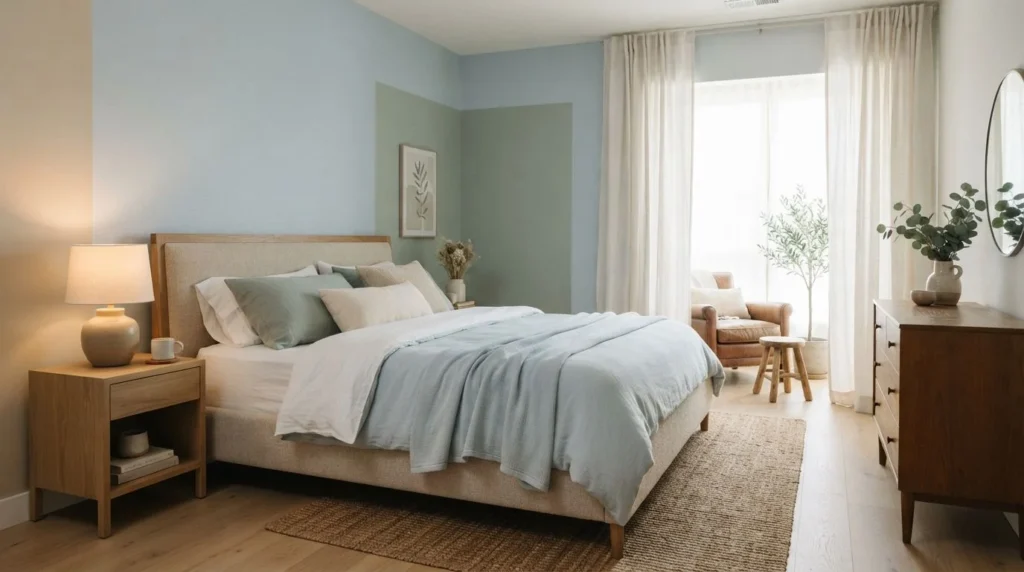
A peaceful bedroom starts with colors that feel comfortable rather than overwhelming. Soft, muted shades are often easier to live with because they create a gentle background for sleeping and relaxing. Color psychology can also influence how a space feels, although personal preference remains important.
Choose Soft and Muted Shades
Calming bedroom colors such as pale blue, sage green, cream, beige, and muted lavender can create a soothing color palette. Avoid choosing a shade only because it is currently popular. A color that feels peaceful to one person may feel too cool, dark, or bright to another.
Consider Warm and Cool Undertones
Warm undertones can make a bedroom feel cozy and inviting, while cool undertones can create a fresh and tranquil atmosphere. Neutral colors offer a balanced option. Always compare paint samples with your furniture and flooring because undertones can change the appearance of a room.
Think About Natural Light
Natural light can dramatically change bedroom wall colors. A shade may appear brighter near a sunny window and deeper in a darker corner. Check your preferred color at different times of day before painting the entire room.
Best Bedroom Color Ideas for a Peaceful Look
Soft Blue for a Calm and Airy Bedroom
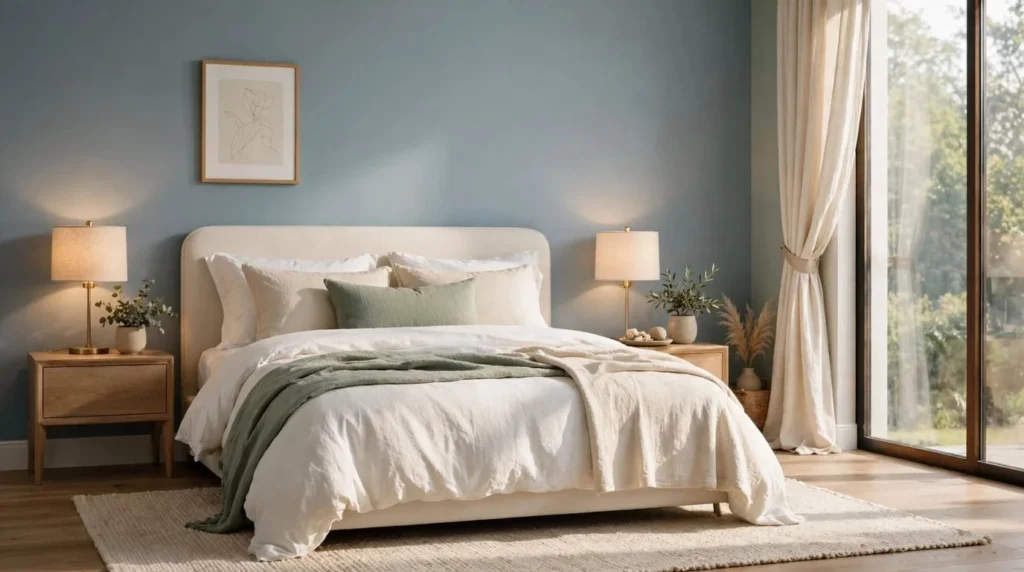
Soft blue is one of the most versatile, relaxing bedroom colors. Powder blue, pale blue, and blue-gray can make a bedroom feel open, fresh, and tranquil without looking too bright.
Pair a soft blue bedroom with white bedding, cream curtains, and natural wood furniture. For a modern appearance, add warm metallic accents or simple black details. Keep the rest of the palette understated so the blue remains the relaxing focal point.
Sage Green for a Natural and Restful Feel
A sage green bedroom brings a subtle connection to nature. Its muted appearance works especially well with cream, beige, natural wood, and woven textures.
Sage green is also a natural fit for Japandi, Scandinavian, minimalist, and biophilic design. Use it across all four walls for a calm effect, or introduce it through an accent wall if you prefer a more subtle change.
Warm Beige for a Cozy and Timeless Bedroom
Warm beige is an excellent choice when you want a comfortable bedroom that will not quickly feel dated. Its warm neutral character works with wood furniture, cream bedding, brown accents, and soft textiles.
This shade can work particularly well in rooms with limited natural light. To prevent a beige bedroom from feeling flat, combine different textures such as linen, cotton, wool, wood, and woven accessories.
Creamy White for a Light and Serene Space
Creamy white creates an airy bedroom while offering more warmth than stark white. It is especially useful when you want flexibility because it works with modern, Scandinavian, minimalist, and traditional interiors.
Pair cream walls with warm lighting, textured bedding, natural wood, and subtle artwork. This combination creates a soft white bedroom that feels clean without becoming cold.
Blue-Gray for a Sophisticated and Peaceful Look
Blue-gray combines the calm character of blue with the sophistication of gray. It is a strong choice for a modern bedroom where you want color without using an intense shade.
Pair blue-gray walls with ivory, white, light wood, or warm beige. If the room receives plenty of natural light, this shade can create a balanced and peaceful environment.
Taupe for a Grounded and Relaxing Atmosphere
Taupe sits between gray and brown, giving it more depth than traditional beige. It can make a bedroom feel grounded, sophisticated, and comfortable.
Use taupe with cream bedding, natural wood, soft white curtains, or muted green accessories. It is particularly effective when you want a neutral bedroom with a little more visual richness.
Muted Lavender for a Soft and Elegant Bedroom
Muted lavender can introduce a gentle hint of color without the intensity of bright purple. Choose a dusty or gray-toned lavender for a more restful appearance.
Combine it with cream, soft white, beige, or light gray. Keep accessories simple to prevent the room from feeling overly decorative.
Olive Green for an Earthy Bedroom
Olive green is a deeper alternative to sage. It creates a cozy, earthy atmosphere and works beautifully with warm neutrals and natural materials.
Use olive on an accent wall if you have a small room, or use it throughout a larger bedroom for a more enveloping effect. Natural wood and cream-colored textiles help soften its deeper tone.
Dusty Mauve for a Warm and Gentle Feel
Dusty mauve provides a soft alternative to stronger pink shades. Its muted character works well in elegant bedrooms and pairs naturally with cream, taupe, beige, and warm white.
Use mauve on walls or through bedding, curtains, and decorative accessories. Keeping the shade muted helps maintain a peaceful atmosphere.
Peaceful Bedroom Color Combinations
Individual colors are useful, but bedroom color combinations can create a more complete and coordinated palette.
- Sage green + cream: Natural, soft, and timeless.
- Soft blue + white: Fresh, airy, and calming.
- Beige + warm white: Cozy, simple, and versatile.
- Taupe + dusty mauve: Warm, sophisticated, and gentle.
- Blue-gray + ivory: Modern and balanced.
- Olive green + beige: Earthy and nature-inspired.
- Lavender + soft gray: Elegant and understated.
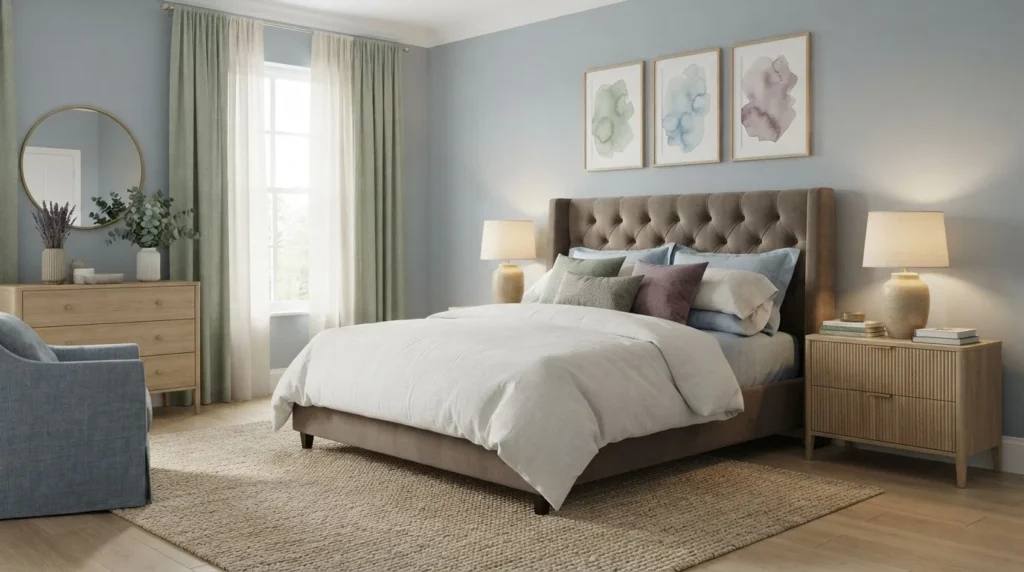
Use one dominant color, one supporting shade, and a small number of accent colors. This prevents the bedroom from looking visually busy.
How Lighting Changes Bedroom Colors
Lighting should always be considered when choosing bedroom paint colors. Bright, sunny bedrooms can handle muted cool tones such as soft blue, sage, and blue-gray. Darker rooms often benefit from warm beige, cream, soft white, and warm taupe.
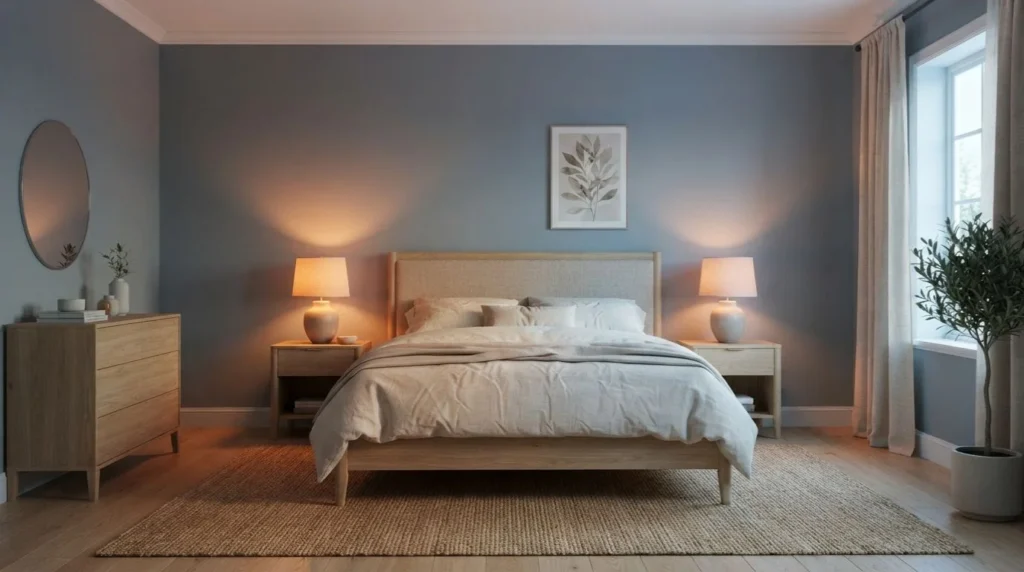
Do not judge a paint color from a screen alone. Place physical samples near windows and observe them in the morning, afternoon, and evening. Artificial lighting can also change how undertones appear, so check the color under your bedroom’s actual light sources. The U.S. Department of Energy explains how warm and cool light are associated with different color temperatures, which can affect how lighting appears in a room.
Best Bedroom Colors for Small or Dark Rooms
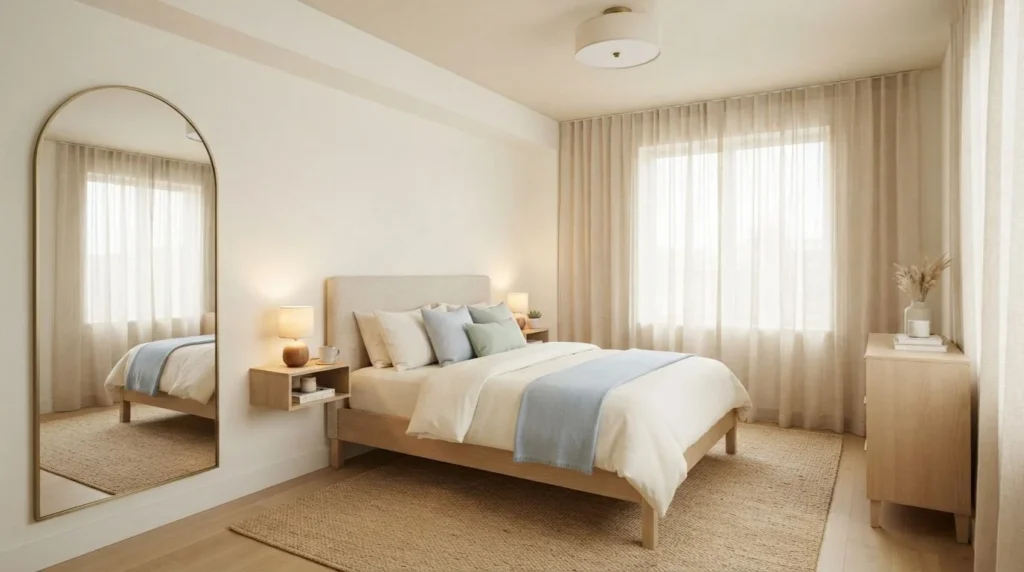
Light and soft colors can help a small bedroom feel more open. Cream, soft white, pale blue, light sage, and warm beige are useful options when you want to maintain an airy appearance.
You can add depth without overwhelming the room by using one accent wall, keeping the ceiling lighter, adding mirrors, and using layered lighting. Avoid filling a small bedroom with too many strong colors or large decorative elements.
For more space-saving inspiration, explore our Small Bedroom Design Ideas that save space guide.
Bedroom Colors for Different Design Styles
Modern Bedroom
Choose blue-gray, warm white, taupe, or soft beige. Keep furniture streamlined and accessories simple.
Scandinavian Bedroom
Soft white, pale blue, and light beige work beautifully with natural wood and simple textiles.
Japandi Bedroom
Sage green, warm beige, taupe, and earthy brown create the calm, natural palette associated with Japandi design.

Cozy Bedroom
Warm beige, cream, olive, and dusty mauve can make the space feel welcoming and comfortable.
Minimalist Bedroom
Use soft white, cream, beige, or light gray with limited decoration and clean furniture lines.
How to Choose the Right Bedroom Color
Choosing a bedroom color becomes easier when you follow a simple process:
- Decide on the mood: Choose whether you want peaceful, cozy, fresh, elegant, or earthy.
- Check natural light: Notice whether your bedroom is bright, balanced, or low-light.
- Consider existing furniture: Coordinate the walls with your bed, wardrobe, flooring, curtains, and bedding.
- Choose two or three samples: Compare several shades rather than selecting the first color you like.
- Test before painting: Observe samples at different times of day.
- Coordinate accessories: Repeat your chosen colors through bedding, rugs, curtains, and artwork.
Consider how the color makes you feel before choosing it for your walls. Color psychology can help explain why certain shades are often associated with calmness, comfort, or energy, but your personal preference should remain the main guide.
Bedroom Color Mistakes to Avoid
Choosing a bedroom color without testing it is one of the most common mistakes. Lighting can make the same paint look completely different from the sample shown online.
Also avoid using too many intense colors together. Pay attention to undertones, especially with beige, gray, and white. You do not need to match every item exactly; complementary shades usually create a more natural result. Before buying your supplies, you can estimate the exact coverage you need with a paint calculator.
Finally, do not choose a trendy color without considering your room. The best bedroom color ideas should suit your lighting, furniture, room size, and personal taste.
Final Thoughts
The right bedroom color can make your space feel more peaceful, comfortable, and personal. Soft blue, sage green, warm beige, cream, taupe, blue-gray, and muted shades are versatile choices for creating a restful atmosphere. However, there is no single perfect color for every bedroom. Consider natural light, room size, furniture, and design style before choosing your palette. With thoughtful bedroom color combinations, soft lighting, and coordinated textures, you can create a relaxing retreat that feels inviting every day.
FAQs
What is the most peaceful color for a bedroom?
Soft blue, sage green, and warm neutral shades are popular choices for peaceful bedrooms. Their muted appearance can create a calm and comfortable atmosphere. However, the most peaceful color is ultimately the one that suits your preferences and works well with your bedroom’s lighting.
What colors are best for a relaxing bedroom?
Soft blue, sage green, cream, warm beige, taupe, and muted lavender are excellent choices. Rather than focusing only on the color family, choose softer shades with balanced saturation. Combining these colors with warm lighting and comfortable textures can further support a relaxing environment.
What color makes a bedroom feel cozy?
Warm beige, cream, taupe, olive green, and other earthy bedroom colors can make a space feel cozy. Warm lighting, natural wood, layered bedding, and textured fabrics can strengthen this effect without requiring a dark wall color.
What are the best bedroom colors for small rooms?
Soft white, cream, pale blue, light sage, and warm beige can help small bedrooms feel brighter and more spacious. A lighter ceiling, mirrors, uncluttered furniture, and layered lighting can also improve the overall sense of space.
Should bedroom walls be warm or cool colors?
Both can work. Warm colors such as beige and cream create a cozy atmosphere, while cool colors such as soft blue and sage can feel fresh and tranquil. Consider your natural light and existing furniture before choosing between warm and cool tones.
How do I choose a bedroom paint color?
Start by deciding the mood you want, then consider natural light, room size, furniture, flooring, and bedding. Test two or three paint samples on the wall and observe them throughout the day before making your final decision.