

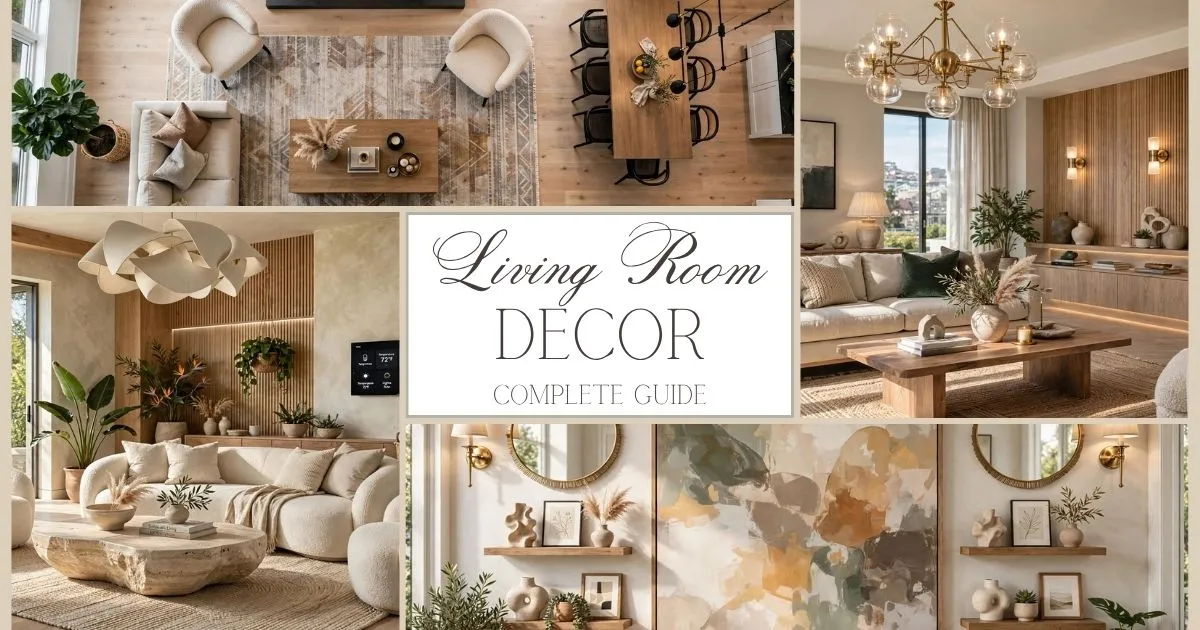
Looking for the best living room decor ideas? A well-designed living room combines comfortable furniture, a balanced color palette, layered lighting, eye-catching wall decor, and carefully chosen accessories to create a stylish yet functional space. Whether you’re decorating a small apartment or a spacious family room, thoughtful design choices can improve comfort, maximize space, and reflect your personal style.
Table of Contents
- Why Is the Living Room So Important?
- How Do You Choose the Right Living Room Style?
- What Furniture Does Every Living Room Need?
- How Can You Arrange Furniture for Better Flow?
- Which Color Palette Works Best?
- How Can Lighting Transform Your Living Room?
- What Wall Décor Makes the Biggest Impact?
- Which Decorative Accessories Complete the Space?
- How Can You Decorate a Small Living Room?
- What Are the Latest Living Room Décor Trends?
- How Can You Decorate on a Budget?
- What Common Decorating Mistakes Should You Avoid?
- Final Thoughts
- Frequently Asked Questions
Why Is the Living Room the Heart of Your Home?
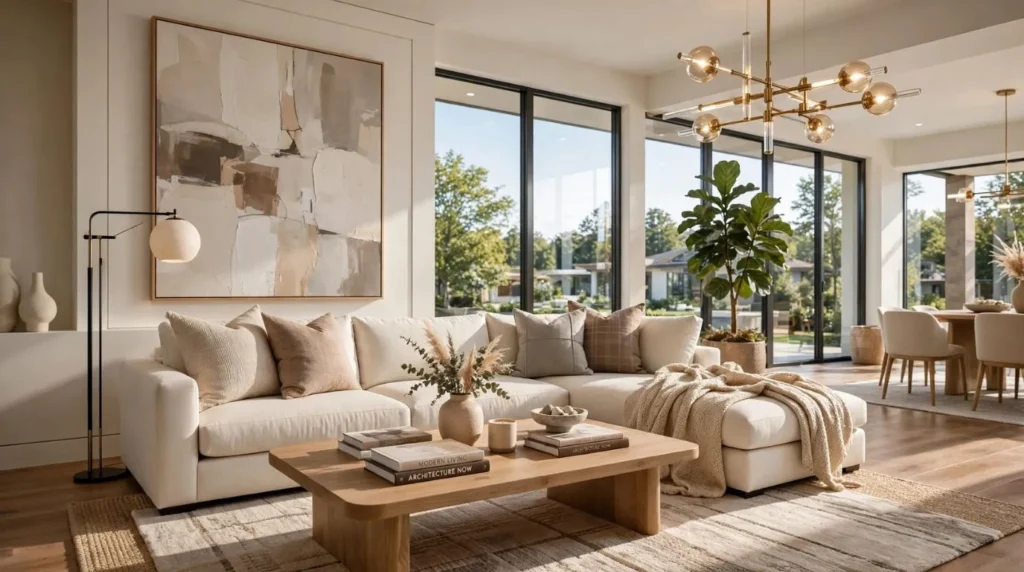
The living room is more than just a place to sit; it is where everyday life happens. Families gather to relax, friends come together for conversations, and guests often form their first impression of your home here. Thoughtful living room decor ideas help create a welcoming atmosphere that balances comfort, functionality, and style.
Whether you prefer modern living room decor, a cozy farmhouse look, or a minimalist design, the right combination of furniture, lighting, colors, and decorative accessories can completely transform the space. Decorating with purpose ensures your living room is both practical and visually appealing.
Why Does Living Room Design Matter?
A beautifully designed living room offers more than aesthetic appeal. It supports your daily routine while creating a comfortable environment for everyone in your home.
A well-planned living room interior design can:
- Create a warm and inviting first impression
- Improve comfort for family gatherings
- Make entertaining guests easier
- Increase the functionality of your space
- Reflect your personality and lifestyle
- Enhance your home’s overall value
Even simple updates like replacing throw pillows, adding an area rug, or introducing layered lighting can give your room a fresh new look without a complete renovation.
What Makes a Living Room Feel Balanced?
The best living room decorating ideas focus on achieving harmony between beauty and functionality.
A balanced room usually includes the following:
- Comfortable seating arranged for conversation
- A clear focal point, such as a fireplace, TV unit, or statement wall
- Consistent color coordination
- Proper furniture spacing for easy traffic flow
- Decorative accessories used in moderation
- A mix of textures through rugs, cushions, curtains, and natural materials
Instead of filling every corner with furniture, leave enough open space to create a calm and inviting atmosphere. Visual balance often makes a room feel larger and more relaxing.
Which Living Room Design Style Matches Your Personality?
Choosing the right design style is one of the most important steps when decorating a living room. Your preferred style influences everything from furniture selection to wall decor, lighting, and accessories. The key is to choose a style that fits both your personality and the way you use your space.
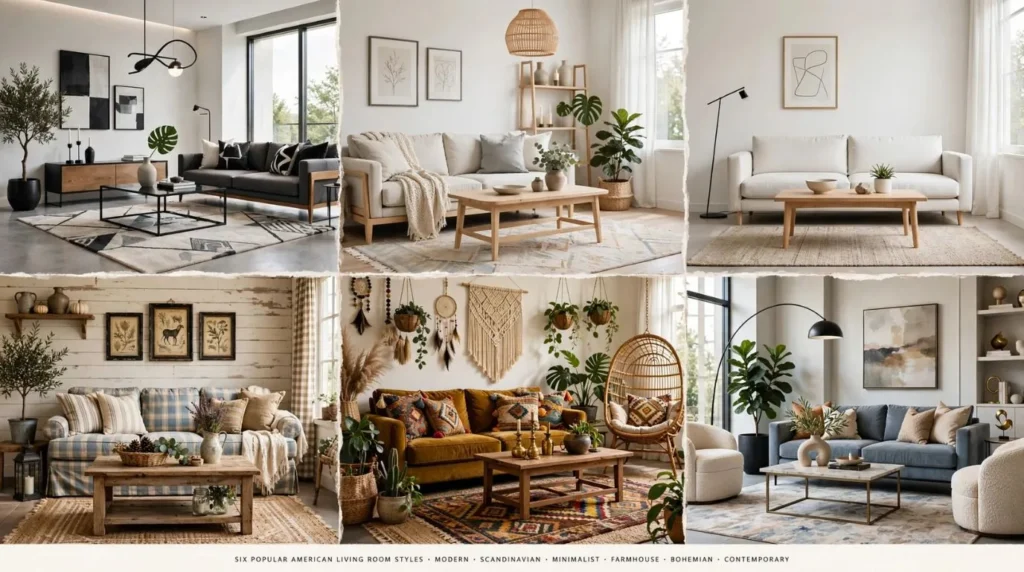
Here are some of the most popular living room design ideas for today’s homes.
Modern Living Room
A modern living room emphasizes clean lines, functional furniture, and clutter-free spaces. Neutral color palettes such as white, gray, beige, and black create a timeless look, while sleek furniture and minimalist décor maintain a sophisticated appearance.
Common features include:
- Modular or sectional sofas
- Glass or wood coffee tables
- Metal accents
- Large canvas wall art
- Smart lighting
- Minimal decorative accessories
Modern interiors work especially well in apartments and open-concept homes because they create an airy, spacious feel. Looking for more inspiration? Explore our collection of modern living room ideas for layouts, furniture, and decorating tips.
Scandinavian Style
Scandinavian design combines simplicity, comfort, and natural beauty. It relies on soft neutral colors, warm wood finishes, and plenty of natural light to create a cozy atmosphere.
Key elements include the following:
- White or light gray walls
- Wooden furniture
- Soft area rugs
- Linen curtains
- Indoor plants
- Woven baskets
- Simple decorative accents
This style is ideal for anyone looking for cozy living room ideas without overwhelming the space. If you’d like to learn more about Scandinavian interior design principles, this resource explains the style’s origins and defining characteristics.
Minimalist Living Room
Minimalism follows the philosophy that less is more. Every piece of furniture serves a purpose, while unnecessary decorations are removed to create a clean, peaceful environment.
Choose:
- Neutral color palettes
- Streamlined sofas
- Hidden storage
- Floating shelves
- Simple wall art
- Functional lighting
A minimalist living room is easy to maintain and works particularly well in smaller homes where maximizing space is important.
Farmhouse Style
Farmhouse interiors combine rustic charm with modern comfort. Natural wood finishes, cozy textiles, and timeless vintage accents bring warmth and comfort to a family-friendly living space.
Popular farmhouse features include:
- Neutral walls
- Wooden coffee tables
- Comfortable oversized sofas
- Decorative lanterns
- Cotton throw blankets
- Rustic shelving
- Ceramic vases
- Black metal accents
This timeless style remains one of the most popular choices for family living rooms.
Bohemian Living Room
Boho interiors celebrate creativity, texture, and individuality. Instead of matching every piece perfectly, this style embraces layered colors, handcrafted décor, and natural materials.
You can achieve the look by incorporating the following:
- Patterned throw pillows
- Layered rugs
- Macramé wall hangings
- Indoor plants
- Vintage furniture
- Woven baskets
- Decorative cushions
- Earth-tone color palettes
Bohemian spaces feel relaxed, artistic, and full of personality.
Mid-Century Modern
Mid-century modern design blends timeless furniture with clean architectural lines. Furniture typically features tapered wooden legs, organic shapes, and functional layouts.
Typical characteristics include the following:
- Walnut furniture
- Leather accent chairs
- Geometric patterns
- Statement lighting
- Warm wood finishes
- Simple décor with bold accent colors
This style pairs beautifully with modern homes while maintaining a classic appearance.
Contemporary Living Room
Unlike modern design, contemporary interiors evolve with current trends. They combine comfort, elegance, and innovation while maintaining a clean aesthetic.
Common design features include:
- Curved furniture
- Mixed textures
- Statement lighting
- Neutral palettes with bold accents
- Large decorative mirrors
- Sculptural décor pieces
Contemporary spaces are flexible and easy to update as new design trends emerge.
Luxury Living Room
Luxury doesn’t necessarily mean spending more; it means selecting high-quality materials and creating a polished, sophisticated look.
Luxury living rooms often include the following:
- Premium sectional sofas
- Marble coffee tables
- Oversized artwork
- Designer lighting fixtures
- Velvet accent chairs
- Layered textiles
- Decorative trays and coffee table books
- Elegant chandeliers
Focus on quality over quantity to create a refined space that feels inviting rather than overwhelming.
What Furniture Should Every Living Room Include?
The right furniture forms the foundation of every beautiful living room. Instead of filling the room with unnecessary pieces, choose furniture that offers both comfort and functionality. Investing in quality essentials helps create a space that remains stylish for years while adapting to your changing needs.
Choosing the Right Sofa
The sofa is the centerpiece of your living room, making it one of the most important furniture investments. Select a size that fits your space comfortably without making the room feel crowded. For larger families, a sectional sofa provides generous seating, while apartments and compact spaces benefit from slim-profile or modular sofas.
When selecting a sofa, consider:
- Room size and layout
- Fabric durability and ease of cleaning
- Neutral colors for long-term flexibility
- Seat depth and cushion comfort
- Overall style that complements your décor
Timeless shades like beige, gray, ivory, and taupe pair easily with seasonal accessories and changing design trends. If you’re shopping for new furniture, our Furniture Buying Guide can help you compare materials, sizes, and styles before making a purchase.
Accent Chairs That Add Character
Accent chairs do more than provide extra seating; they introduce personality, texture, and visual interest. A pair of matching chairs creates symmetry, while a bold statement chair can become a striking focal point.
Popular choices include:
- Leather lounge chairs
- Upholstered accent chairs
- Swivel chairs
- Wooden Scandinavian chairs
- Modern boucle chairs
- Recliners for family rooms
Position accent chairs near the sofa to encourage conversation and maintain a balanced furniture arrangement.
Coffee Tables That Combine Style and Function
A coffee table anchors the seating area while offering practical storage and display space. The ideal coffee table should leave enough room to move comfortably around it while remaining easily accessible from every seat.
Popular materials include:
- Solid wood
- Glass
- Marble
- Metal
- Mixed wood and metal designs
Style your coffee table with a few carefully chosen accessories rather than overcrowding it. A decorative tray, coffee table books, a ceramic vase, or a scented candle creates an elegant, curated look.
TV Units and Media Consoles
Today’s media consoles do much more than support a television. Media consoles keep entertainment areas neat by storing electronics, hiding visible wires, and offering space for books, gaming equipment, and decorative pieces.
Choose a TV unit that:
- Matches your furniture style
- Is wider than your television
- Offers closed storage to reduce visual clutter
- Includes cable management features
- Provides display space for decorative accents
A well-designed media console keeps your entertainment area functional without compromising the room’s overall aesthetic.
Storage Solutions for Clutter-Free Living
An organized living room instantly feels more spacious and inviting. Smart storage furniture helps keep everyday items neatly tucked away while enhancing your décor.
Consider adding:
- Storage ottomans
- Console tables with drawers
- Built-in shelving
- Floating shelves
- Accent cabinets
- Bookshelves
- Woven baskets
- Nesting tables
These pieces provide practical storage without making the room feel crowded.
Living Room Furniture Checklist
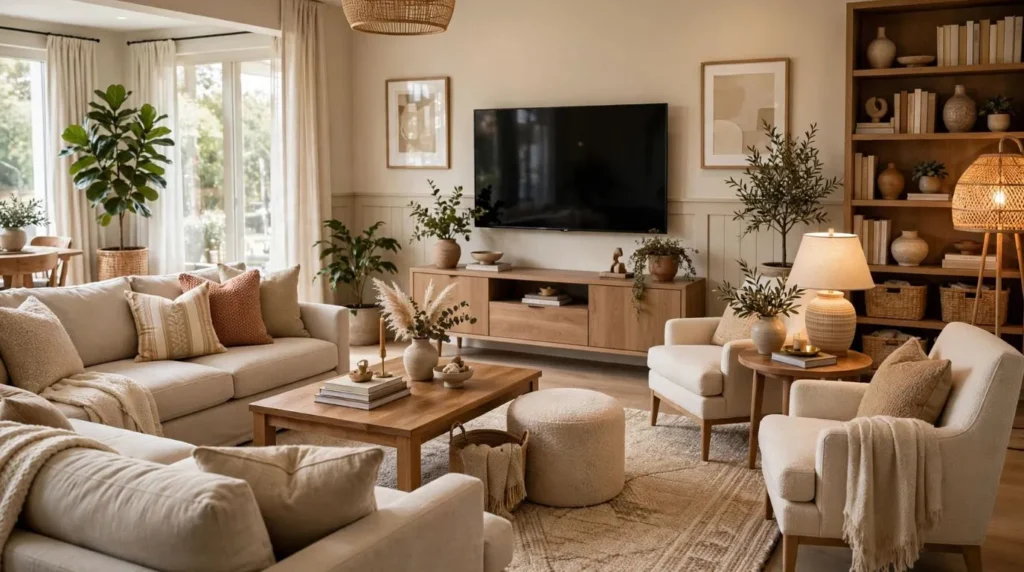
Every living room doesn’t require dozens of furniture pieces. Start with the essentials:
- Comfortable sofa or sectional
- Coffee table
- Accent chairs
- Side tables
- TV unit or media console
- Ottoman (optional)
- Console table
- Area rug
- Bookshelves or floating shelves
- Storage baskets
Selecting quality furniture that serves multiple purposes creates a stylish and functional living room for everyday use.
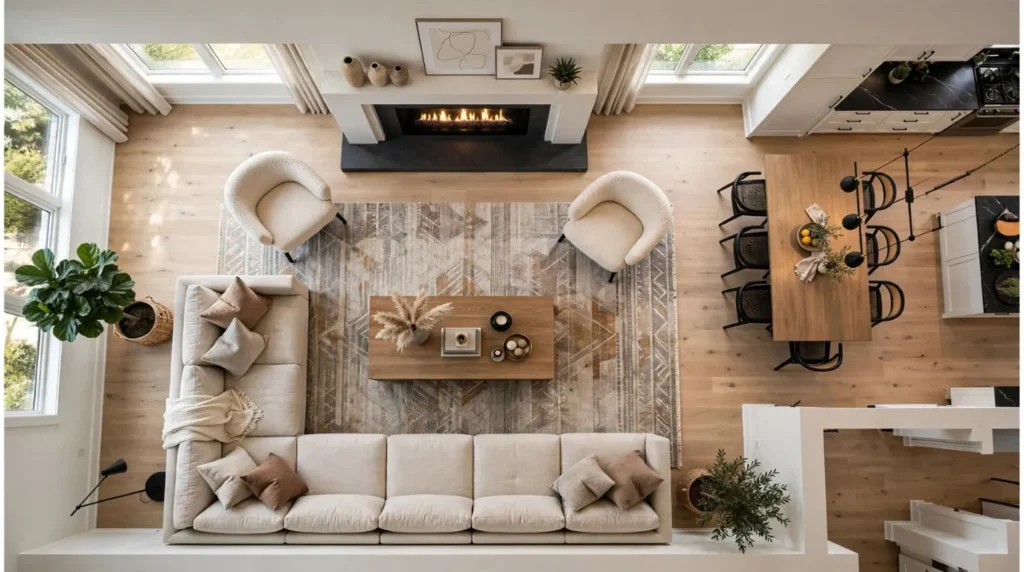
How Can You Arrange Furniture Like a Professional Designer?
Even the most beautiful furniture can look out of place if it’s arranged poorly. A thoughtful layout improves comfort, supports conversation, and makes the room feel larger. Before moving furniture into place, identify your room’s focal point and plan around it.
Create a Comfortable Conversation Area
A welcoming living room encourages interaction. Arrange seating so people can comfortably talk without raising their voices across the room.
To create an inviting conversation zone:
- Arrange sofas and chairs to face one another whenever the room layout allows.
- Keep seating within a comfortable conversational distance.
- Place a coffee table in the center for easy access.
- Add side tables beside seating for convenience.
This arrangement works well whether your focal point is a fireplace, large window, or entertainment center.
Improve Traffic Flow
A common decorating mistake is blocking natural walkways with oversized furniture. Make sure the room layout allows easy movement without forcing people to navigate around furniture or clutter.
For better traffic flow:
- Leave clear walking paths between furniture.
- Avoid placing large pieces directly in entryways.
- Keep frequently used areas open.
- Use rugs to define zones without interrupting movement.
A well-planned layout makes the room feel comfortable and organized.
Make the Most of Small Spaces
Small living rooms require furniture that maximizes functionality without creating visual clutter. Choose pieces with slim profiles and multiple uses to make every square foot count.
Helpful ideas include:
- Storage ottomans
- Floating shelves
- Wall-mounted TV units
- Foldable side tables
- Compact sectional sofas
- Nesting tables
Mirrors and light-colored furniture can also make a small room appear larger by reflecting natural light.
Layout Tips for Large Living Rooms
Large living rooms offer flexibility but can feel empty if furniture is pushed against every wall. Instead, divide the space into functional zones.
You can create separate areas for:
- Conversation
- Entertainment
- Reading
- Family activities
Anchor each zone with an area rug while maintaining enough open space to connect the entire room.
Professional Furniture Arrangement Tips
Keep these designer-approved principles in mind:
- Create one clear focal point.
- Balance furniture across the room.
- Avoid blocking windows and walkways.
- Leave adequate spacing between furniture pieces.
- Use rugs large enough to anchor the seating area.
- Mix different furniture heights for visual interest.
A thoughtful furniture layout improves both comfort and the overall appearance of your living room.
Which Color Palette Makes a Living Room Look Beautiful?
Color has a powerful influence on how a room feels. The right palette can make a living room appear brighter, larger, warmer, or more relaxing. Before choosing paint, furniture, or accessories, decide on a cohesive color scheme that suits your personal style.
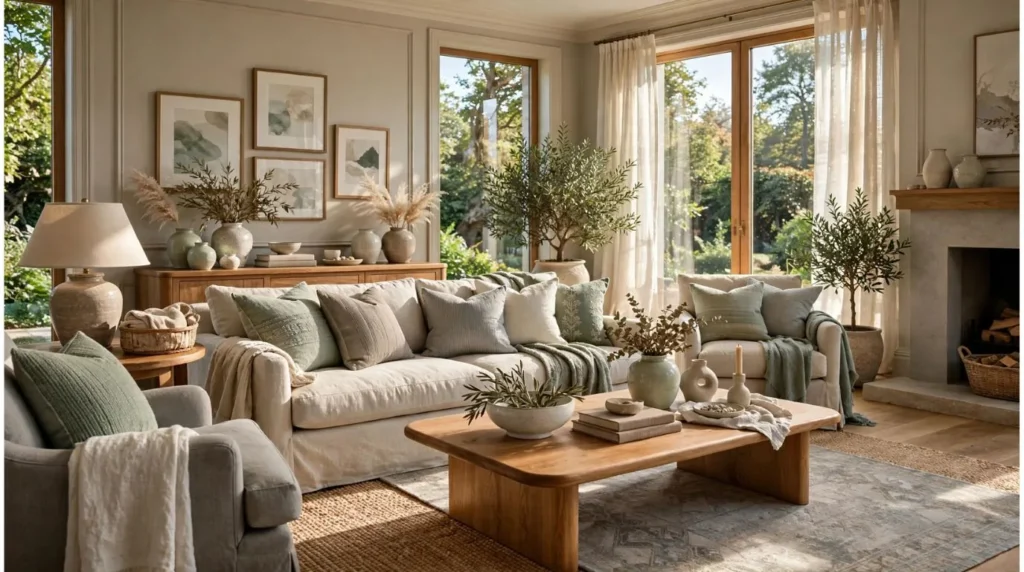
Neutral Color Schemes
Neutral colors remain one of the most popular choices because they create a timeless backdrop that pairs effortlessly with different furniture styles.
Popular neutral shades include:
- White
- Ivory
- Beige
- Gray
- Taupe
- Soft greige
Neutral palettes also make it easy to refresh your décor by simply changing throw pillows, artwork, or seasonal accessories.
Earth-Tone Interiors
Earth tones bring warmth and a natural feel to the living room. Inspired by nature, these colors create a cozy atmosphere that feels welcoming year-round.
Beautiful earth-tone combinations include:
- Sage green
- Olive green
- Terracotta
- Warm brown
- Sand
- Warm wood finishes
These colors work particularly well with woven baskets, indoor plants, linen fabrics, and wooden furniture.
Bold Accent Colors
If your base palette is neutral, bold accents can add personality without overwhelming the space.
Consider introducing:
- Navy blue
- Emerald green
- Mustard yellow
- Charcoal black
- Burnt orange
- Deep burgundy
Use these colors in cushions, artwork, rugs, or decorative accessories for a balanced and sophisticated look.
How to Use the 60-30-10 Color Rule
Professional interior designers often rely on the 60-30-10 rule to create balanced color schemes.
Here’s how it works:
- 60% – Dominant color (walls, large furniture, area rugs)
- 30% – Secondary color (curtains, accent chairs, bedding, larger décor pieces)
- 10% – Accent color (throw pillows, artwork, decorative vases, candles, and accessories)
For example:
- 60%: Warm beige walls and sofa
- 30%: Walnut wood furniture and soft gray curtains
- 10%: Navy blue cushions, artwork, and decorative accessories
This simple formula helps your living room feel cohesive while adding enough contrast to keep the design visually interesting.
How Can Lighting Instantly Upgrade Your Living Room?
Lighting is one of the most overlooked aspects of living room decor ideas, yet it has the power to transform the mood and functionality of your space completely. A well-lit room feels larger, warmer, and more inviting, while poor lighting can make even a beautifully decorated living room feel dull.
Instead of relying on a single ceiling fixture, combine multiple light sources to create depth and flexibility throughout the day.
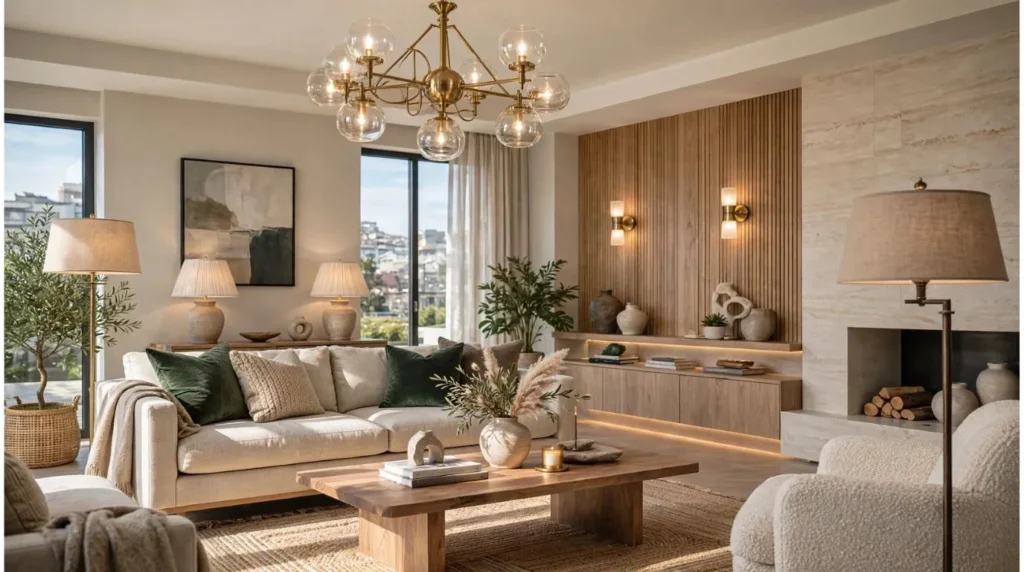
Layered Lighting Explained
Professional designers recommend layered lighting, which combines three types of lighting to achieve a balanced and comfortable environment.
- Ambient lighting: Provides overall illumination through ceiling fixtures, recessed lights, or chandeliers.
- Task lighting: Provides focused illumination for reading, studying, or working using table lamps, floor lamps, or desk lights.
- Accent lighting: Highlights artwork, bookshelves, architectural details, or decorative accessories using wall sconces or LED strip lighting.
Combining these layers creates a warm atmosphere while improving functionality.
Floor Lamps vs. Table Lamps
Both floor lamps and table lamps add style while serving different purposes.
Floor lamps are ideal for:
- Empty room corners
- Reading nooks
- Accent lighting
- Small spaces without side tables
Table lamps work best for:
- Side tables
- Console tables
- Bookshelves
- Layering soft evening light
For a polished look, choose lamp finishes that coordinate with your coffee table, hardware, or other decorative accents.
Pendant Lights and Chandeliers
A statement light fixture instantly becomes a focal point. No matter if your style is modern, farmhouse, or contemporary, the right lighting fixture brings character and charm to your living room.
Popular options include:
- Modern chandeliers
- Pendant lighting
- Sputnik fixtures
- Drum-shade chandeliers
- Rustic wood fixtures
- Minimalist LED pendants
Ensure the fixture is proportional to your room size to maintain visual balance.
Maximizing Natural Light
Natural light makes any living room feel brighter and more spacious. Even if your room has limited windows, a few design choices can maximize daylight.
To increase natural light:
- Hang curtains close to the ceiling.
- Choose sheer window treatments.
- Use decorative mirrors to reflect sunlight.
- Keep window areas uncluttered.
- Select light-colored walls and furniture.
These simple adjustments create an open, airy atmosphere without major renovations.
What Wall Decor Ideas Create a Stunning Focal Point?
Your walls offer endless opportunities to express your personality while adding depth and character to your living room. The best living room wall decor ideas complement your furniture and reinforce your overall design style rather than overwhelming the space.
Gallery Walls
Gallery walls remain one of the most popular decorating trends because they’re highly customizable. Mix artwork, photographs, and decorative objects to tell a visual story.
For a cohesive display:
- Use matching or coordinated frames.
- Maintain even spacing.
- Mix different artwork sizes.
- Choose a consistent color palette.
A gallery wall works well above a sofa, console table, or fireplace.
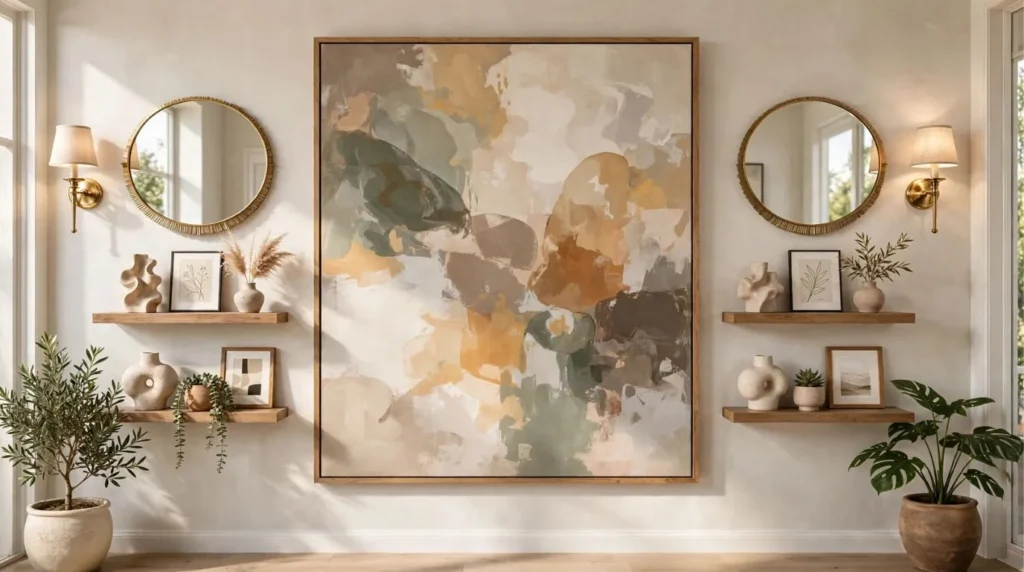
Oversized Wall Art
One large piece of artwork often creates a stronger impact than several smaller pieces. Oversized canvas prints, abstract paintings, or landscape photography instantly draw attention while reducing visual clutter.
Choose artwork that complements your room’s color palette and overall style.
Decorative Mirrors
Mirrors are both functional and decorative. They reflect light, make small rooms appear larger, and add elegance to almost any design style.
Popular mirror styles include:
- Round mirrors
- Arched mirrors
- Black metal frames
- Gold-framed mirrors
- Full-length leaning mirrors
Place mirrors across from windows to reflect more natural light and brighten the room.
Floating Shelves
Floating shelves combine storage with decoration. Instead of displaying everything at once, curate a collection of meaningful objects.
Style shelves with:
- Indoor plants
- Ceramic vases
- Picture frames
- Decorative bowls
- Candles
- Books
- Sculptures
Leave open areas to create a clean and balanced look.
Accent Walls
An accent wall introduces personality without overpowering the room. It can be created using paint, wallpaper, wood paneling, or textured finishes.
Popular accent wall ideas include:
- Sage green paint
- Vertical wood slats
- Stone veneer
- Geometric wallpaper
- Board and batten paneling
- Textured plaster finishes
An accent wall behind the sofa or TV unit naturally becomes the room’s focal point.
Which Decorative Accessories Bring Your Living Room to Life?
Accessories complete the room by adding warmth, texture, and personality. Instead of purchasing many small items, focus on a few high-quality decorative pieces that complement your furniture and color palette.
Throw Pillows
Throw pillows are one of the easiest ways to update your living room throughout the year.
Mix different things:
- Sizes
- Textures
- Patterns
- Fabrics
- Accent colors
Changing pillow covers seasonally offers an affordable refresh without replacing furniture.
Area Rugs
A properly sized area rug anchors your seating arrangement while adding warmth and comfort.
When choosing a rug:
- Ensure the front legs of furniture sit on the rug.
- Select durable materials for high-traffic areas.
- Coordinate colors with your existing décor.
- Introduce subtle patterns for visual interest.
A rug that’s too small is one of the most common decorating mistakes.
Indoor Plants
Plants breathe life into any living room while improving the overall atmosphere.
Easy-care options include:
- Snake Plant
- ZZ Plant
- Pothos
- Rubber Plant
- Peace Lily
- Monstera
If natural plants aren’t practical, quality artificial plants can provide a similar decorative effect.
Decorative Trays
Decorative trays help organize smaller accessories while creating an intentional display.
Arrange items like:
- Candles
- Small vases
- Coasters
- Decorative beads
- Books
- Seasonal accents
Grouping items on a tray keeps surfaces neat and stylish.
Candles and Vases
Candles add warmth and ambiance, while ceramic or glass vases introduce texture and height.
Mix different shapes and heights to create balanced arrangements on coffee tables, shelves, or console tables.
Coffee Table Styling
Avoid overcrowding your coffee table. A simple arrangement often looks more elegant than a crowded display.
A timeless styling formula includes the following:
- A decorative tray
- One or two coffee table books
- A ceramic vase with greenery
- A candle or small sculpture
This combination creates a polished centerpiece while remaining practical.
How Can You Decorate a Small Living Room Without Feeling Crowded?
A small living room doesn’t have to feel cramped. With thoughtful planning and smart furniture choices, even compact spaces can feel open, comfortable, and stylish.
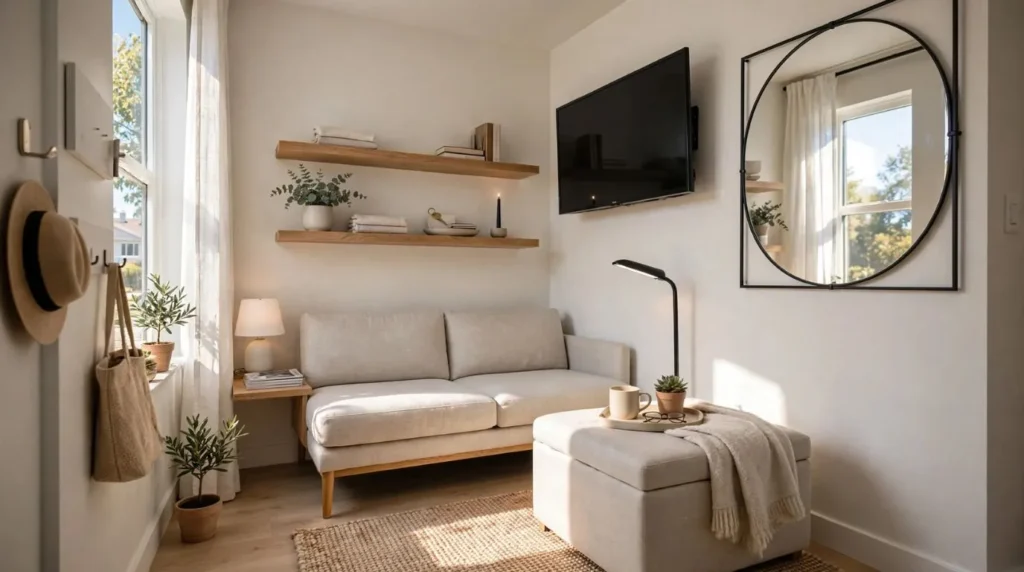
Multi-Functional Furniture
Choose furniture that serves more than one purpose.
Excellent options include:
- Storage ottomans
- Lift-top coffee tables
- Sleeper sofas
- Nesting tables
- Foldable furniture
- Modular seating
These pieces maximize functionality while reducing clutter.
Vertical Storage Ideas
When floor space is limited, use your walls.
Vertical storage solutions include the following:
- Floating shelves
- Wall-mounted cabinets
- Tall bookcases
- Hanging planters
- Ladder shelves
Vertical design elements draw the eye upward, creating the illusion of a taller, more spacious room.
Light Colors That Open Up the Space
Light colors naturally reflect more light and create the illusion of a larger room.
Ideal shades include:
- White
- Soft beige
- Light gray
- Cream
- Pale sage green
Pair these colors with natural lighting for maximum effect.
Mirrors for Visual Depth
Strategically placed mirrors make compact living rooms feel significantly larger.
Place mirrors:
- Opposite windows
- Above the sofa
- Near entryways
- Across from statement lighting
Combined with layered lighting, mirrors create impressive visual depth.
Small Living Room Essentials
- Storage ottoman
- Floating shelves
- Slim-profile sofa
- Foldable side table
- Wall-mounted TV
- Large mirror
- Neutral color palette
What Are the Biggest Living Room Decor Trends This Year?
Modern living room design continues to evolve, focusing on comfort, sustainability, and timeless style rather than short-lived fads.
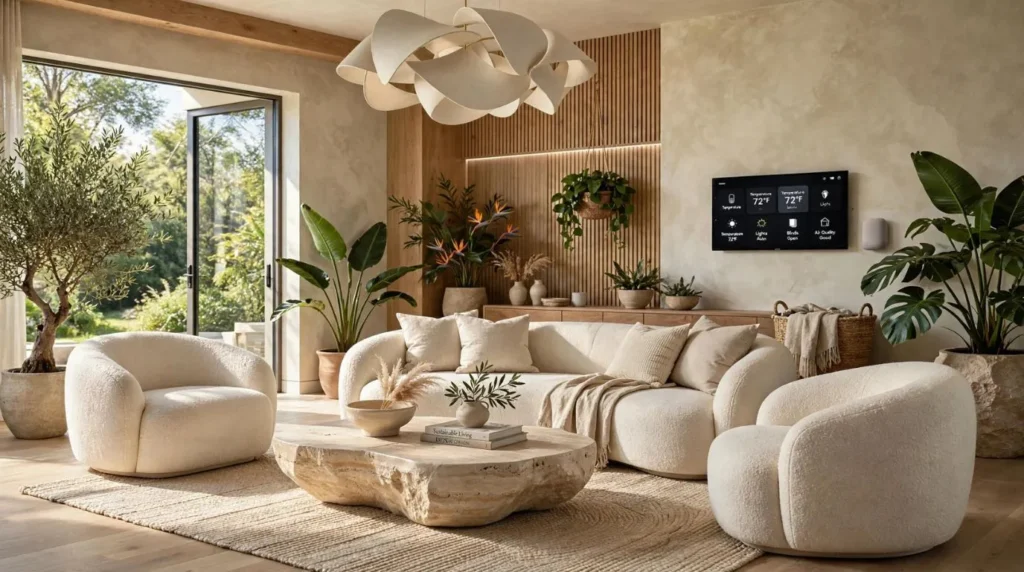
Sustainable Home Decor
Eco-friendly decorating is becoming increasingly popular. Homeowners are choosing:
- Reclaimed wood furniture
- Organic fabrics
- Bamboo accessories
- Recycled materials
- Handmade décor
- Vintage and thrifted pieces
Following sustainable home decorating practices can help reduce waste while creating a healthier living environment.
Biophilic Design
Biophilic design strengthens the connection between indoor spaces and nature.
Bring this trend into your home by adding:
- Indoor plants
- Natural wood furniture
- Stone accents
- Linen textiles
- Large windows
- Earth-tone color palettes
The result is a calming and refreshing living environment.
Smart Living Room Features
Technology is becoming an essential part of modern interior design.
Popular smart upgrades include:
- Smart LED lighting
- Voice-controlled assistants
- Hidden charging stations
- Smart thermostats
- Motorized window shades
- Wireless speakers
These features improve convenience without compromising style.
Curved Furniture
Soft, curved silhouettes are replacing sharp edges in contemporary interiors.
Look for:
- Curved sofas
- Rounded coffee tables
- Circular mirrors
- Arch-shaped shelving
- Curved accent chairs
These shapes create a welcoming and sophisticated atmosphere.
Textured Fabrics
Texture adds depth even in neutral spaces.
Popular materials include:
- Bouclé
- Velvet
- Linen
- Wool
- Woven cotton
- Natural jute
Layering different textures makes the living room feel warm, comfortable, and visually interesting.
How Can You Refresh Your Living Room on a Budget?
Creating a stylish living room doesn’t always require a complete renovation or expensive furniture. With thoughtful planning and a few strategic updates, you can give your space a fresh new look while staying within your budget. Small changes often make the biggest difference.
Affordable Living Room Decor Ideas Under $250
If you’re working with a limited budget, focus on decorative accessories and simple upgrades that instantly improve the room’s appearance.
Ideas under $250 include:
- Replace old throw pillows with textured cushions.
- Refresh the seating area with a stylish rug that clearly defines the space.
- Hang modern wall art or framed prints.
- Introduce indoor plants for a fresh, natural touch.
- Style your coffee table with books, candles, and a decorative tray.
- Update lampshades for a more contemporary look.
- Install floating shelves for extra storage and display space.
These affordable changes can make your living room feel completely refreshed without replacing large furniture pieces.
Living Room Makeover Under $500
With a slightly larger budget, you can make more noticeable improvements that enhance both style and functionality.
Consider:
- Buying a new accent chair.
- Replacing outdated curtains with modern window treatments.
- Installing a statement light fixture.
- Painting an accent wall.
- Upgrading your coffee table.
- Adding a storage ottoman.
- Refreshing your media console styling.
These improvements create a significant visual impact while remaining budget-friendly.
Premium Living Room Upgrade
For homeowners planning a complete makeover, investing in quality furniture and timeless materials offers long-term value.
A premium redesign may include:
- A high-quality sectional sofa
- Custom-built shelving
- Hardwood or luxury vinyl flooring
- Designer lighting
- Large-scale artwork
- Smart home lighting systems
- Premium window treatments
Prioritize durable materials and classic designs that will remain stylish for years.
Easy DIY Weekend Projects
If you enjoy decorating, a few DIY projects can personalize your living room while saving money.
Simple weekend ideas include:
- Paint old picture frames.
- Create your own gallery wall.
- Repaint a side table or console.
- Rearrange furniture for a fresh layout.
- Arrange open shelves with a balanced mix of books, artwork, and decorative accents.
- Make seasonal centerpieces using candles and greenery.
These projects require minimal investment but deliver impressive results.
Which Living Room Decorating Mistakes Should You Avoid?
Even beautiful furniture and expensive décor can fall flat if common decorating mistakes aren’t avoided. Understanding these essential design principles helps you create a balanced, comfortable, and visually appealing living space that feels both functional and inviting.
Buying Furniture Without Measuring
One of the biggest mistakes is purchasing furniture before measuring the room.
Before shopping:
- Measure wall lengths.
- Note window and door locations.
- Consider traffic flow.
- Leave enough clearance around furniture.
Proper planning prevents overcrowding and ensures every piece fits comfortably.
Ignoring Lighting Layers
Relying on one overhead light often makes the room feel flat.
Instead, combine:
- Ambient lighting
- Task lighting
- Accent lighting
Layered lighting creates depth, improves functionality, and makes the space feel warm and inviting.
Choosing Rugs That Are Too Small
A rug that’s too small can make the seating area feel disconnected.
For the best result:
- Place at least the front legs of your sofa and chairs on the rug.
- Choose a rug that defines the entire conversation area.
- Leave a consistent border of flooring around the edges.
A properly sized rug visually anchors the furniture arrangement.
Overcrowding the Room
Adding too much furniture or too many accessories makes a living room feel cramped.
Instead:
- Choose quality over quantity.
- Leave open space around furniture.
- Display only meaningful decorative items.
- Rotate seasonal décor rather than displaying everything at once.
A clutter-free room feels larger and more relaxing.
Hanging Artwork Too High
Artwork should feel connected to the furniture below it.
As a general guideline:
- Hang artwork at eye level.
- Leave approximately 6-10 inches between the artwork and the sofa.
- When creating a gallery wall, maintain even spacing between frames.
Proper placement creates visual harmony throughout the room.
Seasonal Living Room Refresh Ideas
Refreshing your living room throughout the year keeps it feeling inviting without requiring a full makeover.
Spring
- Add fresh flowers and greenery.
- Replace heavy blankets with lightweight throws.
- Introduce pastel or botanical cushions.
- Open curtains to maximize natural light.
Summer
- Use breathable linen fabrics.
- Decorate with coastal-inspired accessories.
- Add woven baskets and light-colored rugs.
- Incorporate blue and white accents.
Fall
- Layer cozy throw blankets.
- Add warm earth-tone pillows.
- Decorate with candles and ceramic vases.
- Introduce wood textures and seasonal foliage.
Winter
- Use chunky knit blankets.
- Add velvet cushions.
- Incorporate warm lighting.
- Decorate with fresh greenery and subtle metallic accessories for a warm winter look.
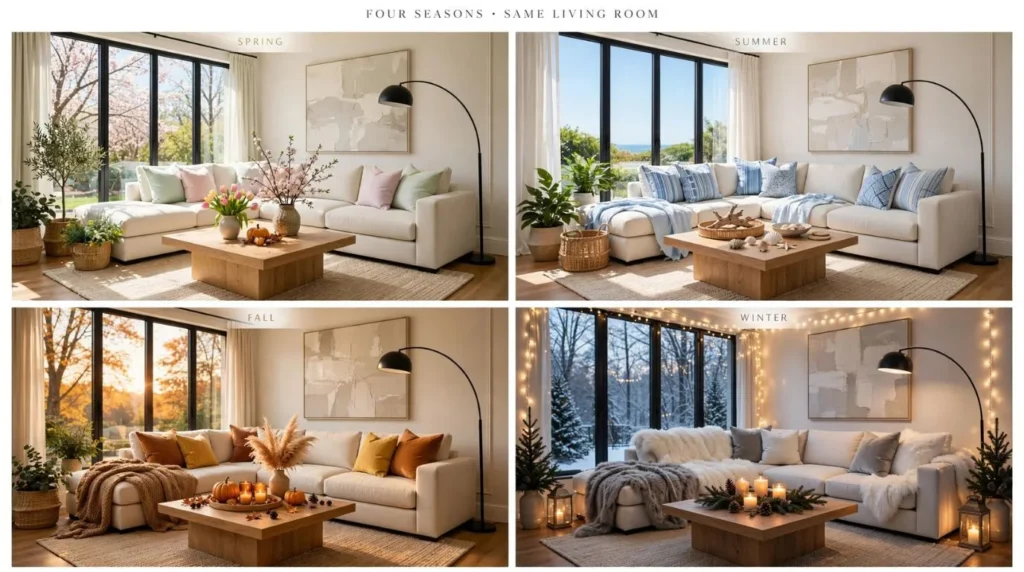
Seasonal updates keep your décor feeling fresh while extending the life of your existing furniture.
Printable Living Room Decorating Checklist
Use this checklist before completing your living room makeover:
- Choose your decorating style.
- Measure the room before buying furniture.
- Select a cohesive color palette.
- Follow the 60-30-10 color rule.
- Arrange furniture around a focal point.
- Layer ambient, task, and accent lighting.
- Add an appropriately sized area rug.
- Decorate walls with artwork or mirrors.
- Include indoor plants or greenery.
- Style the coffee table with decorative accessories. Organize clutter using smart storage solutions.
- Add throw pillows and blankets for comfort.
- Review traffic flow and furniture spacing.
- Finish with personal decorative accents.
Final Thoughts: Create a Living Room You’ll Love
The best living room decor ideas combine thoughtful planning, comfortable furniture, balanced colors, layered lighting, and carefully selected accessories. Rather than following every passing trend, focus on creating a space that reflects your personality while supporting your daily lifestyle.
Whether you’re decorating a compact apartment, updating a family room, or planning a complete living room makeover, remember that great design is built on functionality as much as style. By choosing quality furniture, using the 60-30-10 color rule, maximizing natural light, and incorporating timeless decorative elements, you can create a living room that feels both beautiful and practical.
For more expert decorating inspiration, explore the latest home styling resources on SoftAuraLiving.com, including guides on home decor styles, home decor shopping checklists, wall art ideas, budget home décor, and lighting design. With the right ideas and a clear plan, you can transform any living room into a space you’ll enjoy for years to come.
Frequently Asked Questions
How do I decorate my living room beautifully?
Start by choosing a decorating style and a cohesive color palette. Invest in comfortable furniture, layer different types of lighting, add wall art, incorporate decorative accessories, and finish the space with plants and textiles. Focus on creating a balance between beauty and functionality.
What should every living room have?
Every living room should include comfortable seating, a coffee table, an area rug, layered lighting, storage solutions, wall decor, and decorative accessories such as throw pillows, candles, and indoor plants.
Which colors make a living room look larger?
Light colors such as white, cream, soft gray, beige, and pale sage green reflect more light and create the illusion of a larger, brighter room. Pairing these shades with mirrors further enhances the sense of space.
How can I decorate my living room on a budget?
Refresh your living room by replacing throw pillows, adding affordable wall art, styling your coffee table, introducing indoor plants, updating lighting, rearranging furniture, and shopping second-hand for quality decor pieces.
What is the 60-30-10 decorating rule?
The 60-30-10 rule is a simple interior design guideline where 60% of the room uses a dominant color, 30% features a secondary color, and 10% introduces an accent color through accessories and decor. Using this method brings visual balance and consistency to your space.
How can you create a cozy living room?
Use layered lighting, soft textiles, warm neutral colors, area rugs, decorative cushions, throw blankets, natural wood finishes, scented candles, and indoor plants to create a welcoming atmosphere.