

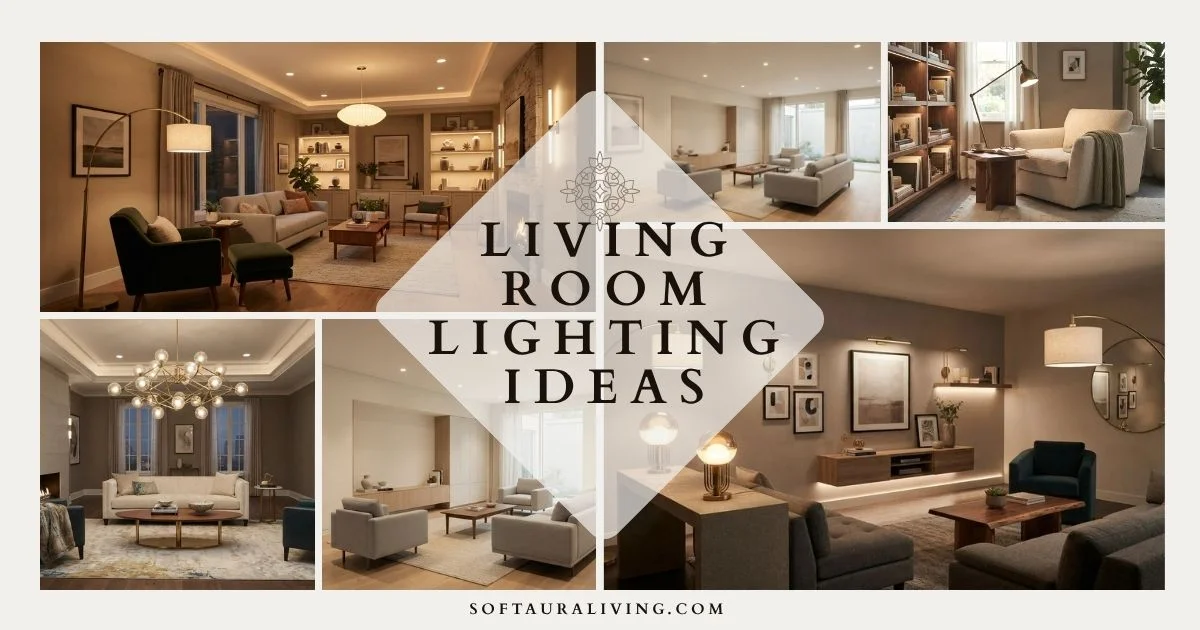
The best living room lighting combines ambient, task, and accent lighting to create a comfortable and functional space. Use ceiling lights or chandeliers for overall illumination, floor and table lamps for reading and everyday activities, and sconces or picture lights to highlight decor. Warm white bulbs around 2700K-3000K can create a cozy atmosphere, while dimmers and smart bulbs make it easy to adjust the lighting for different activities.
Table of Contents
- How to Choose Living Room Lighting
- The 3 Layers of Living Room Lighting
- 15 Living Room Lighting Ideas
- Living Room Lighting Ideas for Different Spaces
- Which Light Color Temperature Works Best
- Living Room Lighting Placement Tips
- How to Create a Cozy Living Room With Lighting
- Common Living Room Lighting Mistakes to Avoid
- FAQs About Living Room Lighting
How to Choose Living Room Lighting
The right living room lighting should balance function, comfort, style, and room size. Start considering how much natural light enters through your windows and where the room tends to feel dark. Then think about how you use the space. A living room used for reading, relaxing, entertaining, and watching TV needs more flexibility than a room used mainly for conversation.
Your ceiling height and furniture arrangement also matter. Large rooms can handle statement chandeliers and multiple fixtures, while smaller spaces often benefit from slim floor lamps, wall sconces, and recessed lighting.
Instead of depending on one overhead fixture, create a balanced lighting scheme with several sources. Energy-efficient LED bulbs, dimmer switches, and smart lighting can also make your living room easier to adapt throughout the day. For a broader approach to decorating, see our home decor guide for practical ideas on coordinating lighting with furniture, colors, and decorative elements.
The 3 Layers of Living Room Lighting
A simple formula for successful living room lighting is:
Ambient + Task + Accent = Balanced Lighting
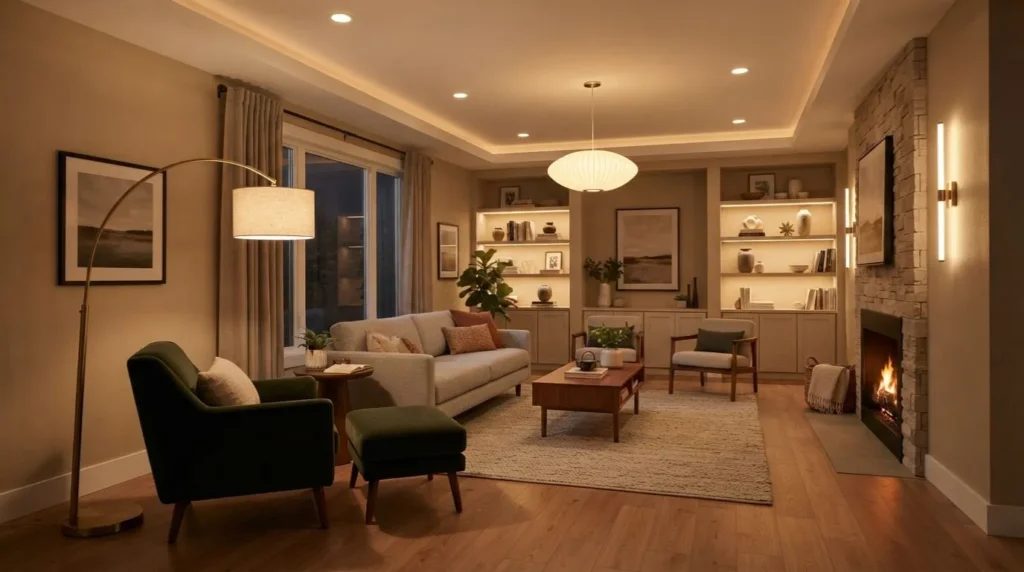
Ambient Lighting
Ambient lighting provides the room’s general illumination. It should make it easy to move around without creating harsh shadows or glare.
Popular options include chandeliers, pendant lights, ceiling fixtures, recessed lighting, and flush-mount lights. Choose the fixture according to your ceiling height, room size, and overall interior style.
Task Lighting
Task lighting delivers targeted light that makes activities such as reading, writing, or working more comfortable and easier to see. It is especially useful around reading chairs, sofas, desks, and other functional areas.
Place a floor lamp beside a sofa or reading chair, or use a table lamp on a side table. Adjustable and swing-arm lamps are particularly useful because you can direct the light where it is needed.
Accent Lighting
Accent lighting adds depth and draws attention to decorative features. Use wall sconces, picture lights, LED strips, or shelf lighting to highlight artwork, built-in shelves, a fireplace, or an accent wall.
This layer is especially effective when you want your living room to feel more sophisticated without making it excessively bright.
15 Living Room Lighting Ideas
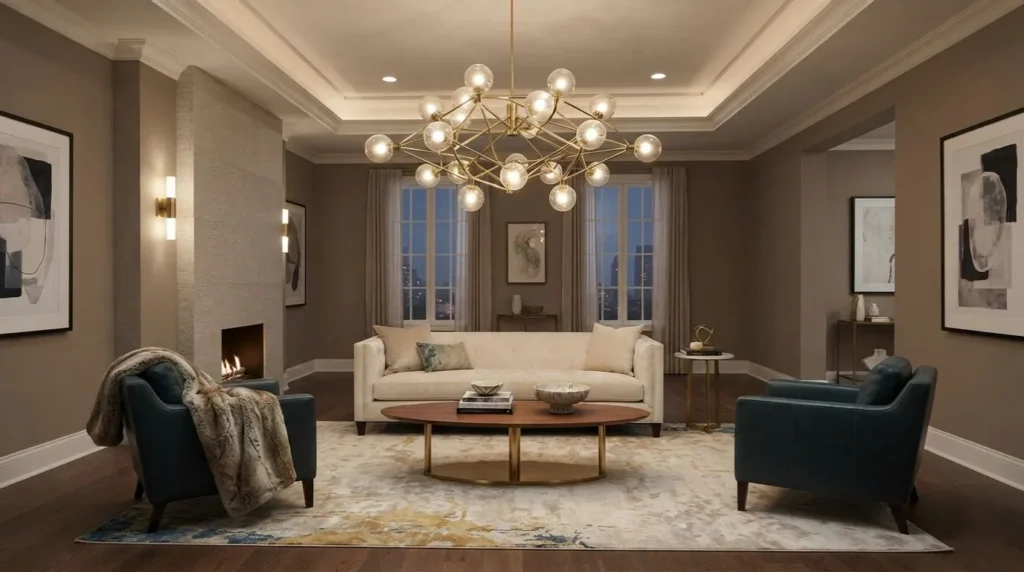
Make a Statement With a Chandelier
A statement chandelier can become the focal point of a large or formal living room. Choose a fixture that complements the furniture and ceiling height without overwhelming the space.
Add a Sculptural Pendant Light
A sculptural pendant works well in modern living room lighting designs. Its shape can add visual interest while providing useful overhead illumination.
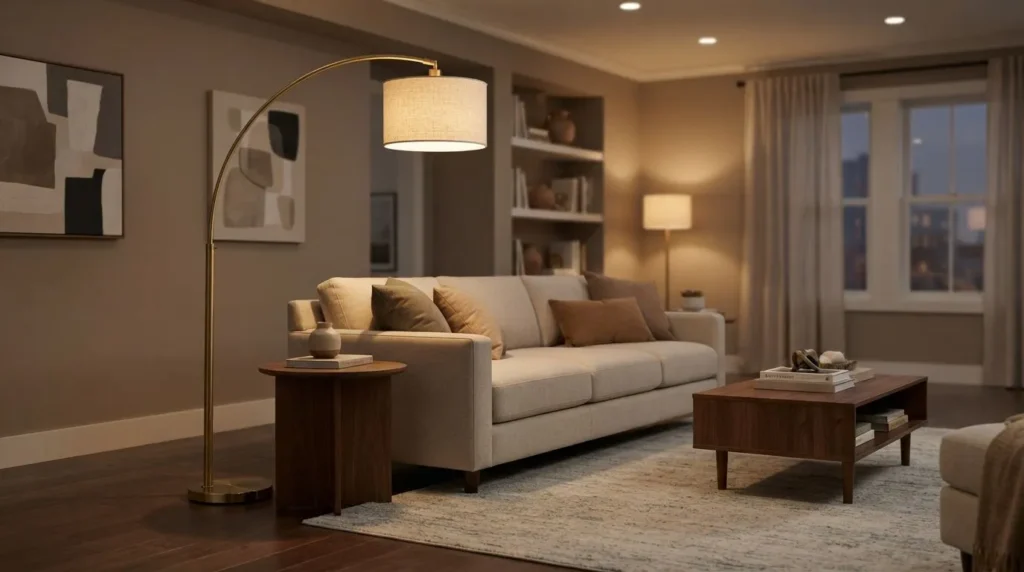
Place a Floor Lamp Beside the Sofa
Floor lamps provide practical task lighting without requiring additional electrical work. An arc lamp can extend over a sofa or chair, while a traditional floor lamp works well beside seating.
Use Table Lamps for Warm, Localized Light
Table lamps are one of the easiest ways to introduce cozy living room lighting. Place them on side tables, consoles, or cabinets to create pools of warm light at eye level.
Install Wall Sconces
Wall sconces provide stylish living room wall lighting while saving valuable floor space. Use them beside artwork, around a fireplace, or near seating areas.
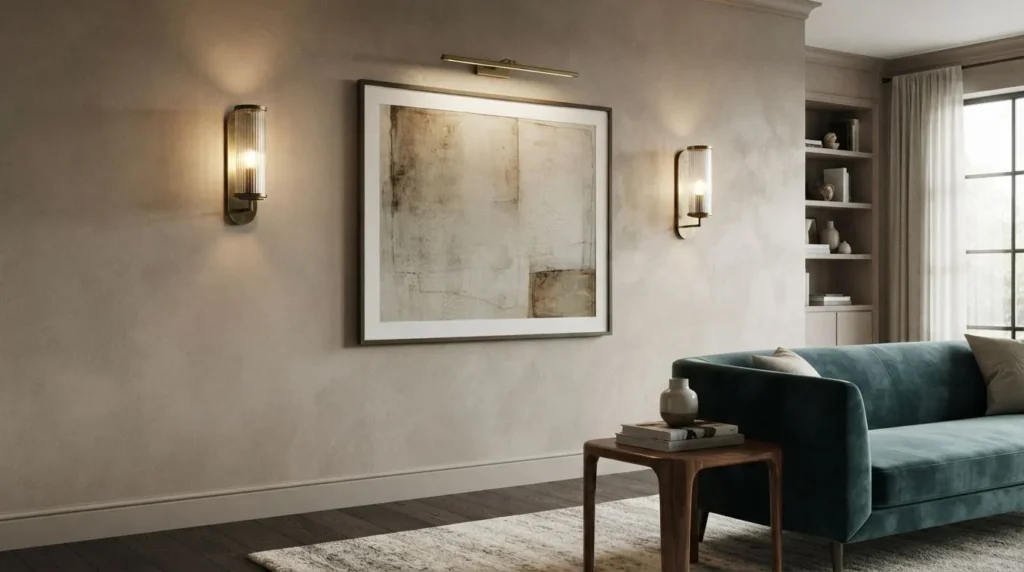
Highlight Artwork With Picture Lights
Picture lights can turn artwork into a focal point. Position the fixture so it illuminates the artwork evenly without creating distracting glare.
Try Recessed Lighting for a Clean Look
Recessed lights are useful for modern and minimalist interiors because they provide illumination without adding visual bulk. Space them thoughtfully to avoid an overly bright or uneven lighting layout.
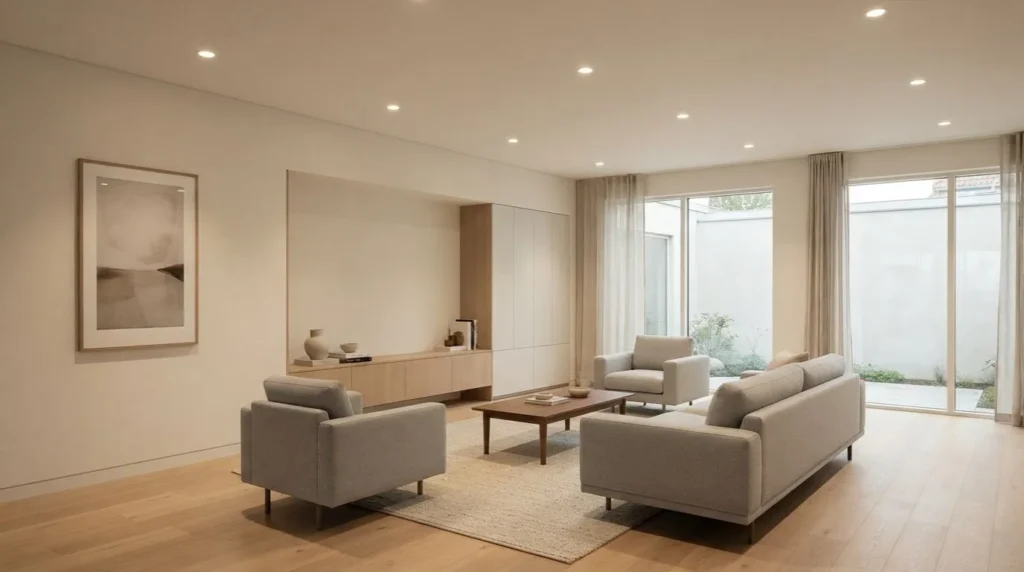
Choose Flush-Mount Lights for Low Ceilings
Flush-mount fixtures sit close to the ceiling, making them practical for rooms with limited vertical space. Select a stylish design to keep the fixture functional and decorative.
Use Arc Floor Lamps
Arc floor lamps are ideal when you want light over a seating area without installing a ceiling fixture. Their curved design also adds a contemporary decorative element.
Illuminate Built-In Shelves
Add small accent fixtures or LED strip lighting inside built-in shelves. Soft illumination can highlight books, artwork, plants, and decorative objects while adding depth.
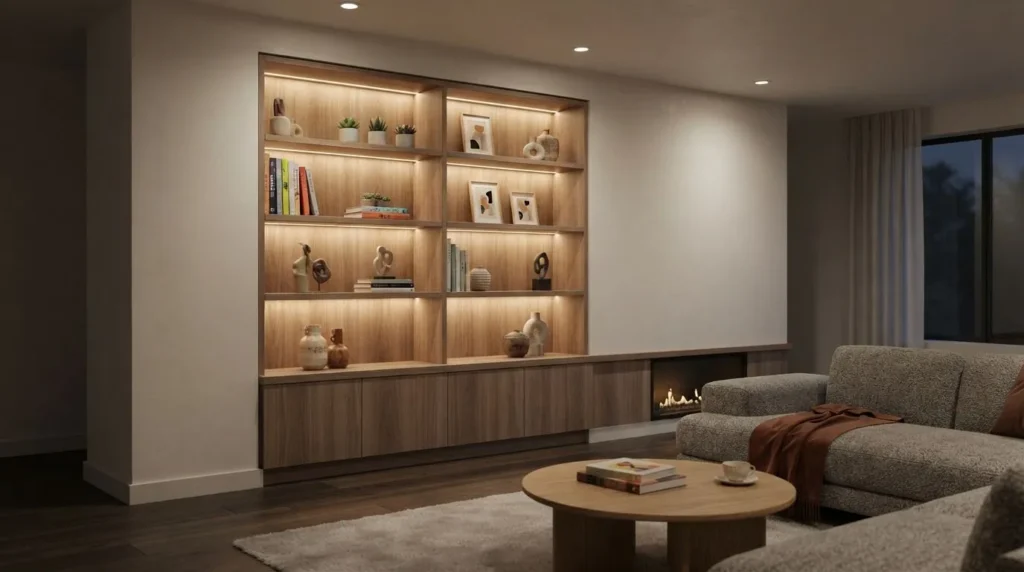
Light Dark Corners
Dark corners can make a living room feel smaller and less inviting. Use a floor lamp, table lamp, or wall light to balance illumination throughout the room and reduce heavy shadows.
Add LED Strip Lighting
LED strips can create subtle indirect lighting beneath shelves, behind cabinets, or around architectural features. They work particularly well as accent lighting rather than the room’s primary source.
Create a Cozy Reading Nook
Combine a comfortable chair with an adjustable floor or reading lamp. Position the light close enough for comfortable reading while avoiding direct glare.
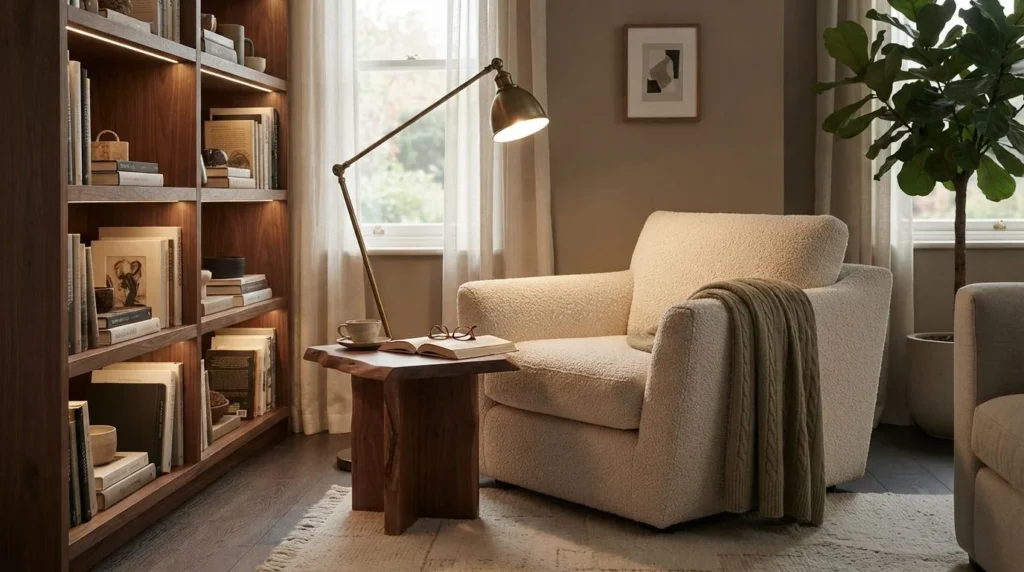
Use Dimmable Lighting
Dimmable lighting lets one room support different moods and activities. Keep the brightness higher for cleaning or entertaining and lower it for relaxing or movie nights.
Try Smart Lighting
Smart bulbs allow you to adjust brightness, color settings, and schedules using an app or compatible voice controls. Create scenes for reading, relaxing, entertaining, or watching TV.
Living Room Lighting Ideas for Different Spaces
Small Living Rooms
For small spaces, choose fixtures that provide useful illumination without taking up too much visual or floor space. Wall sconces, slim floor lamps, recessed lights, and compact table lamps work particularly well.
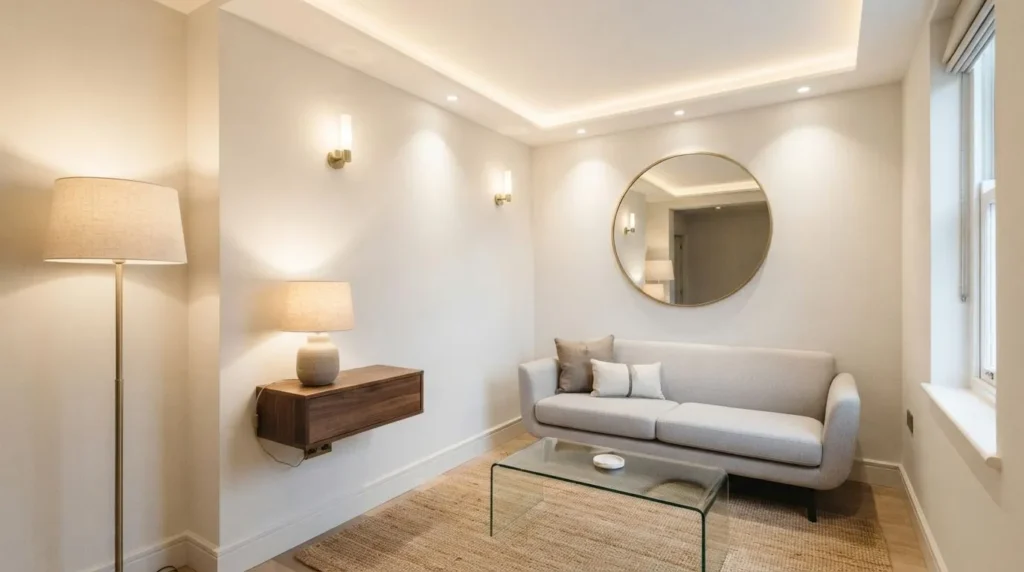
Mirrors and reflective surfaces can also help distribute available light. Avoid choosing bulky lighting fixtures that overwhelm the room or take up too much visual space. You can also explore our small living room decor ideas for more ways to make a compact space feel open and functional.
Large Living Rooms
Large rooms need multiple light sources to prevent empty areas from feeling dark. Combine a statement chandelier or pendant with floor lamps, table lamps, sconces, and accent lighting.
Layering fixtures at different heights helps create visual balance throughout the space.
Dark Living Rooms
To brighten a dark living room, use several light sources rather than relying on a single bright fixture. Illuminate corners, add lamps with light-colored shades, and consider mirrors to reflect available natural and artificial light. Keep the brightness higher for cleaning or entertaining and lower it for relaxing or movie nights. Choosing energy-efficient lighting can also help reduce electricity use while providing effective illumination.
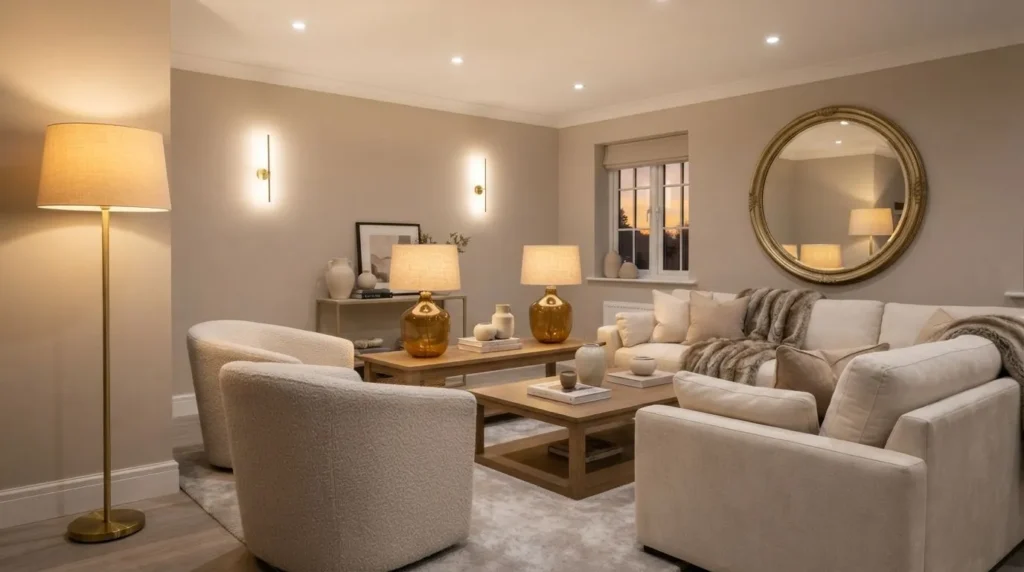
Warm LEDs can keep the room comfortable while providing sufficient illumination.
Living Rooms Without Ceiling Lights
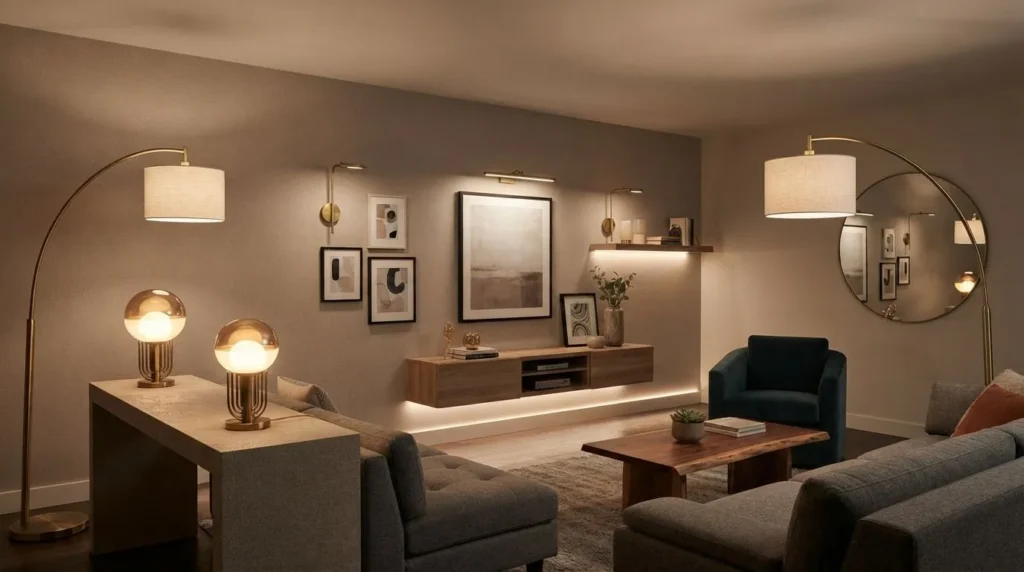
You can create effective living room lighting without ceiling lights. Use floor lamps, table lamps, plug-in sconces, picture lights, rechargeable lamps, and LED strips.
Place these fixtures at different heights so the room still has a layered lighting effect.
High-Ceiling Living Rooms
High ceilings can accommodate larger chandeliers and pendant lights. Choose fixtures with enough visual scale to suit the room and combine overhead lighting with tall floor lamps and lower-level fixtures.
Layered lighting prevents the upper part of the room from feeling disconnected from the seating area.
Living Rooms With TVs
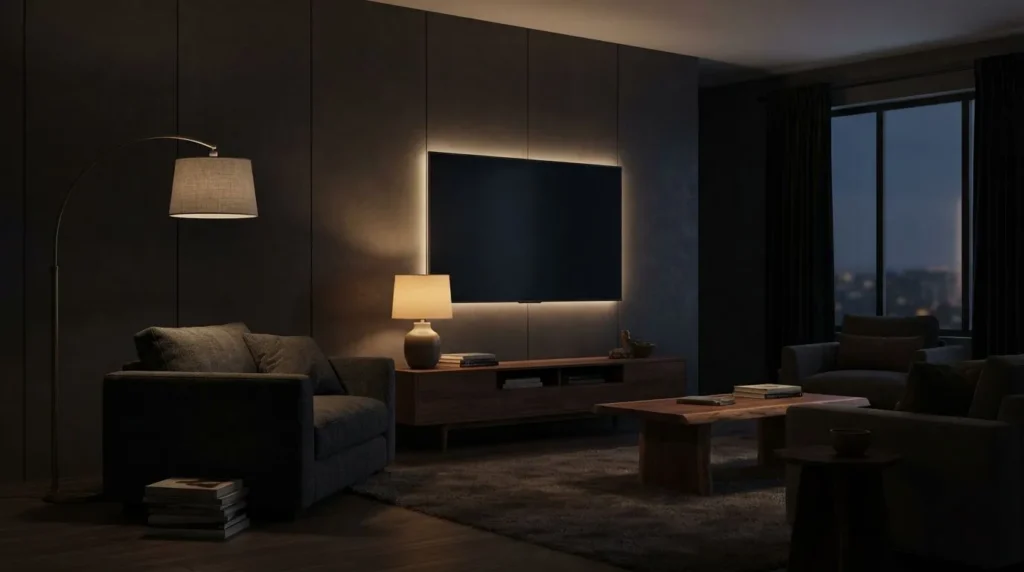
Avoid placing bright fixtures directly opposite the television because they can create distracting glare. Dimmable lights are useful because you can reduce brightness during movie nights.
Soft backlighting behind or around the TV can provide gentle illumination without competing with the screen.
Which Light Color Temperature Works Best
Color temperature is measured in Kelvin (K) and affects how warm or cool a light appears. For a more detailed explanation of color temperature, see Wikipedia’s reference on the subject.
Warm White: 2700K-3000K
Warm white light is generally a good choice for cozy living rooms. It works especially well for relaxing, evening use, traditional interiors, and spaces where you want a soft, welcoming atmosphere.
Neutral or Cooler White: 3000K-4000K
A slightly cooler range can create a brighter, more functional appearance. It may work well when the living room doubles as a workspace or needs stronger daytime illumination.
For most relaxing living spaces, warm living room lighting around 2700K-3000K offers a comfortable starting point.
Living Room Lighting Placement Tips
Good lighting placement is just as important as choosing attractive fixtures.
- Place floor lamps beside seating without blocking walkways.
- Position table lamps on side tables, consoles, or cabinets.
- Use sconces to frame artwork, fireplaces, or seating areas.
- Hang chandeliers and pendants at an appropriate height for the room.
- Direct accent lighting toward artwork and architectural features.
- Spread fixtures around the room rather than concentrating them in one area.
- Avoid harsh shadows and direct glare.
- Keep color temperatures consistent for a more cohesive lighting scheme.
The goal is balanced illumination that makes the entire room feel comfortable rather than simply making it brighter.
How to Create a Cozy Living Room With Lighting
Creating cozy living room lighting does not require expensive fixtures. Start with warm white bulbs and layer different sources at different heights.
Use a ceiling fixture for ambient light, lamps for task lighting, and sconces or LEDs for accent lighting. Add dimmer switches so you can lower the brightness when relaxing.
Pay attention to dark corners and highlight attractive features such as artwork, shelves, or a fireplace. Decorative lighting can provide an additional layer of mood lighting when you want a softer evening atmosphere.
Common Living Room Lighting Mistakes to Avoid
Avoid these common mistakes when planning your living room lighting:
- Using only one overhead fixture
- Choosing bulbs that are excessively cool
- Ignoring dark corners
- Creating glare on the TV
- Choosing fixtures that are too large or too small
- Hanging fixtures at an unsuitable height
- Mixing noticeably different color temperatures
- Forgetting task lighting
- Over-lighting the entire room
- Skipping dimmer switches when adjustable lighting would be useful
A good lighting layout should provide enough illumination for activities while preserving visual comfort and a cozy atmosphere.
Final Thoughts
The best living room lighting ideas combine style with practical illumination. Instead of depending on a single fixture, build a layered lighting scheme with ambient, task, and accent sources.
Consider your room size, furniture arrangement, ceiling height, natural light, and daily activities before choosing fixtures. Then use warm bulbs, dimmers, smart controls, and thoughtful placement to create a living room that feels bright when you need it and cozy when you want it.
For more design inspiration, explore related guides on Living Room Decor Ideas, Small Living Room Decor Ideas, Living Room Color Ideas and Combinations, and How to Arrange Living Room Furniture Properly.
Frequently Asked Questions
How can you create the perfect lighting setup in a living room?
A well-planned living room lighting setup combines several light sources at different levels. Use ceiling fixtures for general illumination, floor or table lamps for focused activities, and accent lights to highlight artwork or decor. Warm white bulbs can also create a comfortable and inviting atmosphere.
Should living room lights be warm or cool?
Warm white light around 2700K-3000K is usually a comfortable choice for living rooms, especially for relaxing and evening use. Slightly cooler lighting can be useful when the room needs brighter, more functional illumination.
How many lights should a living room have?
There is no single ideal number. The right amount depends on room size, ceiling height, natural light, furniture arrangement, and activities. Instead of counting fixtures, focus on creating balanced ambient, task, and accent lighting.
How do I light a living room without ceiling lights?
Use a combination of floor lamps, table lamps, wall sconces, picture lights, rechargeable lamps, and LED strips. Place fixtures at different heights to create layered lighting without relying on overhead illumination.
How can I make a small living room look brighter?
Use multiple light sources, reflective surfaces, lighter lampshades, wall lighting, and strategically placed floor or table lamps. Avoid bulky fixtures that take up visual space, and illuminate dark corners to make the room feel more open.