

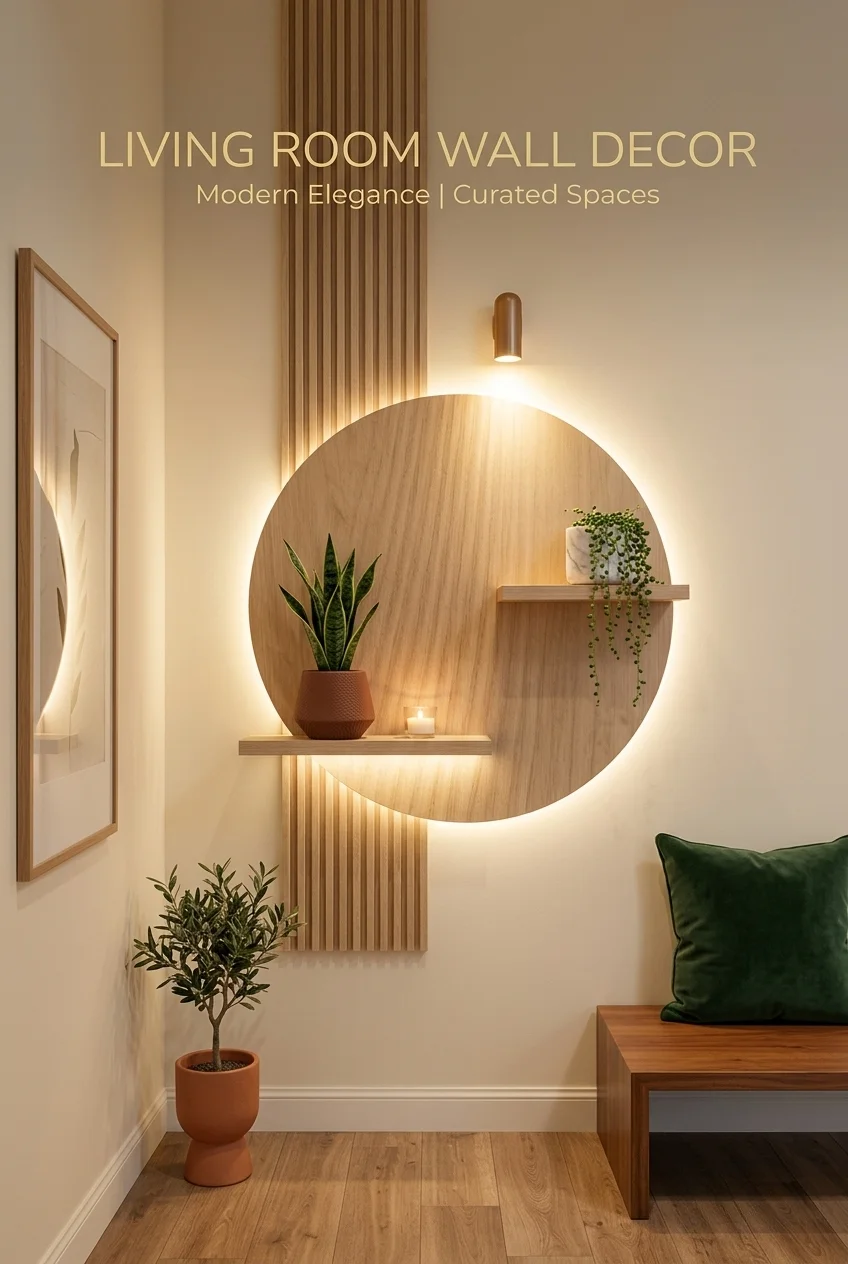
Living room wall decor ideas can transform a plain space with gallery walls, oversized artwork, mirrors, floating shelves, accent walls, wallpaper, wood paneling, sconces, and personalized displays. Mirrors paired with vertical wall accents can visually expand a small room and make it feel less confined. For large walls, choose oversized art, gallery arrangements, or statement treatments. The best decor should complement your furniture, color palette, interior style, lighting, and budget.
Table of Contents
- Best Living Room Wall Décor Ideas
- Living Room Wall Décor Ideas by Wall Location
- Wall Decor Ideas for Small and Large Living Rooms
- Living Room Wall Décor Ideas by Interior Style
- Budget-Friendly and DIY Wall Décor Ideas
- How to Choose the Right Wall Décor
- Common Wall Decor Mistakes to Avoid
- 2026 Living Room Wall Decor Trends
- Frequently Asked Questions
Your living room walls provide an opportunity to express your personality and make the entire space feel more complete. An empty wall can look unfinished, while thoughtfully chosen decoration can add color, texture, warmth, and visual balance.
The good news is that you do not need an expensive renovation to refresh your walls. From a simple gallery wall to floating shelves or a bold accent wall, there are living room wall decoration ideas for almost every room size, decorating style, and budget. For more room-by-room decorating guidance, explore our home decor guide.
Best Living Room Wall Decor Ideas
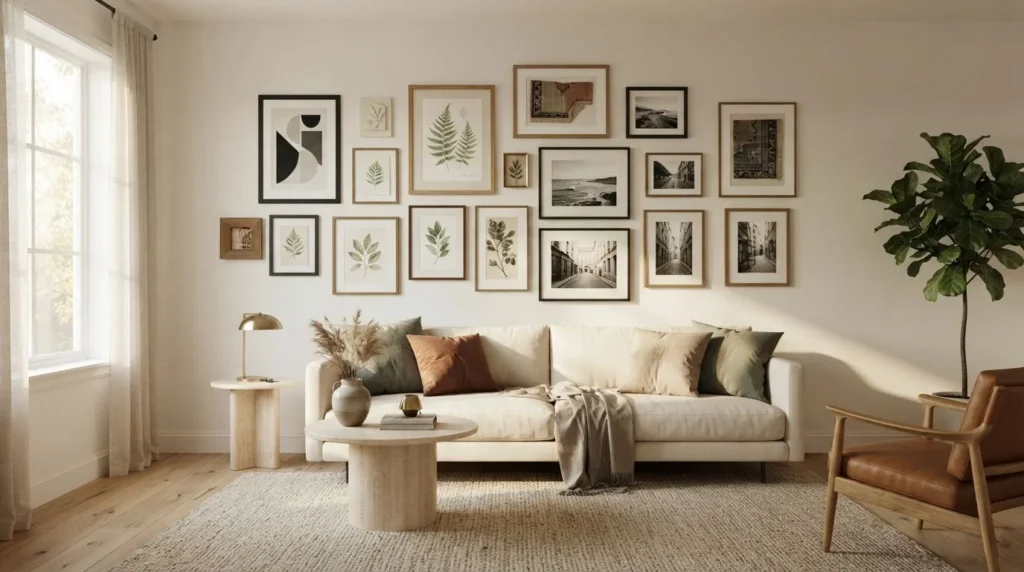
Create a Gallery Wall
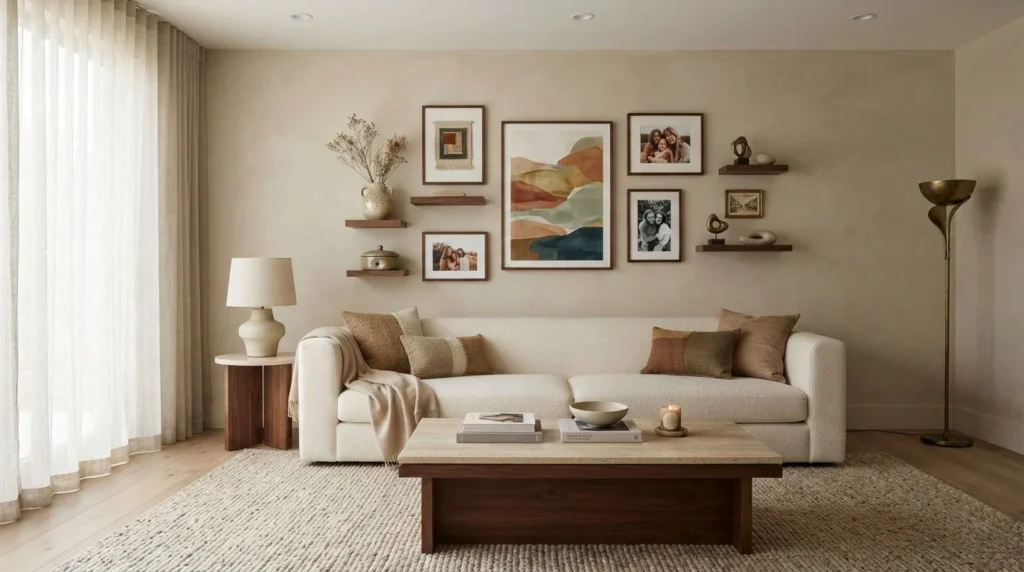
A gallery wall is one of the most versatile living room wall art ideas. Combine framed artwork, family photographs, botanical prints, and meaningful pictures to create a display that feels personal.
For a polished appearance, choose matching frames and even spacing. If you prefer an eclectic look, mix different frame styles while maintaining a common color or theme.
Hang Oversized Artwork
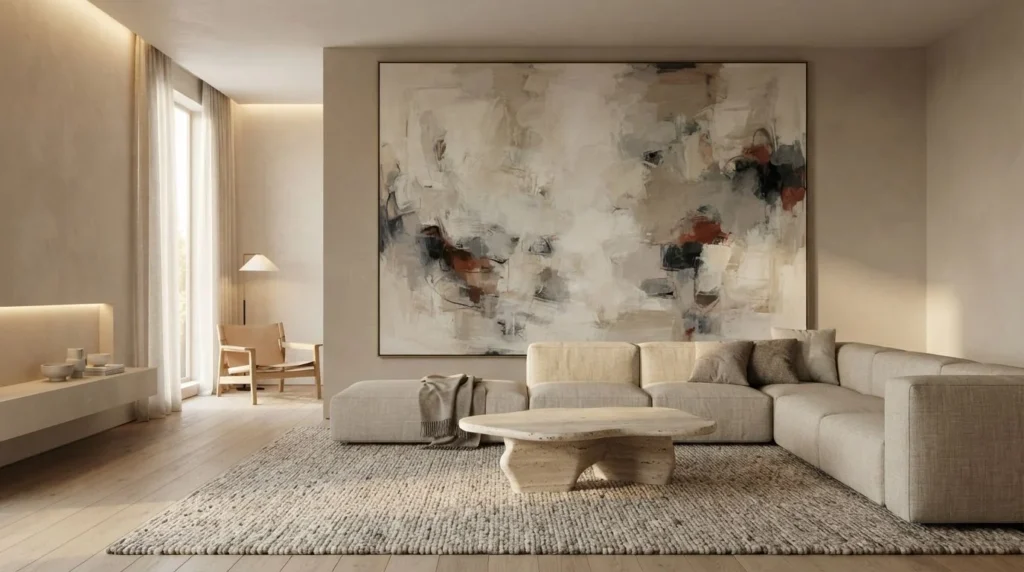
Oversized artwork can instantly give a large blank wall a focal point. Choose an abstract painting, landscape, canvas, or statement artwork that complements the colors already present in your living room.
Large-scale art generally works better than several tiny pieces when the wall and furniture are substantial.
Add a Statement Mirror
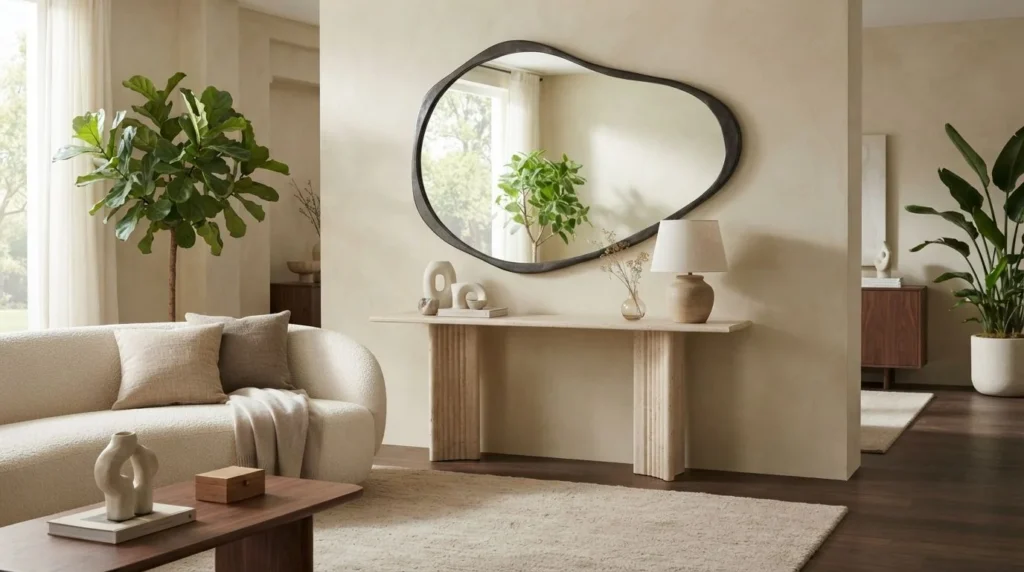
Decorative mirrors can make a living room feel brighter and more spacious by reflecting light. A large round wall mirror works particularly well above a console table or on an otherwise empty wall. Learn more about how mirrors reflect light and their optical properties in this mirror guide.
Choose a simple frame for modern interiors or a more decorative design for traditional and eclectic spaces.
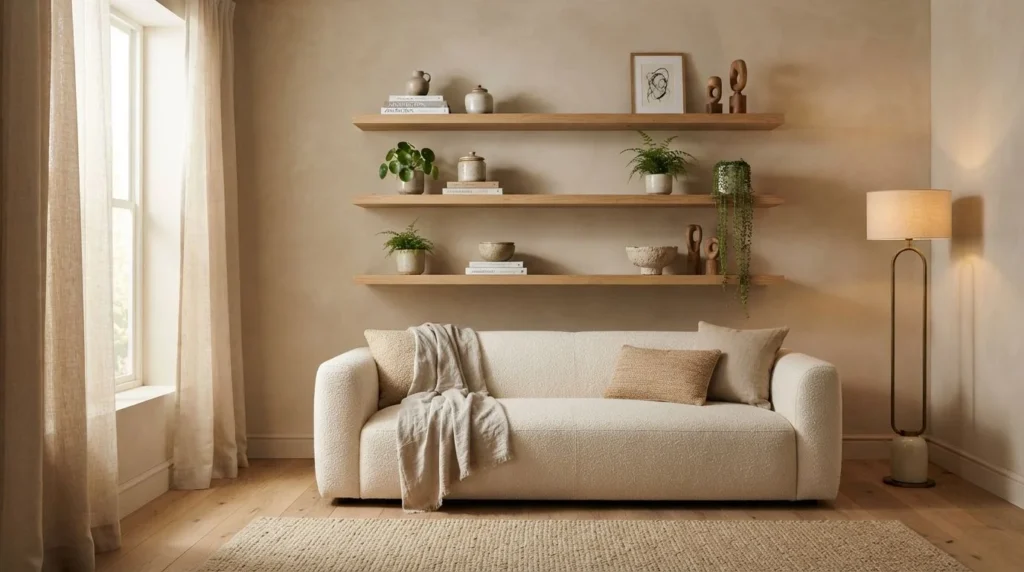
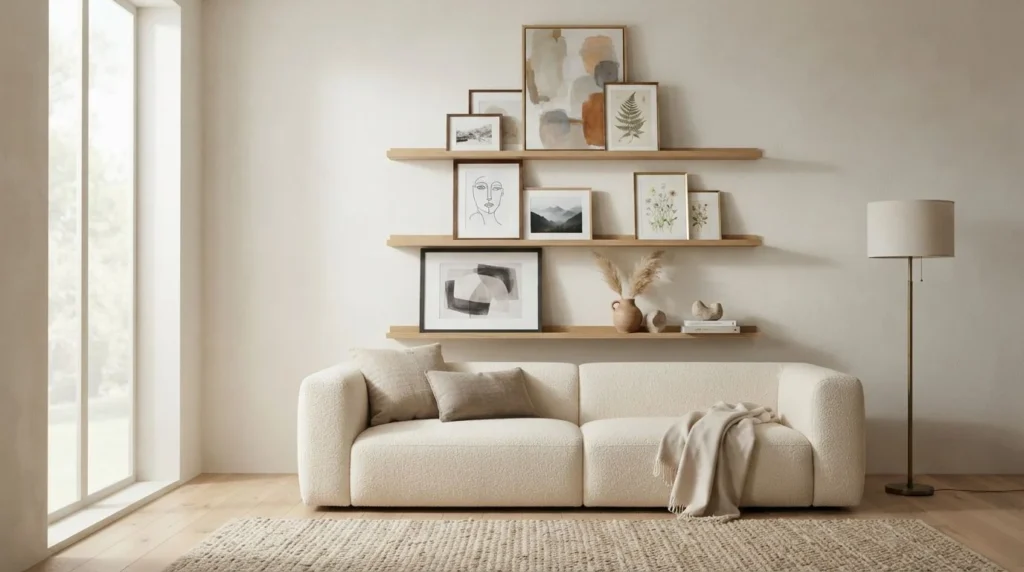
Install Floating Shelves
Floating shelves combine decoration and functionality. Display books, plants, photographs, ceramics, candles, and small decorative objects without using valuable floor space.
Keep some empty space between objects so the shelves look curated rather than overcrowded.
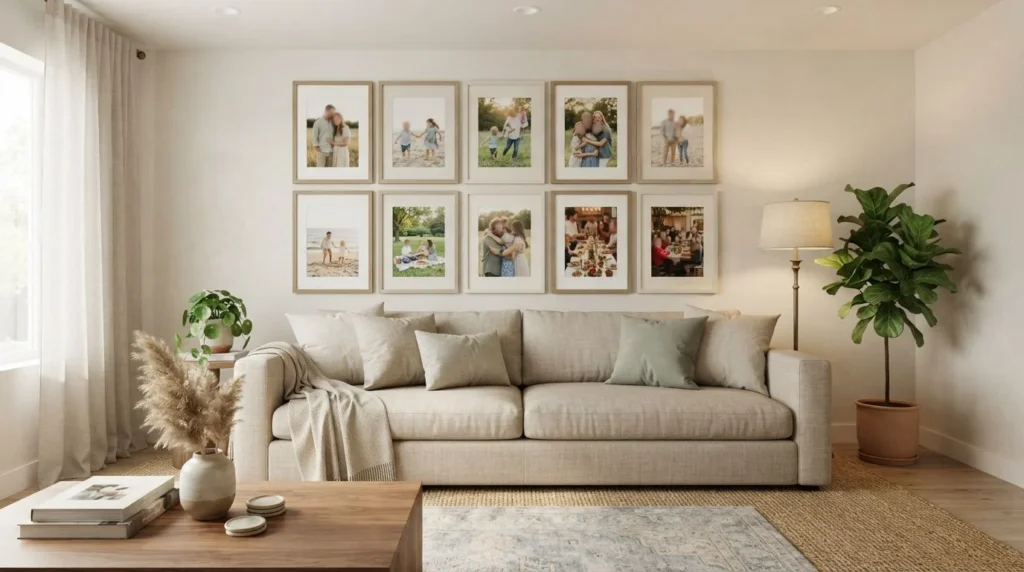
Display Family Photos
A family photo wall adds warmth and personality to your home. Use photographs with similar colors or consistent frames to create a cohesive arrangement.
Picture ledges are another flexible option because you can easily change photographs and artwork whenever you want to refresh the room.
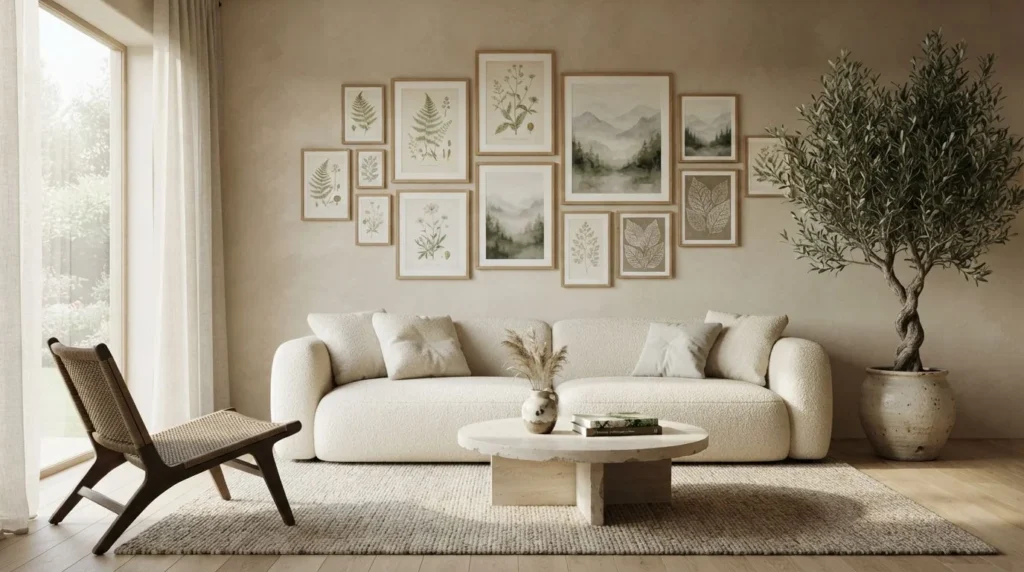
Use Botanical or Nature-Inspired Art
Botanical prints, landscape artwork, nature photography, and greenery can bring a natural feeling indoors. These elements complement Scandinavian, Japandi, and organic modern interiors particularly well.
Natural materials such as wood and woven decor can further enhance this look.
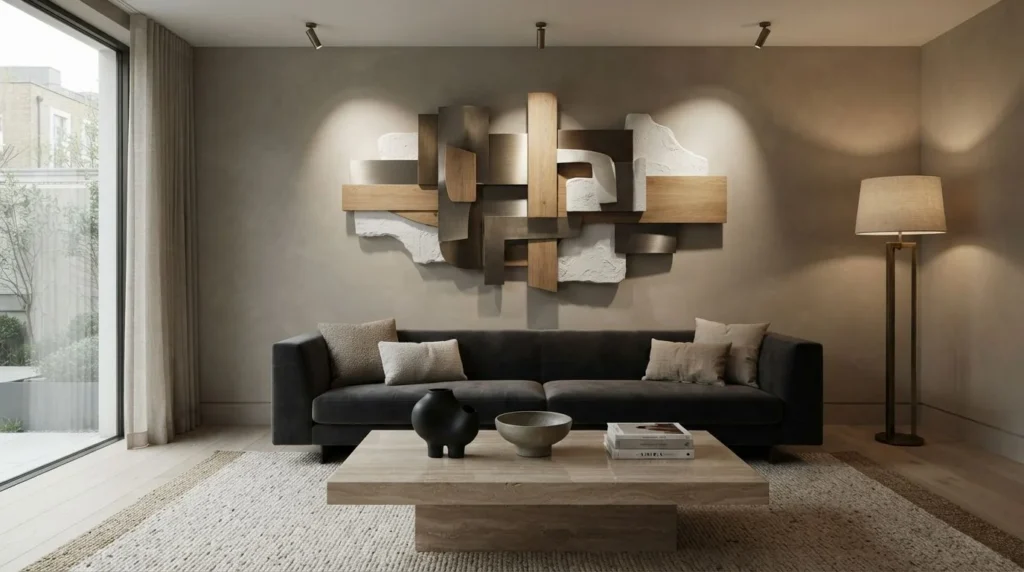
Add Sculptural Wall Art
Sculptural wall art introduces depth and dimension. Consider metal pieces, wooden artwork, textured designs, or mixed-material decorations.
This is an effective choice for modern and contemporary rooms where simple furniture can benefit from an eye-catching statement wall.
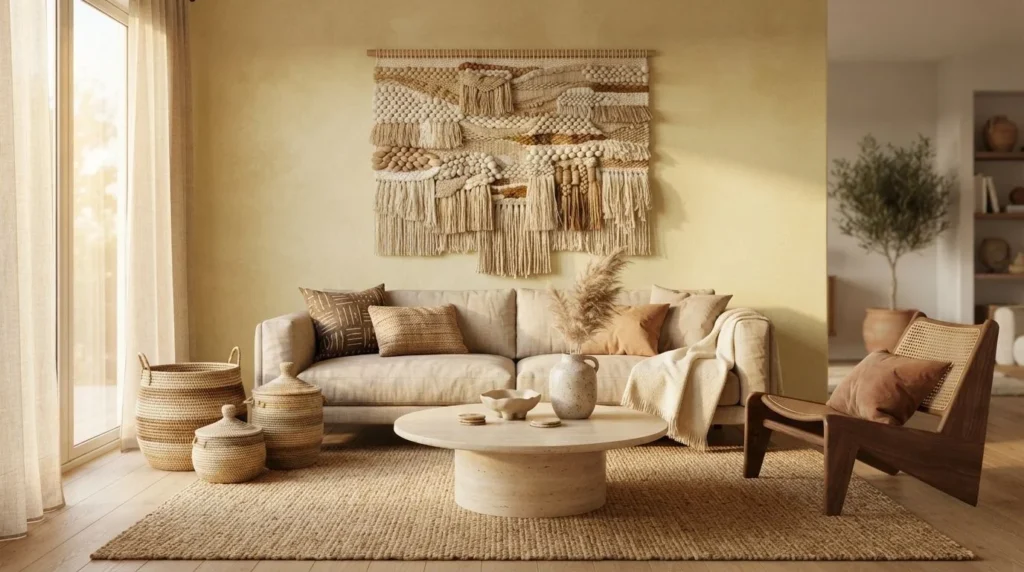
Hang a Tapestry or Woven Decor
Tapestries, macrame wall hangings, woven baskets, and textile wall décor add softness and texture. They are especially suitable for boho, rustic, and eclectic living rooms.
One large tapestry can become a focal point, while several smaller woven pieces can create a layered display.
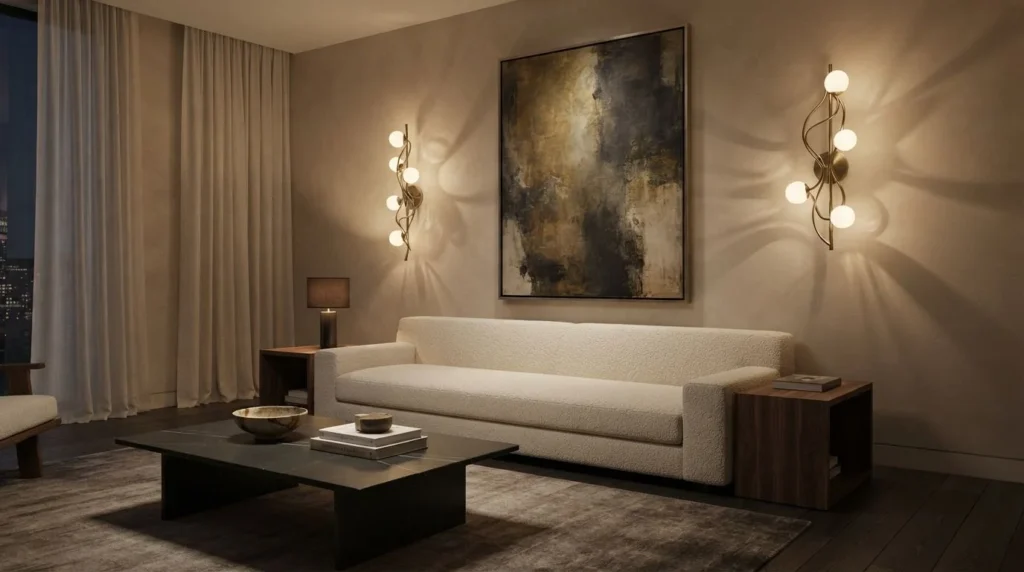
Install Decorative Wall Sconces
Wall sconces provide both decorative and functional lighting. Place them beside artwork, around a fireplace, or on either side of a sofa.
Warm lighting can highlight wall art and textured surfaces while creating a comfortable atmosphere during the evening.
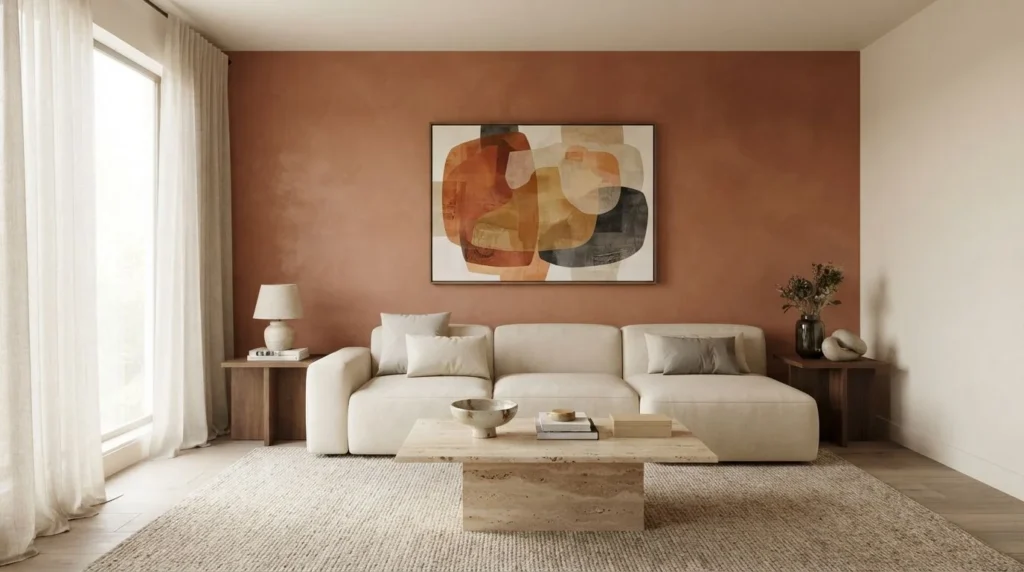
Create an Accent Wall
An accent wall can dramatically change a living room without requiring every wall to be redesigned. Use paint, a bold color, texture, or a patterned finish to create a focal point.
The wall behind the sofa is often a natural location for this type of feature.
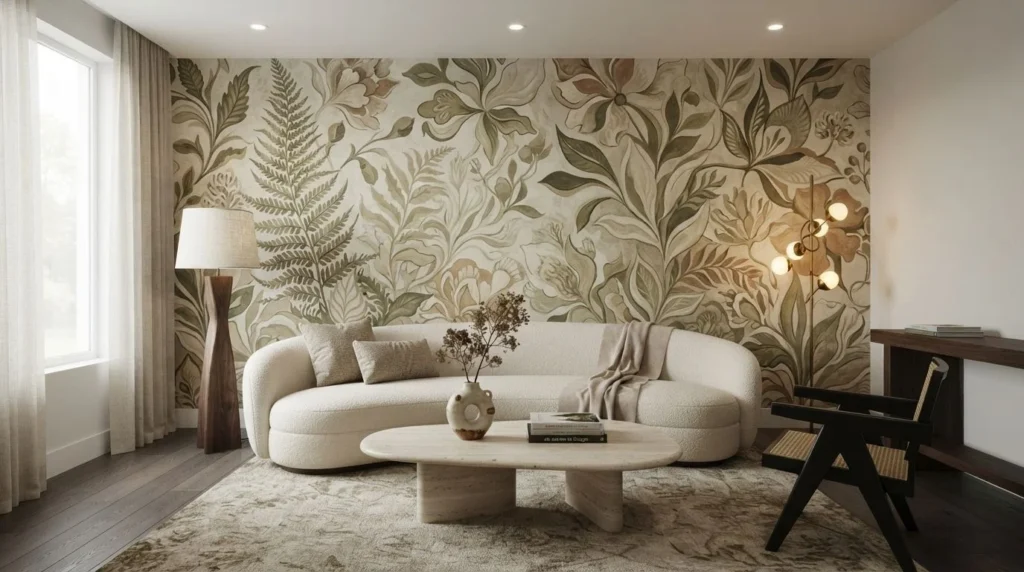
Try Wallpaper or a Mural
Wallpaper can introduce pattern, color, and personality. Choose a subtle design for a calm atmosphere or a bold mural for a dramatic effect.
Peel-and-stick wallpaper is also a practical option for renters who want removable wall decor.
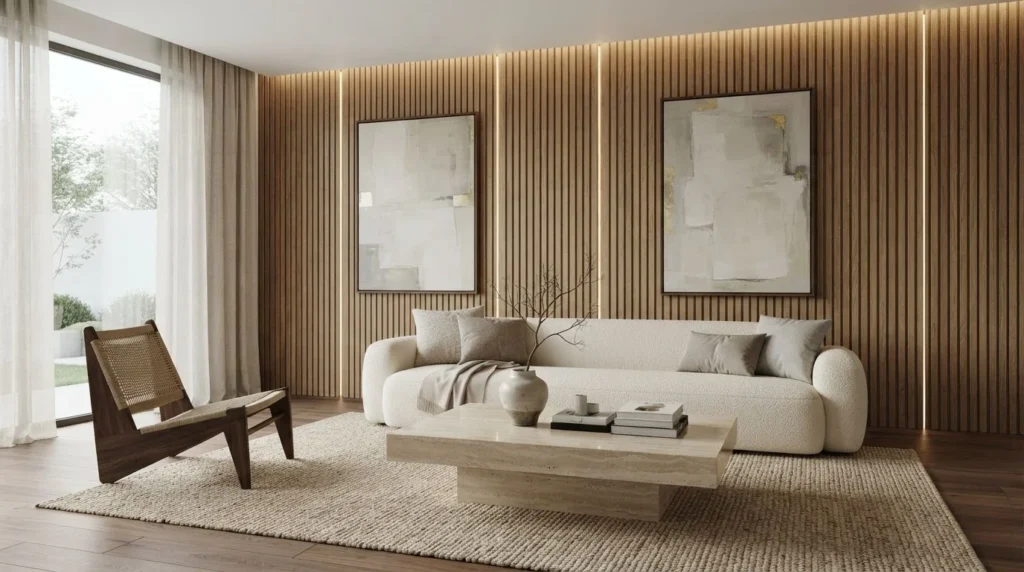
Add Wood Wall Paneling
Wood wall panels create warmth and architectural interest. Vertical panels can emphasize height, while geometric designs provide a contemporary appearance.
Board and batten, slatted wood, and other paneling styles can create an attractive background for a sofa, TV, or fireplace.
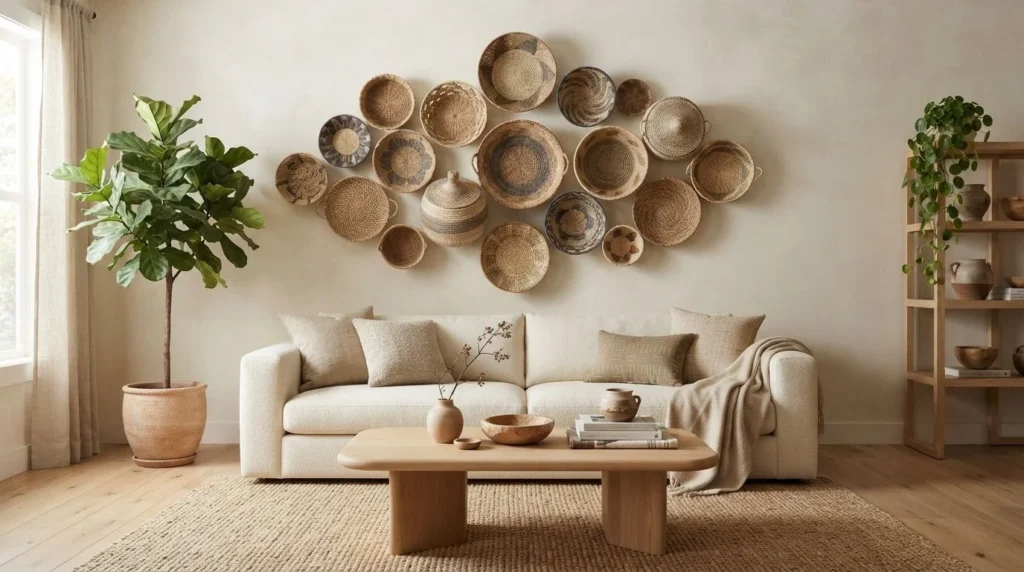
Decorate With Baskets
Woven baskets are an easy way to add texture to a blank wall. Arrange baskets in different sizes and shapes to create an organic display.
This idea works particularly well with boho, farmhouse, rustic, and eclectic decor.
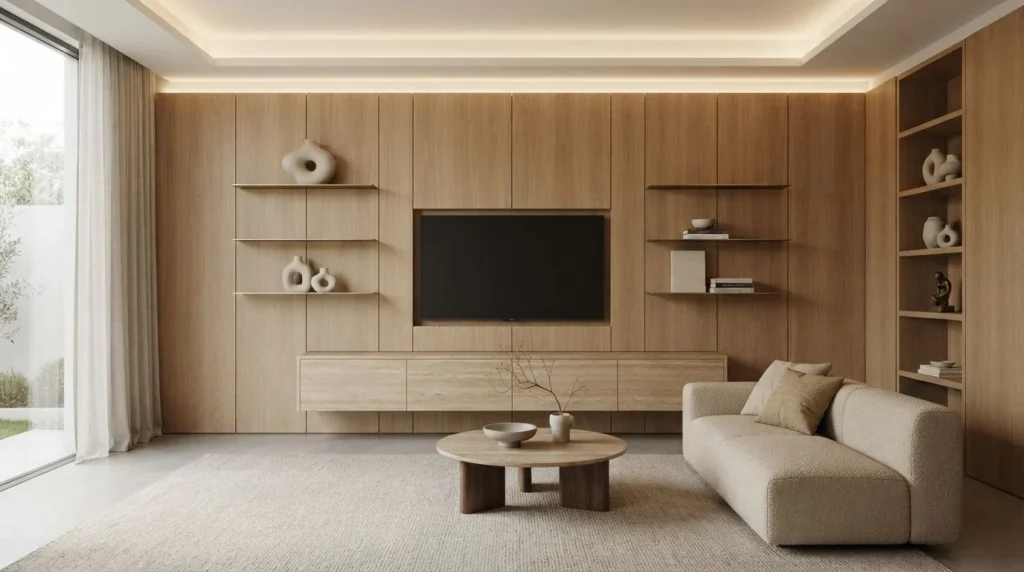
Create a TV Feature Wall
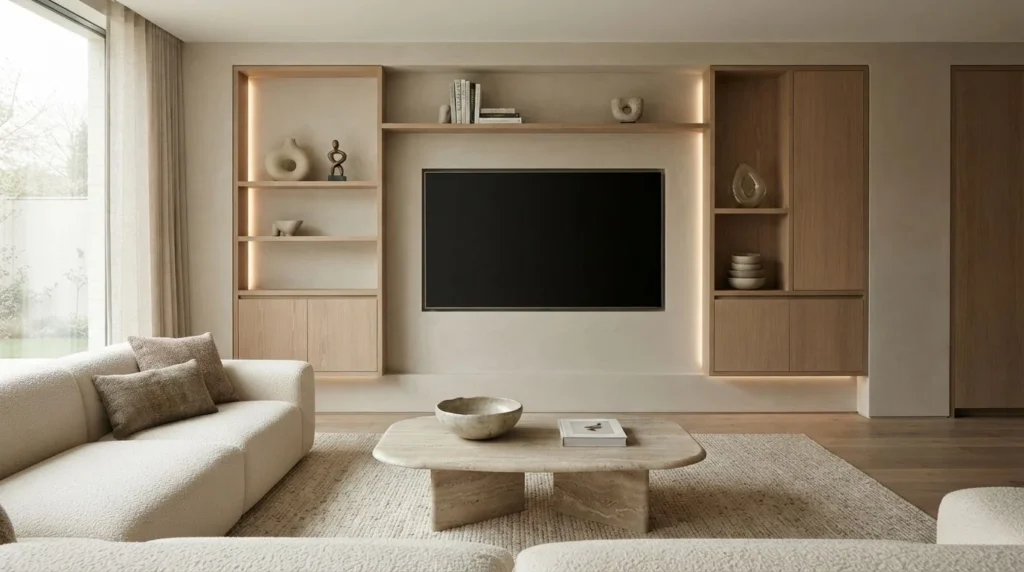
Instead of allowing the television to dominate the room, surround it with built-in shelving, wood paneling, cabinets, or carefully selected artwork.
Keep decorative objects limited around the screen. A simple arrangement usually makes a TV wall feel more sophisticated.
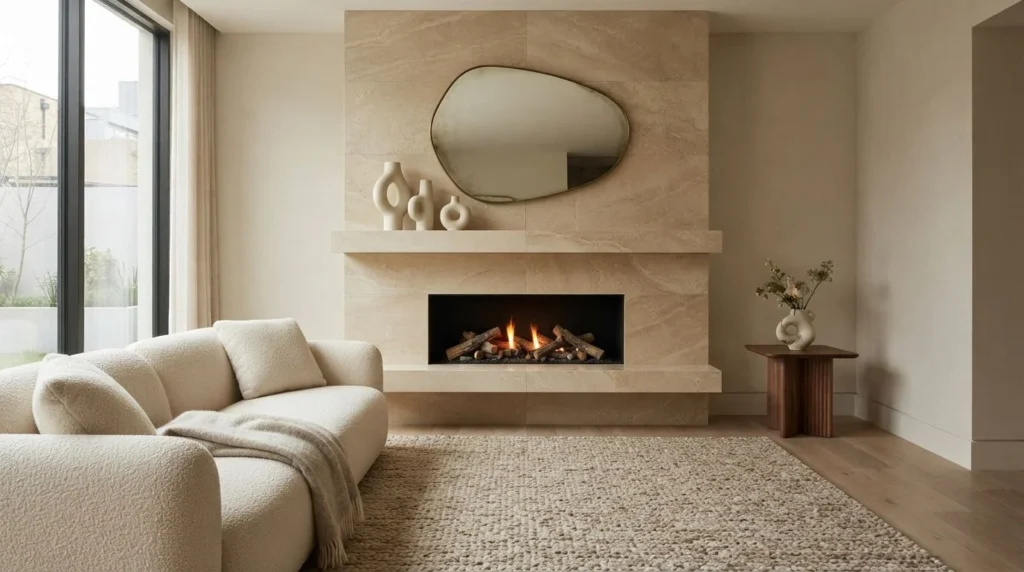
Style a Fireplace Wall
A fireplace naturally becomes a focal point, so the wall above it should complement its design. A large mirror, artwork, or carefully styled mantle can complete the look.
If the fireplace already has strong architectural details, avoid adding too many competing decorations.
Use Picture Ledges
Picture ledges provide an easy way to layer artwork without permanently committing to a gallery wall. Mix different frame sizes while keeping the overall arrangement balanced.
They are also ideal if you enjoy changing your living room décor seasonally.
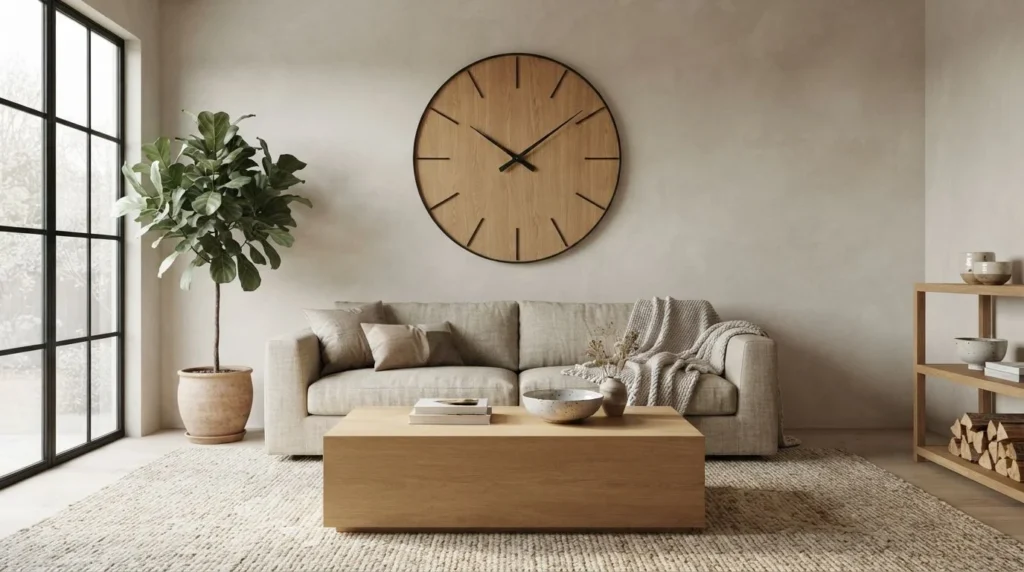
Add a Large Wall Clock
A large decorative clock can fill an empty wall while providing a practical function. Choose a clean metal design for a modern room or a wooden style for rustic and farmhouse interiors.
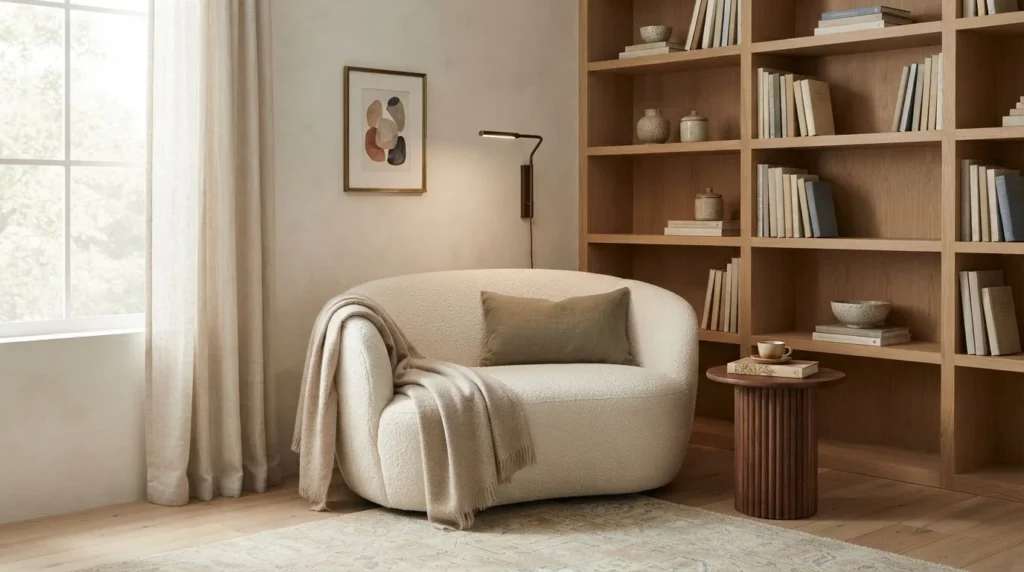
Create a Reading-Nook Wall
Turn an unused section into a cozy reading nook with a comfortable chair, bookshelf, artwork, and wall-mounted lighting.
This approach combines functional design with attractive wall decoration.
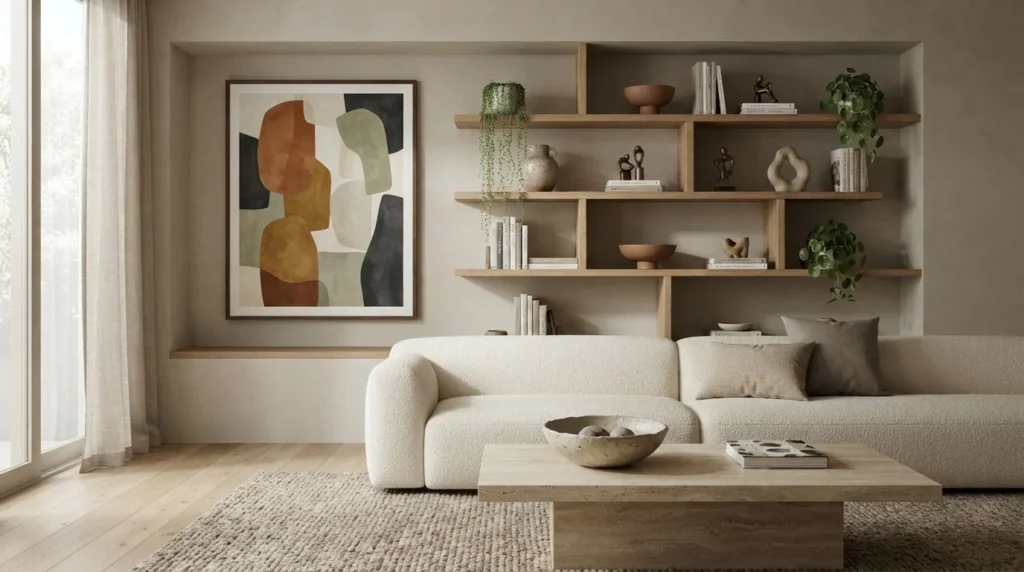
Mix Art With Open Shelving
Combine framed artwork with floating shelves, books, plants, and decorative objects. Varying textures and heights creates depth without making the wall feel repetitive.
Keep the colors coordinated to maintain a cohesive appearance.
Use Architectural Molding
Wainscoting, wall molding, board and batten, and geometric trim can add character without requiring lots of decorative accessories.
Paint the molding in the same color as the wall for a subtle effect or introduce contrast for a stronger statement.
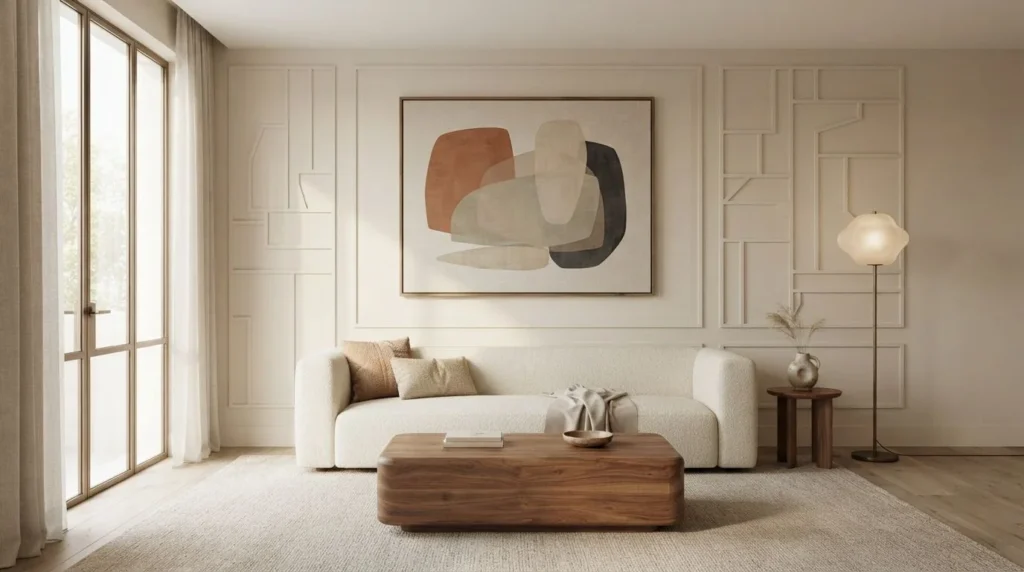
Create a Travel-Inspired Wall
Maps, travel photographs, postcards, and meaningful souvenirs can turn a wall into a visual story. This is a great option for homeowners who want their décor to feel personal rather than generic.
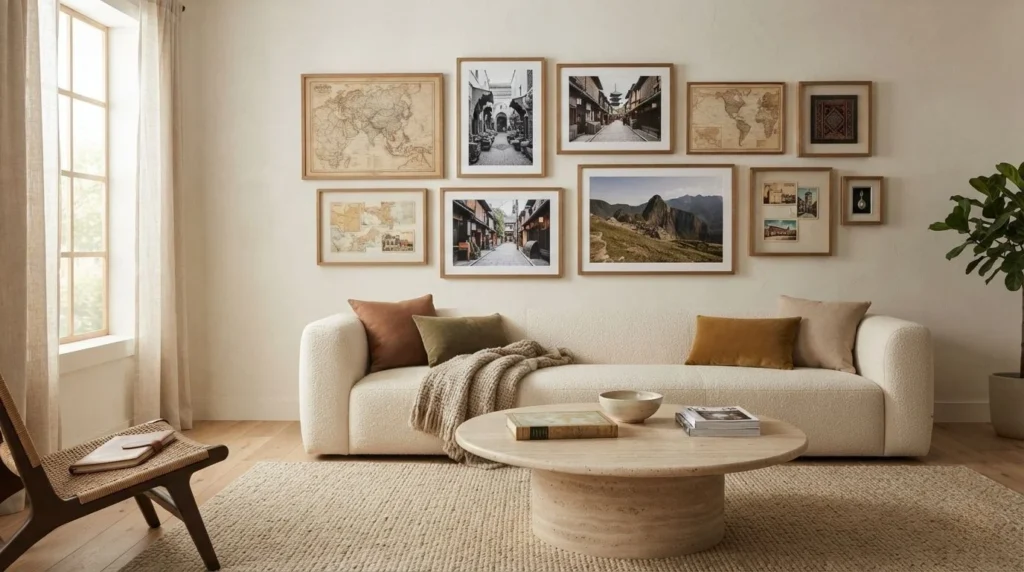
Try a Monochromatic Wall
For a sophisticated look, choose artwork and decorations from one color family. Mix different shapes and textures to keep the arrangement interesting while maintaining visual harmony.
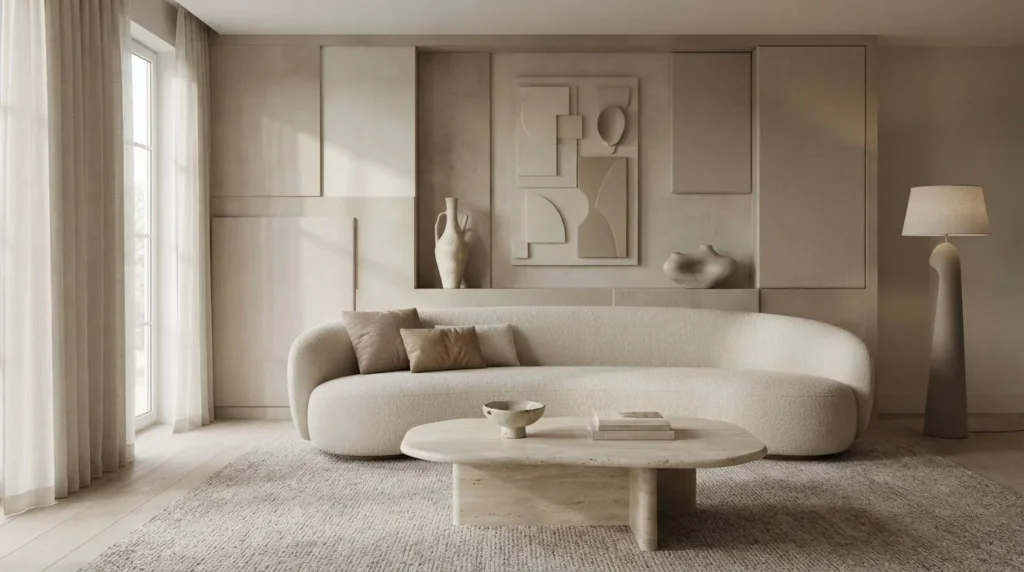
Decorate an Empty Corner Wall
Tall artwork, vertical shelving, plants, or sculptural décor can make an awkward corner feel intentional.
Vertical pieces are particularly useful in smaller living rooms because they draw the eye upward without taking up floor space.
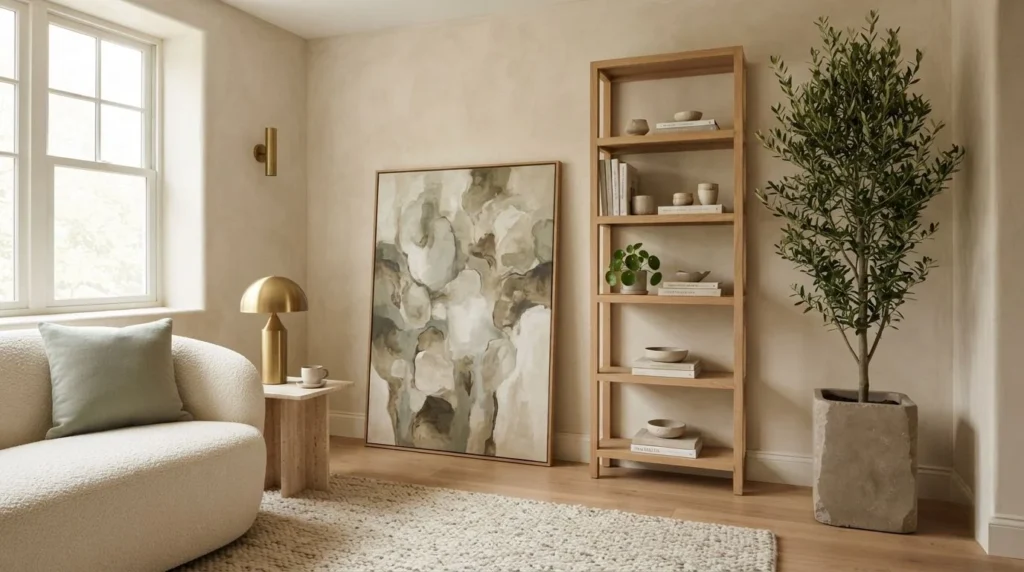
Layer Different Textures
Combine wood, metal, woven materials, textiles, ceramics, and framed art to create depth. Layered textures can make neutral living rooms feel warmer and more inviting.
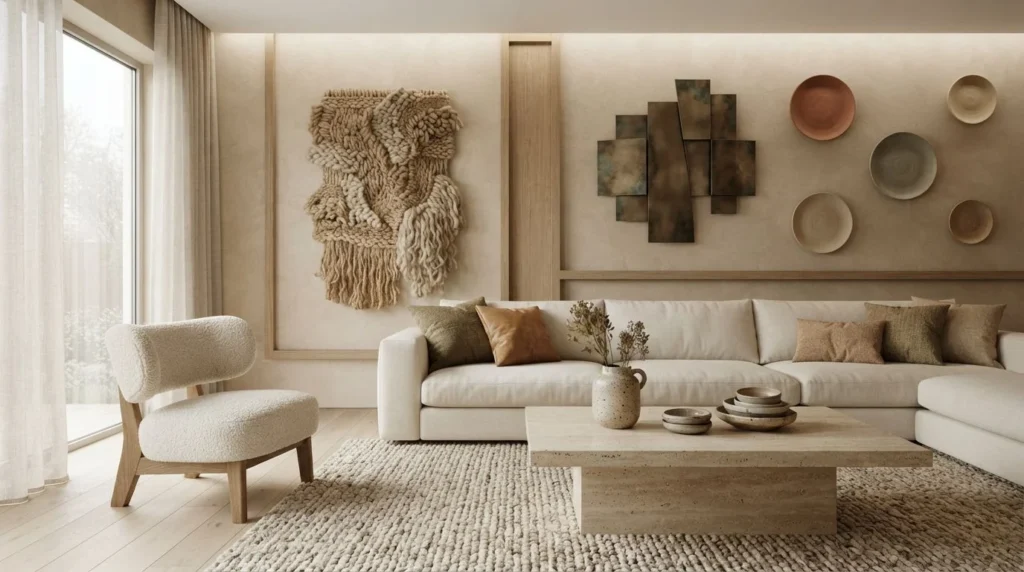
Create a Personalized Statement Wall
Your wall does not need to follow a strict decorating formula. Combine favorite artwork, photographs, objects, and colors to create a display that reflects your personality.
A thoughtfully decorated wall can stay stylish for years, making a stronger impression than generic pieces used only to cover a space.
Living Room Wall Decor Ideas by Wall Location
Wall Decor Above the Sofa
The area above the sofa is one of the most important places to consider when planning wall décor. Oversized artwork, a gallery wall, a large mirror, picture ledges, or wall sconces can all work well.
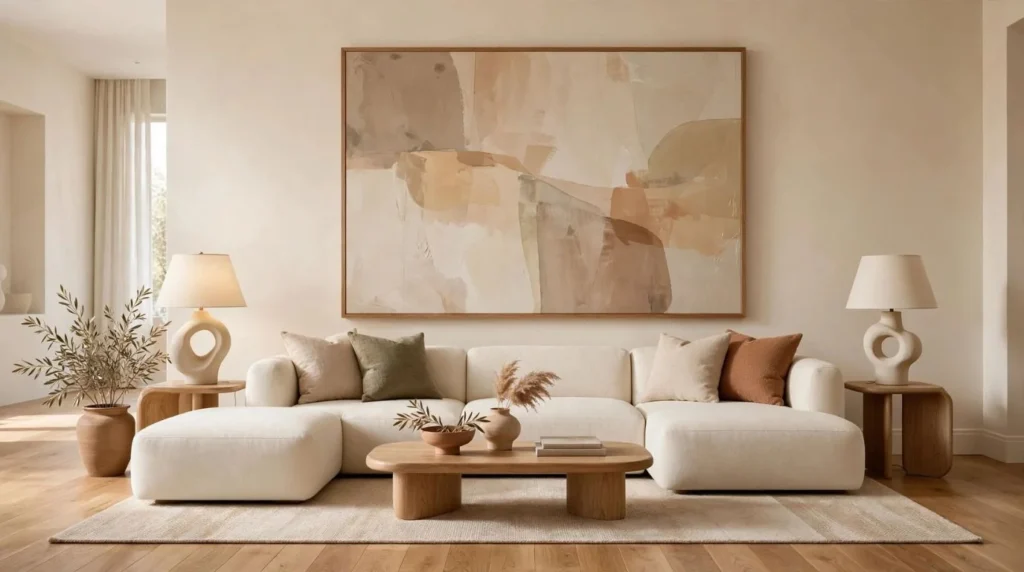
Choose pieces that relate to the sofa’s size and color rather than treating the wall as a separate area.
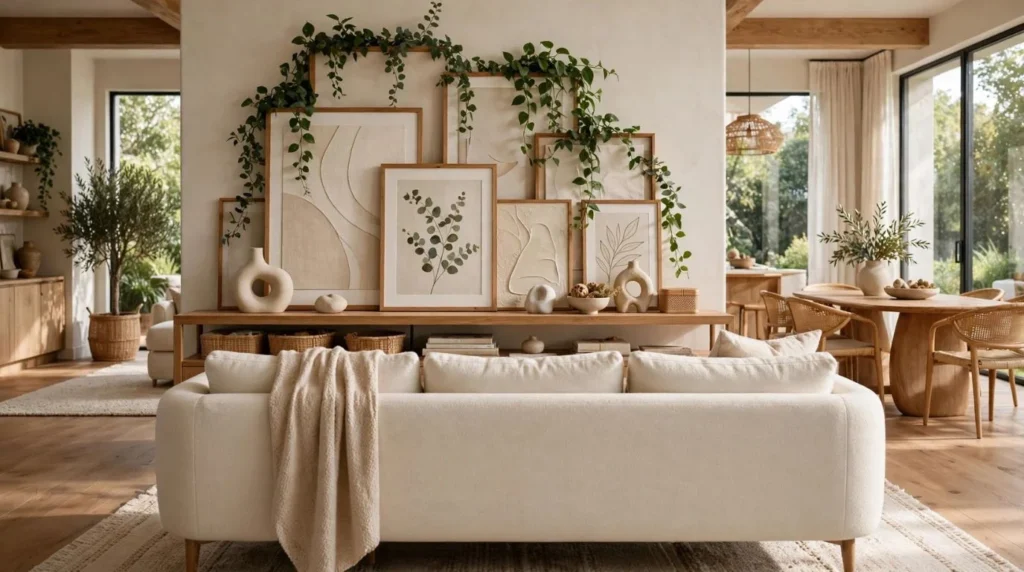
Wall Decor Behind the Sofa
If your sofa sits away from the wall, use the space behind it for artwork, floating shelves, plants, or a console table with decorative objects.
Wall Decor Around the TV
Built-in shelving, wood paneling, cabinets, and minimal artwork can frame the television while keeping the wall organized.
Wall Decor Ideas for Small and Large Living Rooms
Small Living Room Wall Decor
Small spaces benefit from decoration that creates visual interest without using floor space. For more ideas on making compact rooms feel functional and stylish, see our small space home decor guide.
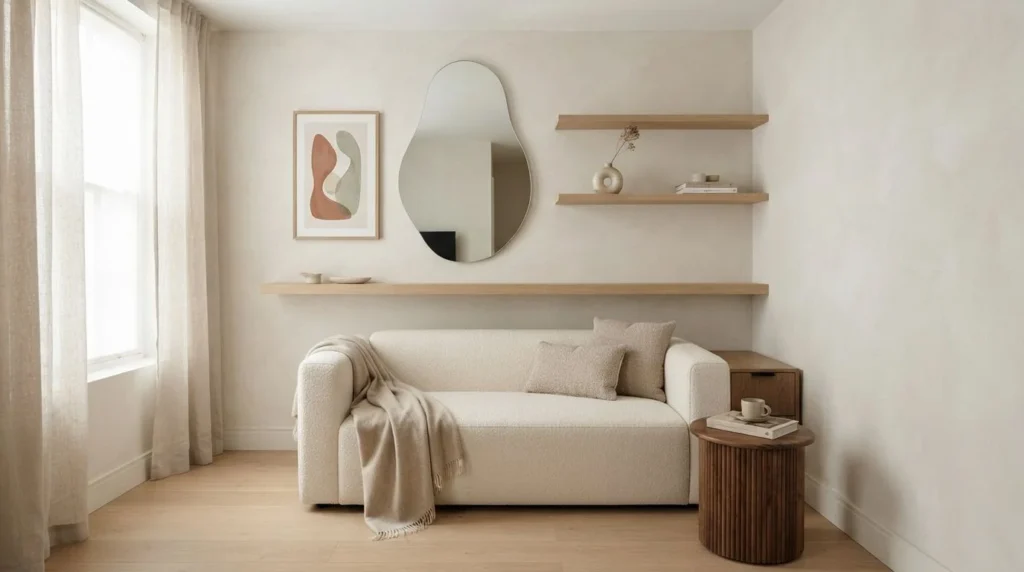
Avoid filling small walls with too many tiny decorations.
Large Living Room Wall Decor
Large walls need enough visual weight to feel balanced. Consider oversized artwork, large gallery walls, built-in shelving, wood paneling, or several coordinated artwork groupings.
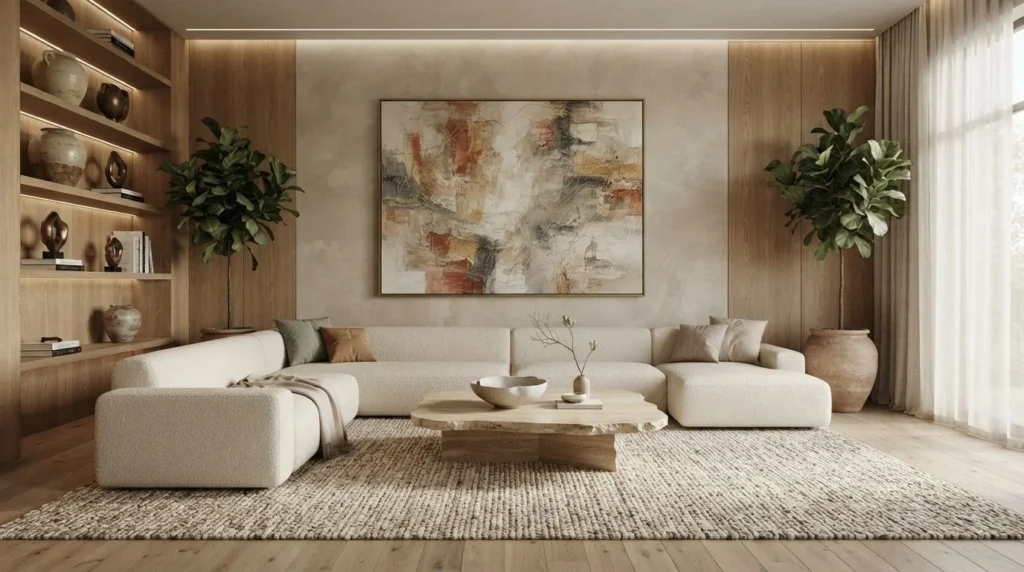
A few substantial pieces usually look more intentional than covering the entire wall with small objects.
Living Room Wall Decor Ideas by Interior Style
Modern Wall Decor
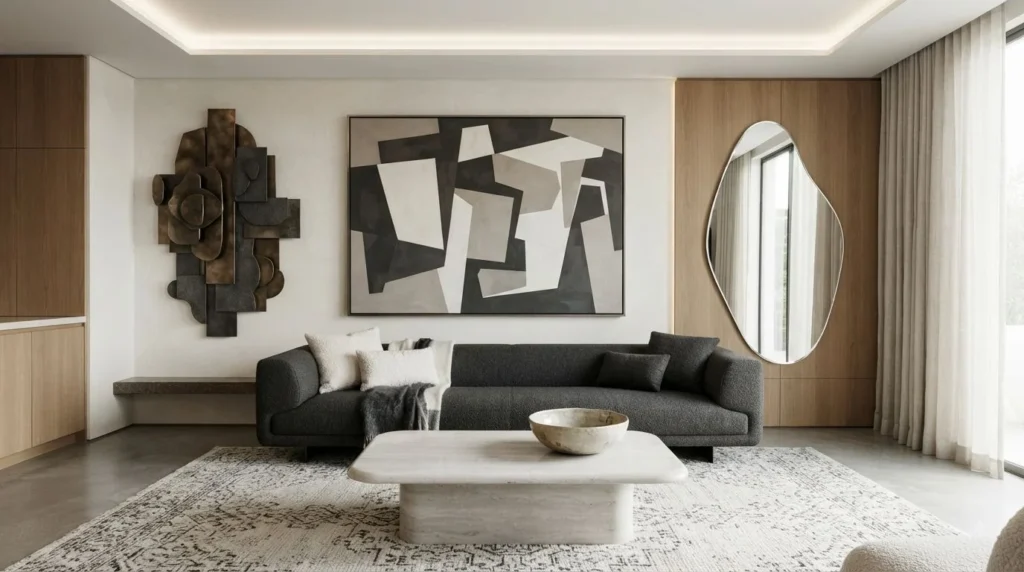
Use abstract artwork, sculptural pieces, oversized mirrors, neutral colors, and clean arrangements. Modern wall decor should look intentional without feeling crowded.
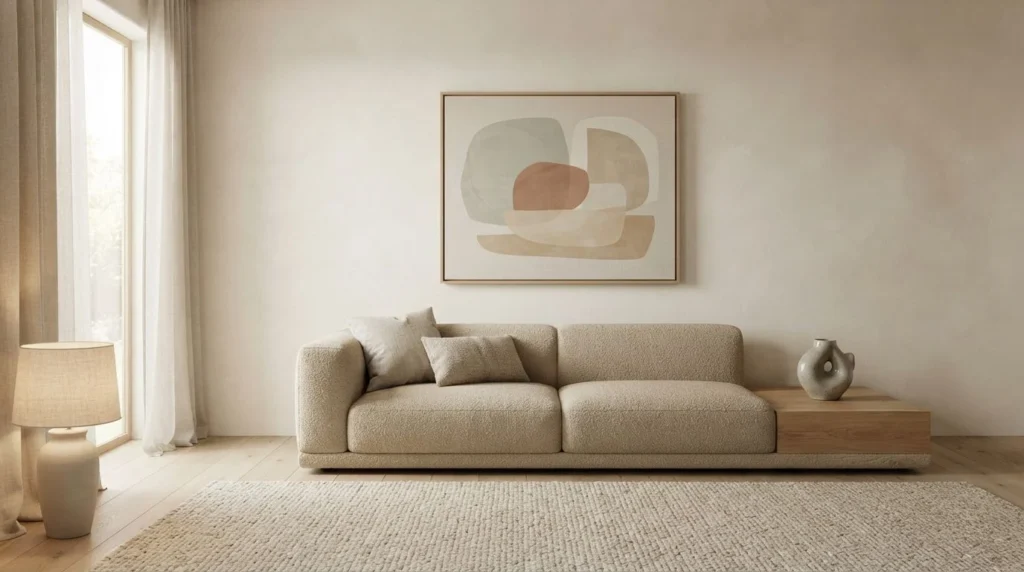
Minimalist Wall Decor
Choose one statement artwork, simple frames, neutral colors, and generous negative space. In minimalist interiors, fewer pieces often create a stronger visual impact.
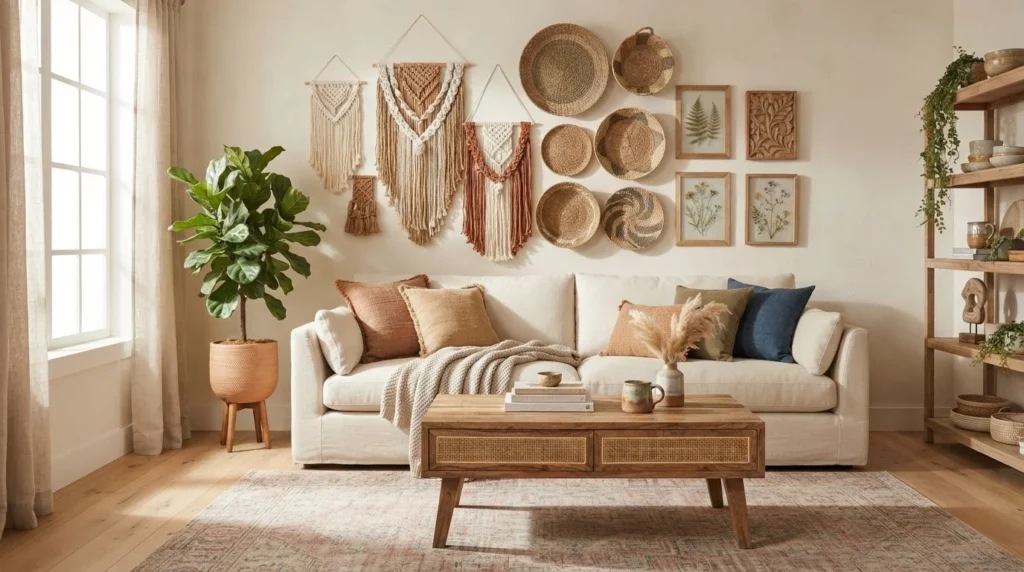
Boho Wall Decor
Macrame, woven baskets, tapestries, plants, natural wood, and earthy artwork create a relaxed bohemian atmosphere.
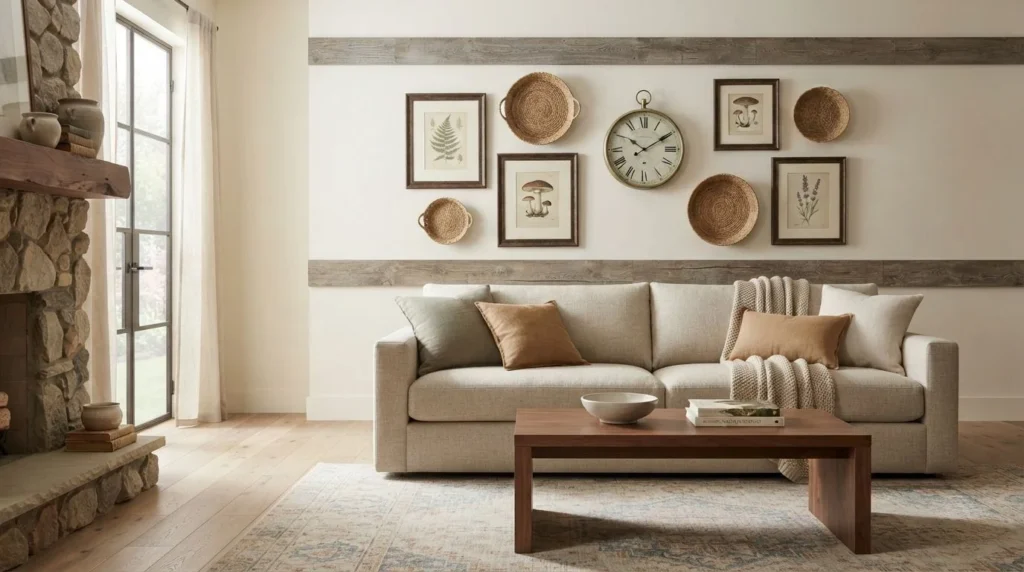
Farmhouse and Rustic Wall Decor
Wooden elements, vintage artwork, rustic frames, baskets, and natural finishes complement farmhouse and rustic interiors.
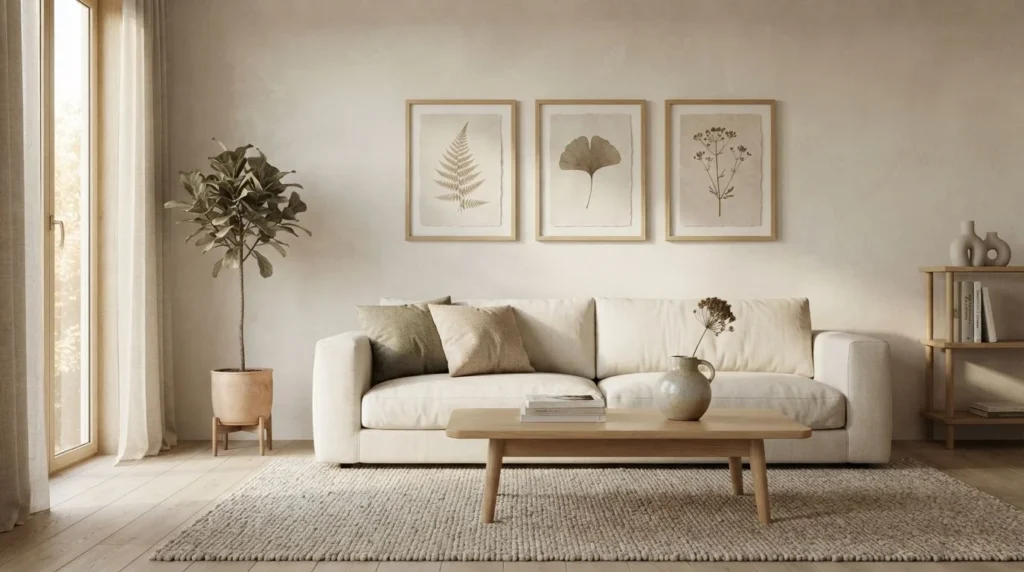
Scandinavian and Japandi Wall Decor
Neutral artwork, natural materials, simple forms, and restrained styling work well with these calm design styles.
Organic Modern Wall Decor
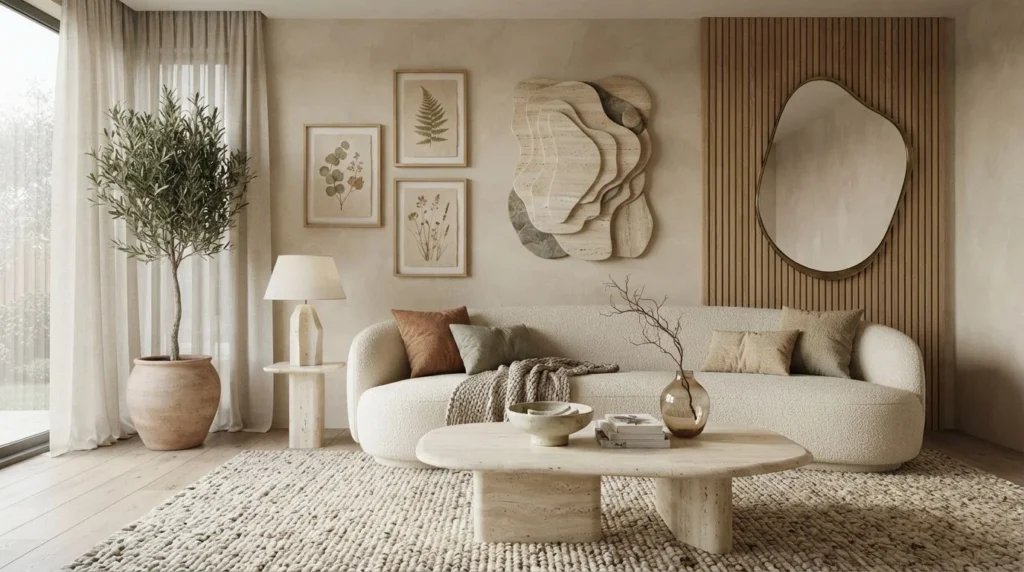
Combine earth tones, textured art, natural wood, botanical elements, and stone-inspired finishes to create warmth and visual depth.
Budget-Friendly and DIY Wall Decor Ideas
Beautiful wall decor does not have to be expensive. Create a DIY gallery wall with printable artwork, family photographs, and thrifted frames.
For renters, peel-and-stick wallpaper, removable hooks, adhesive strips, and lightweight artwork provide flexible options without permanent changes.
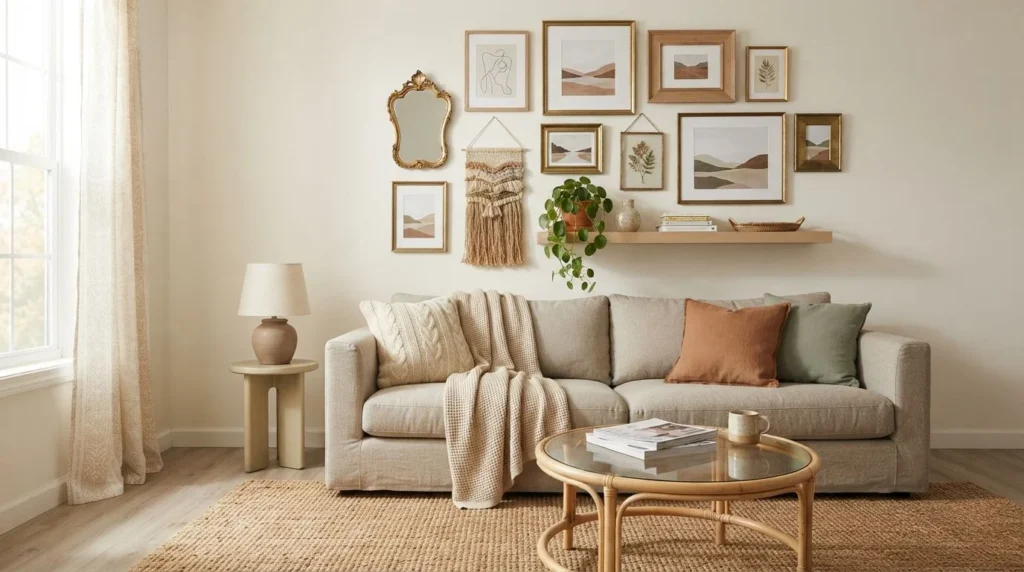
You can also repurpose thrifted mirrors, baskets, decorative plates, and vintage frames to create inexpensive living room wall décor with character.
How to Choose the Right Living Room Wall Decor
Start by considering your wall size, furniture, color palette, interior style, lighting, and budget.
Large walls usually require larger-scale décor, while smaller walls benefit from simpler arrangements. Your artwork should visually relate to the furniture underneath it, and its colors should complement the sofa, rug, curtains, or accent pieces.
For additional information about residential lighting use and energy considerations, see the U.S. Department of Energy’s residential lighting resources.
Common Living Room Wall Decor Mistakes to Avoid
Hanging Artwork Too High
Artwork that sits too far above furniture can feel disconnected. Position it so it visually relates to the furniture beneath it.
Choosing Artwork That Is Too Small
Small artwork can disappear against a large wall. Choose a larger piece or group several smaller pieces together.
Overcrowding the Wall
Negative space helps a room breathe. You do not need to fill every empty section.
Matching Everything Too Closely
Mix shapes, textures, and materials while maintaining a consistent color story.
Decorating Every Wall
Create intentional focal points instead of decorating every available surface. Some empty space can make the overall design feel more sophisticated.
2026 Living Room Wall Decor Trends
Living room wall decor trends in 2026 are moving toward personalized, tactile, and natural-looking spaces. Personalized artwork, sculptural pieces, organic textures, natural materials, warm neutrals, mixed-material designs, and textured wall treatments are strong choices.
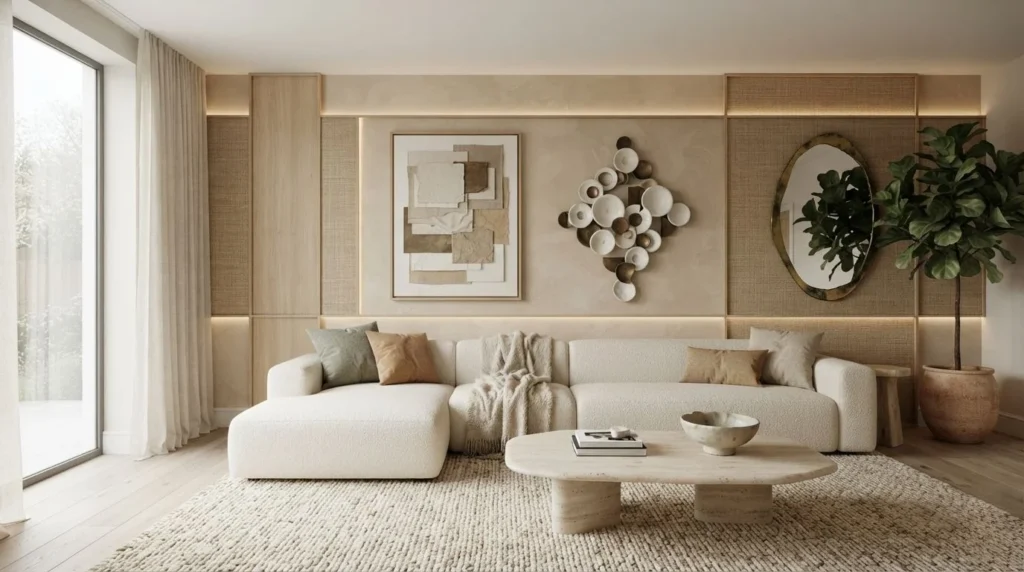
Statement wallpaper and biophilic wall décor can also add personality while creating a warmer connection with nature.
Frequently Asked Questions
What can I put on my living room wall?
You can use artwork, mirrors, gallery walls, floating shelves, photographs, plants, tapestries, baskets, sconces, wallpaper, paneling, clocks, and decorative objects. The best option depends on your wall size, furniture, style, and budget.
What should I put above my sofa?
Oversized artwork, a gallery wall, a large mirror, picture ledges, or wall sconces are excellent choices. Select a display that is proportional to the sofa and complements the room’s existing colors.
How do I decorate a large blank living room wall?
Make a spacious wall feel balanced by choosing decor with enough visual weight. A statement artwork, curated gallery arrangement, built-in shelves, wood accents, or a textured feature wall can create a strong focal point. Instead of filling the entire surface with small decorations, use a few well-scaled pieces to give the wall a polished and cohesive appearance.
What Are the Best Ways to Style a Small Living Room Wall?
Choose mirrors, vertical artwork, floating shelves, and lighter wall treatments. Keep the arrangement simple to prevent the room from feeling visually crowded.
How high should wall art be?
Wall art should be positioned at a comfortable viewing height while remaining visually connected to nearby furniture. Consider the sofa, artwork size, ceiling height, and overall proportions rather than following one rigid measurement.
How do I make my living room wall look expensive?
Focus on scale, quality framing, cohesive colors, texture, layered lighting, and negative space. One carefully selected statement piece can often look more sophisticated than many inexpensive decorations.