

A home decor shopping checklist is a practical planning guide that helps you purchase furniture, home accessories, and decorative items in the right order without overspending. It allows beginners to create a cohesive interior design, prioritize essential purchases, set a realistic budget, and avoid costly decorating mistakes. Whether you’re furnishing a new home or refreshing an existing space, a well-planned checklist makes shopping easier, smarter, and more budget-friendly.
Table of Contents
- Why Do You Need a Home Decor Shopping Checklist?
- What Should You Do Before Buying Home Decor?
- How to Set a Home Decor Budget Without Overspending
- Choose Your Interior Design Style Before Shopping
- Room-by-Room Home Decor Shopping Checklist
- Home Decor Essentials You Should Buy First
- How to Choose Quality Home Decor That Lasts
- Smart Tips for Shopping Home Decor Online
- Common Home Decor Shopping Mistakes to Avoid
- Printable Home Decor Shopping Checklist
- Frequently Asked Questions
- Final Thoughts
Why Do You Need a Home Decor Shopping Checklist?
Buying home decor without a plan often leads to unnecessary purchases, mismatched styles, and wasted money. A home decor shopping checklist provides a clear roadmap, helping you make thoughtful decisions before adding furniture, wall decor, lighting, or decorative accessories to your home.
Whether you’re decorating your first apartment, moving into a new house, or giving your current space a makeover, following a structured home-decorating checklist ensures that every purchase contributes to a stylish and functional living environment.
Instead of buying items on impulse, you’ll know exactly what your home needs and when to buy it.
Save Money by Shopping with a Plan
Planning before shopping is one of the easiest ways to stay within your budget. A checklist helps you compare products, track prices, and prioritize purchases based on your needs.
Benefits include:
- Prevents duplicate purchases
- Helps compare product quality and prices
- Makes seasonal sales easier to plan for
- Reduces unnecessary spending
- Encourages smarter budgeting
Using a home decor buying guide also allows you to focus on long-term investments, such as a durable sofa or quality bed frame, before spending on decorative extras.
Avoid Buying Unnecessary Decor
Many beginners purchase decorative items before investing in essential furniture. While candles, decorative trays, and wall art look attractive, they should complement your space, not define it.
A home decor essentials checklist helps separate necessities from optional accessories, ensuring your home remains practical as well as beautiful.
Ask yourself these questions before buying:
- Does this item serve a purpose?
- Will it match my existing color palette?
- Is there enough space for it?
- Can I use it for years to come?
Answering these questions reduces clutter and prevents buyer’s remorse.
Create a Cohesive Look Throughout Your Home
A consistent decorating plan helps every room feel connected.
Choosing a unified color palette, similar textures, complementary finishes, and balanced lighting creates harmony from the entryway to the bedroom.
Instead of every room looking completely different, your home develops a polished appearance that reflects your personal style.
What Should You Do Before Buying Home Decor?
Before filling your shopping cart with furniture and accessories, spend time planning your space. Careful preparation makes decorating easier and prevents expensive mistakes later.
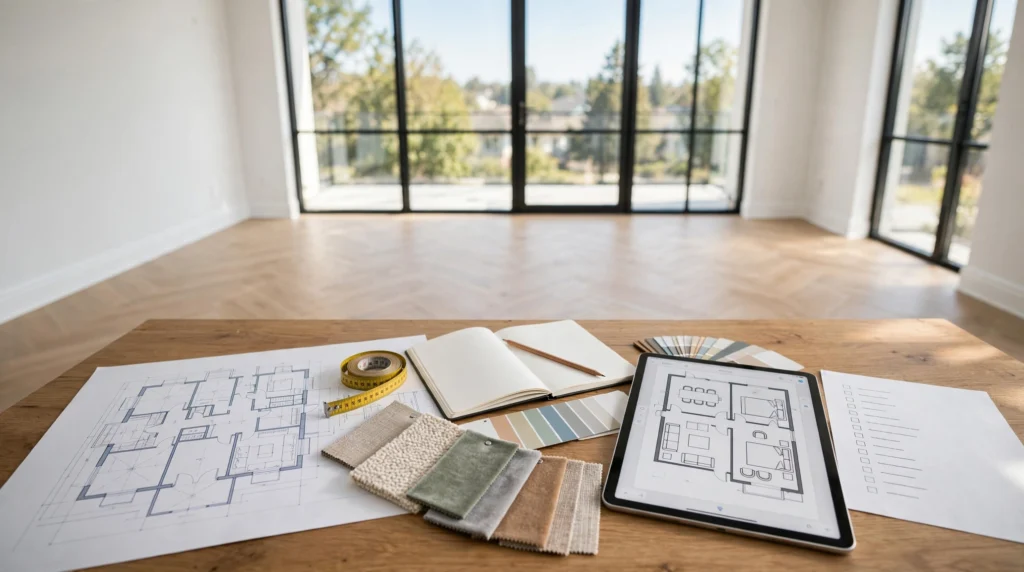
A successful home decor shopping checklist for beginners always starts with understanding your home’s layout, measuring each room, and setting realistic expectations.
Measure Every Room Carefully
One of the biggest decorating mistakes is purchasing furniture without checking measurements.
Always measure:
- Room width and length
- Ceiling height
- Doorways
- Hallways
- Windows
- Existing furniture
- Available walking space
Large items such as sectional sofas, coffee tables, dining tables, and bookshelves should fit comfortably without making the room feel crowded.
Keep product dimensions on your phone while shopping so you can compare them instantly.
Decide on a Realistic Budget
Your budget determines which items you should purchase first.
Start by listing your essential furniture, then estimate how much you can comfortably spend without affecting other financial priorities.
Many first-time homeowners divide their spending into three categories:
- Essential furniture
- Functional home accessories
- Decorative accents
This approach prevents overspending while ensuring every room becomes usable before adding luxury decor.
Create a Wishlist Before Shopping
A wishlist helps you stay focused when browsing online stores or visiting furniture showrooms.
Include:
- Furniture
- Lighting fixtures
- Area rugs
- Curtains
- Decorative mirrors
- Indoor plants
- Wall art
- Storage solutions
Organize your list by room so shopping becomes more efficient.
Prioritize Needs Before Decorative Extras
A common mistake is buying attractive accessories before purchasing everyday essentials.
Follow this simple Buy Now vs. Buy Later strategy.
Buy Now
- Sofa
- Bed frame
- Mattress
- Dining table
- Curtains
- Lighting
- Storage furniture
Buy Later
- Decorative trays
- Candles
- Coffee table books
- Artificial plants
- Accent accessories
- Seasonal decor
This method keeps your home functional while allowing you to decorate gradually without financial stress.
How to Set a Home Decor Budget Without Overspending
Creating a realistic budget is one of the smartest steps in any home decor planning guide. A spending plan helps you avoid impulse purchases and ensures your money goes toward items that offer the greatest value.
Decorating your home doesn’t have to be expensive. If you’re working with a limited budget, explore our budget home decor ideas for practical tips on finding affordable furniture, choosing stylish accessories, and making your home look beautiful without overspending.
Divide Your Budget Room by Room
Allocate separate budgets for each room based on its importance and how often it is used.
For example, the living room and bedroom typically require larger investments than an entryway or guest room.
Invest More in Long-Term Furniture
Certain furniture pieces are used daily and should be built to last.
Prioritize spending on:
- Sofa
- Bed frame
- Mattress
- Dining table
- Storage cabinets
Look for durable materials, strong construction, and reliable warranties to maximize long-term value.
Save Money on Decorative Accessories
Decorative accessories can be updated whenever your style changes, so there’s no need to invest heavily in them at the beginning.
Affordable options include:
- Throw pillows
- Decorative vases
- Candles
- Picture frames
- Indoor plants
- Decorative baskets
Shopping during seasonal sales and clearance events can help you refresh your home while staying within budget.
Suggested Budget Priorities
| Category | Priority | Budget Suggestion |
| Sofa | High | $$$ |
| Area Rug | Medium | $$ |
| Throw Pillows | Low | $ |
| Wall Art | Medium | $$ |
| Indoor Plants | Low | $ |
Choose Your Interior Design Style Before Shopping
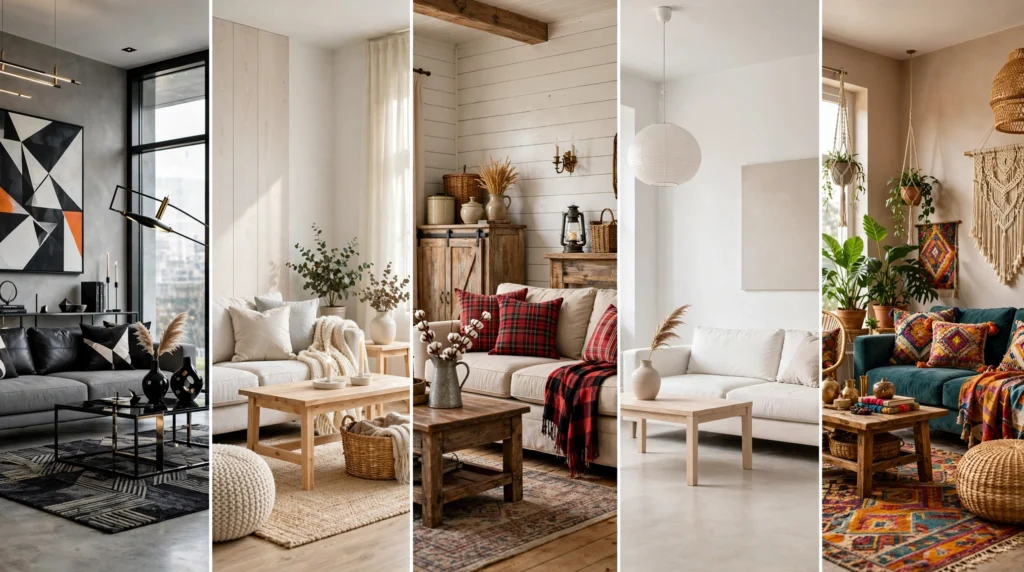
Choosing an interior design style before you start shopping is one of the most important steps in creating a beautiful and cohesive home. Without a clear direction, it’s easy to purchase furniture and home accessories that don’t work well together.
A consistent decorating style also helps you select the right color palette, textures, lighting, and decorative accents while staying focused on your home decor shopping checklist.
Modern Style
Modern home decor emphasizes clean lines, simplicity, and functionality. Furniture typically features sleek silhouettes with neutral colors such as white, black, gray, and beige.
Key elements include the following:
- Minimal wall decor
- Glass and metal finishes
- Simple furniture designs
- Statement lighting fixtures
- Neutral color palette
This style works well for homeowners who prefer uncluttered and sophisticated interiors.
Minimalist Style
Minimalist interiors follow the principle of “less is more.” Every item serves a purpose while maintaining an open and organized space.
Must-have features include:
- Functional furniture
- Neutral tones
- Hidden storage solutions
- Simple decorative accessories
- Clean surfaces
Instead of filling rooms with decorative items, focus on quality pieces that add both beauty and practicality.
Scandinavian Style
Scandinavian design combines warmth with simplicity. It uses natural materials, light wood furniture, soft textiles, and plenty of natural light.
Popular features include:
- Wooden furniture
- Cozy throw blankets
- Indoor plants
- Soft area rugs
- White or pastel walls
This decorating style creates bright, inviting spaces that feel comfortable year-round.
Farmhouse Style
Farmhouse interiors blend rustic charm with modern comfort. Wooden finishes, vintage-inspired accessories, and cozy fabrics create a welcoming atmosphere.
Common decor pieces include:
- Wooden coffee tables
- Shiplap-inspired wall decor
- Woven storage baskets
- Linen curtains
- Decorative lanterns
Neutral colors paired with natural textures help complete the farmhouse look.
Bohemian Style
Bohemian (Boho) interiors celebrate creativity, layered textures, and colorful accessories. This style is perfect for homeowners who enjoy mixing patterns, artwork, and handcrafted decor.
Popular Boho decor includes:
- Patterned rugs
- Colorful cushions
- Hanging plants
- Macramé wall art
- Decorative baskets
Regardless of the style you choose, maintain balance, proportion, layering, and proper lighting throughout your home to create a harmonious design.
Room-by-Room Home Decor Shopping Checklist
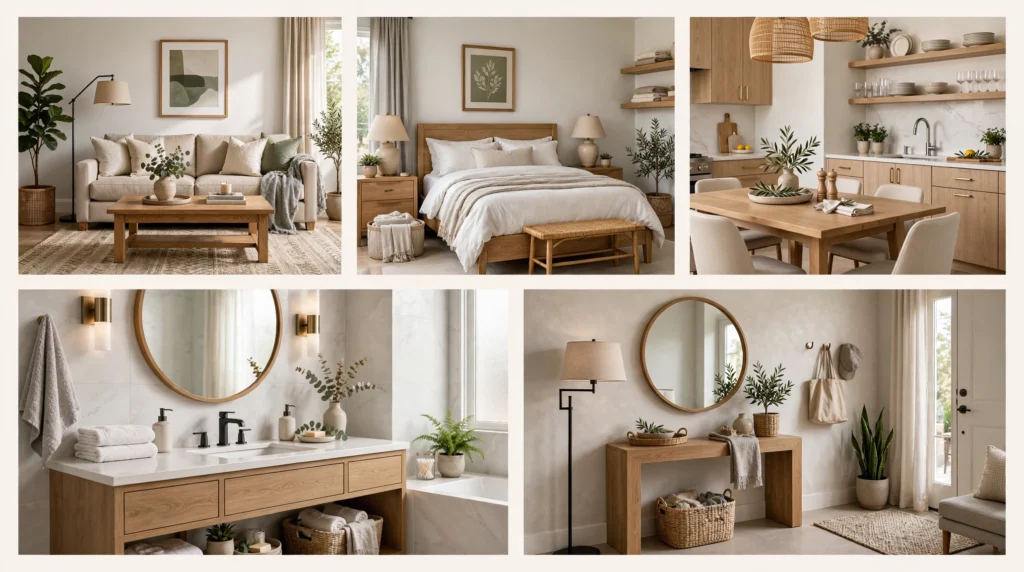
Decorating one room at a time helps you stay organized and avoid unnecessary purchases. This room-by-room home decor checklist ensures you buy the essential items first while creating a comfortable and stylish living space.
Living Room Checklist
The living room is often the heart of the home, making it one of the first spaces to furnish. Start with functional furniture before adding decorative accents. Once you’ve selected your essential furniture, browse our living room decor guide for expert advice on furniture placement, color coordination, lighting, and decorative accessories that can transform your living space.
Essential furniture
✔ Sofa or sectional sofa
✔ Coffee table
✔ TV console
✔ Accent chair
✔ Side table
Decor accessories
✔ Area rug
✔ Floor lamp
✔ Throw pillows
✔ Cozy blanket
✔ Wall art or canvas art
✔ Decorative mirrors
✔ Curtains or window treatments
✔ Indoor plants
✔ Decorative trays
✔ Candles
Shopping Tip: Leave enough walking space between the sofa and coffee table to improve comfort and functionality.
Bedroom Checklist
Your bedroom should promote relaxation while providing practical storage. Creating a comfortable bedroom involves more than choosing a bed. Explore our bedroom decor ideas for inspiration on selecting furniture, lighting, bedding, and decorative accents that create a relaxing retreat.
Essential furniture
✔ Bed frame
✔ Quality mattress
✔ Nightstands
✔ Dresser
Decor accessories
✔ Bedding set
✔ Decorative pillows
✔ Table lamps
✔ Full-length mirror
✔ Curtains or blackout drapes
✔ Area rug
✔ Wall artwork
✔ Indoor plant
Shopping Tip: Invest in a high-quality mattress before purchasing decorative accessories. Comfort should always come first.
Dining Room Checklist
A welcoming dining room encourages family meals and social gatherings.
Essential furniture
✔ Dining table
✔ Dining chairs
✔ Storage cabinet or buffet
Decor accessories
✔ Centerpiece
✔ Pendant light
✔ Decorative vase
✔ Wall mirror
✔ Artwork
✔ Table runner
Choose furniture that fits comfortably within the room while allowing enough space to move around the table.
Kitchen Checklist
Kitchen decor should improve both organization and visual appeal.
Must-have items
✔ Decorative trays
✔ Countertop organizers
✔ Storage baskets
✔ Floating shelves
✔ Small indoor plants
✔ Stylish canisters
✔ Decorative cutting boards
✔ Wall hooks
Keep countertops clutter-free by using functional storage solutions that complement your decorating style.
Bathroom Checklist
Bathrooms can feel more inviting with a few carefully selected accessories.
Essential items
✔ Mirror
✔ Soft towels
✔ Storage shelves
✔ Soap dispenser
✔ Decorative basket
✔ Small plant
✔ Wall shelf
✔ Bath mat
✔ Scented candle
Choose moisture-resistant materials that can withstand daily use.
Entryway Checklist
The entryway creates your home’s first impression, so keep it organized and welcoming.
Furniture
✔ Console table
✔ Shoe storage bench
Decor accessories
✔ Wall mirror
✔ Decorative vase
✔ Welcome mat
✔ Wall hooks
✔ Storage basket
✔ Small table lamp
✔ Indoor plant
A well-designed entryway combines style with functionality by providing convenient storage for shoes, keys, and everyday essentials.
Bonus Tip: Decorate in the Right Order
Following a logical decorating sequence helps prevent costly mistakes and keeps your project on track.
Decorating Timeline
- Measure every room.
- Choose your decorating style.
- Set your budget.
- Purchase essential furniture.
- Add lighting fixtures.
- Install rugs and curtains.
- Hang wall decor and mirrors.
- Finish with decorative accessories and indoor plants.
This room-by-room approach makes decorating less overwhelming while ensuring every purchase supports a cohesive and functional home design.
Home Decor Essentials You Should Buy First
When decorating your first home, it’s tempting to purchase decorative accessories before the essentials. However, a smart home decor shopping checklist prioritizes furniture and functional items that you’ll use every day. Once these basics are in place, you can gradually add decorative pieces to enhance your home’s personality.
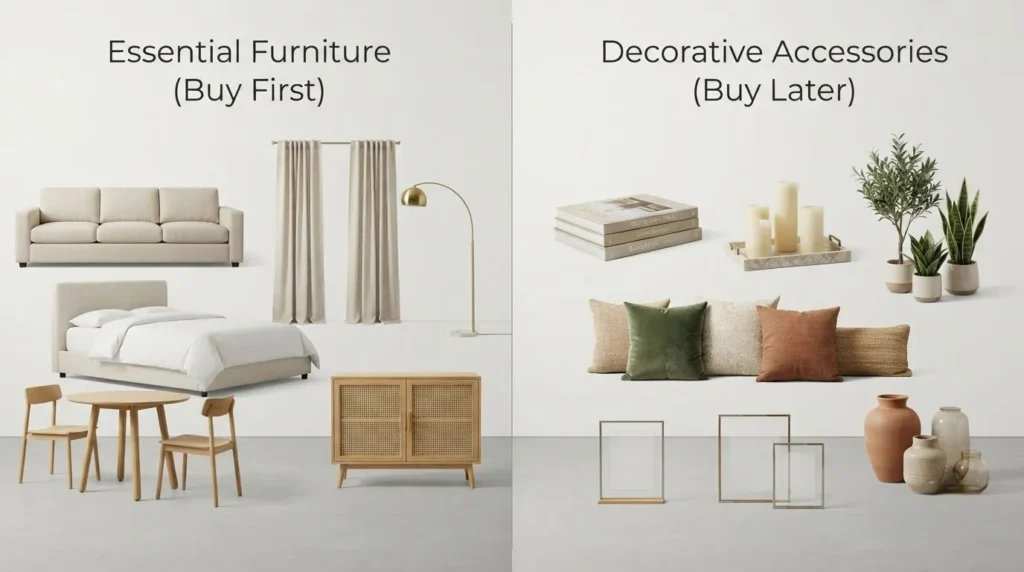
Buy These First
These items provide comfort, functionality, and long-term value.
- Sofa: The centerpiece of your living room and one of the most-used furniture pieces.
- Bed Frame and Mattress: A quality bed improves sleep and supports your well-being.
- Dining Table and Chairs: Essential for meals, work, and family gatherings.
- Curtains or Window Treatments: Improve privacy, control natural light, and complete the room.
- Lighting Fixtures: Combine ceiling lights, table lamps, and floor lamps to create a warm, inviting atmosphere.
- Storage Solutions: Bookshelves, storage baskets, and shelving help keep your home organized.
Buy These Later
Once your essential furniture is in place, consider adding decorative accessories.
- Decorative trays
- Candles
- Artificial plants
- Coffee table books
- Decorative vases
- Accent accessories
- Seasonal decor
- Picture frames
Buying in stages allows you to spread out expenses while creating a thoughtfully designed home.
How to Choose Quality Home Decor That Lasts
Quality matters more than quantity when shopping for home decor. Investing in durable furniture and well-made accessories helps you save money over time while reducing the need for frequent replacements.
Check Material Quality
Before purchasing, inspect the materials used in furniture and decor.
Look for:
- Solid wood instead of particleboard for frequently used furniture.
- Durable fabrics that resist stains and wear.
- Metal hardware with a sturdy finish.
- High-quality stitching on cushions and upholstery.
Choosing durable materials ensures your furniture remains attractive for years.
Compare Product Reviews
Customer reviews provide valuable insights into a product’s durability, comfort, and overall quality.
Pay attention to comments about:
- Product quality
- Ease of assembly
- Color accuracy
- Long-term performance
- Customer service
Reading multiple reviews helps you make informed purchasing decisions.
Read Return and Warranty Policies
Large furniture purchases often involve delivery services and assembly, so review the return policy and warranty before placing an order.
Check:
- Return window
- Return shipping fees
- Warranty coverage
- Replacement process
- Delivery conditions
A flexible return policy provides peace of mind if the product doesn’t meet your expectations.
Choose Timeless Designs Over Trends
While trendy decor can be appealing, timeless furniture offers better long-term value.
Neutral sofas, classic coffee tables, quality mirrors, and versatile area rugs can easily adapt to changing decorating styles with simple accessory updates.
Smart Tips for Shopping Home Decor Online
Online shopping offers convenience and endless design inspiration, but it also requires careful planning. Following a few smart practices can help you avoid disappointment and unnecessary expenses.
Compare Prices Across Multiple Stores
Never purchase the first item you see.
Compare prices across different retailers to find the best value. Seasonal promotions, coupons, and clearance sales can significantly reduce your decorating budget.
Read Customer Reviews Carefully
Don’t rely only on product descriptions.
Reading customer reviews is one of the best ways to evaluate a product before making a purchase. Reviews often provide real-life insights into quality, durability, sizing, and overall customer satisfaction. Following trusted online shopping tips can also help you identify reliable sellers, avoid scams, and make informed buying decisions before placing an order.
Check Product Dimensions
Always compare product dimensions with your room measurements.
Even beautiful furniture can become a problem if it’s too large or too small for the available space.
Verify Shipping Costs
Some retailers advertise low prices but charge high delivery fees.
Before checking out, review:
- Shipping costs
- Delivery times
- Assembly services
- Return shipping charges
Shop During Seasonal Sales
Planning your purchases around major sales events can help you save significantly on home decor. Popular shopping seasons include:
- Memorial Day sales
- Fourth of July promotions
- Labor Day sales
- Black Friday
- Cyber Monday
- End-of-season clearance events
Planning purchases around these sales can help you save hundreds of dollars on furniture and home accessories.
Common Home Decor Shopping Mistakes to Avoid
Even experienced homeowners make decorating mistakes. Learning what to avoid can save you both time and money.
Buying Without Measuring
Always measure your room, doorways, and furniture placement before making a purchase.
Ignoring Color Coordination
Choose a consistent color palette that works throughout your home.
Matching tones and complementary finishes create a balanced and cohesive design.
Choosing Style Over Function
A beautiful chair isn’t useful if it’s uncomfortable.
Always balance aesthetics with functionality when selecting furniture.
Buying Everything at Once
Decorating your entire home in one shopping trip often leads to rushed decisions.
Take your time and build your space gradually.
Forgetting About Lighting
Lighting has a significant impact on how your decor looks.
Layer ceiling lights, floor lamps, and table lamps to create warmth and improve functionality.
Printable Home Decor Shopping Checklist
Use this simple checklist while shopping or decorating your home.
Living Room
☐ Sofa
☐ Coffee Table
☐ TV Console
☐ Area Rug
☐ Curtains
☐ Floor Lamp
☐ Throw Pillows
☐ Wall Art
☐ Indoor Plants
Bedroom
☐ Bed Frame
☐ Mattress
☐ Nightstand
☐ Bedding
☐ Table Lamp
☐ Mirror
☐ Curtains
Kitchen
☐ Storage Baskets
☐ Decorative Tray
☐ Floating Shelves
☐ Indoor Plant
Bathroom
☐ Mirror
☐ Towels
☐ Storage Shelf
☐ Soap Dispenser
☐ Decorative Basket
Entryway
☐ Console Table
☐ Welcome Mat
☐ Wall Mirror
☐ Shoe Storage
☐ Decorative Vase
Final Thoughts
A well-planned home decor shopping checklist is the key to creating a stylish, functional, and welcoming home without unnecessary stress or overspending. By measuring your space, setting a realistic budget, choosing an interior design style, and prioritizing essential furniture, you can shop with confidence and avoid costly mistakes. Decorating room by room also makes the process more manageable while helping you build a cohesive look that reflects your personality. Whether you’re furnishing your first apartment or updating a family home, thoughtful planning and smart purchasing decisions will help you create a space you’ll enjoy for years to come.
Frequently Asked Questions
What should I buy first when decorating my home?
Start with essential furniture such as a sofa, bed frame, mattress, dining table, lighting fixtures, and curtains. Once your home is functional, add decorative accessories like wall art, rugs, mirrors, and indoor plants.
How much should I budget for home decor?
Your budget depends on the size of your home and your decorating goals. Focus on investing in high-quality furniture first, then purchase decorative accents over time to avoid overspending.
How do I choose matching home decor?
Begin with a consistent color palette and select furniture, lighting, rugs, and accessories that complement one another. Repeating similar textures and finishes helps create a cohesive look throughout your home.
Which room should I decorate first?
The living room is usually the best place to start because it is one of the most frequently used spaces. After that, move on to the bedroom, dining room, kitchen, bathroom, and entryway.
What are the must-have home decor items?
Essential home decor items include a comfortable sofa, quality bed, area rugs, curtains, mirrors, lighting fixtures, throw pillows, wall art, storage baskets, and indoor plants.
How can I decorate my home on a budget?
Set a realistic budget, prioritize essential purchases, compare prices, shop during seasonal sales, and mix affordable decor with a few high-quality statement pieces.
Is it better to buy furniture or decor first?
Furniture should always come first because it provides functionality and defines the layout of each room. Decorative accessories can then be added to enhance the overall design.
What mistakes should beginners avoid when shopping for home decor?
Common mistakes include buying furniture without measuring, ignoring product dimensions, choosing trendy items over timeless designs, overspending on accessories, and failing to check customer reviews, warranties, or return policies.